
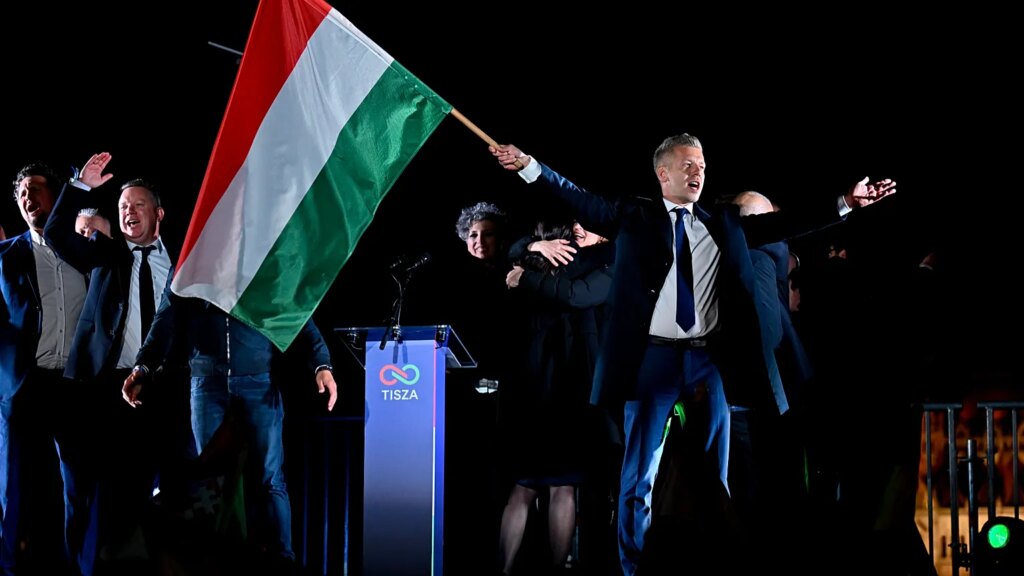
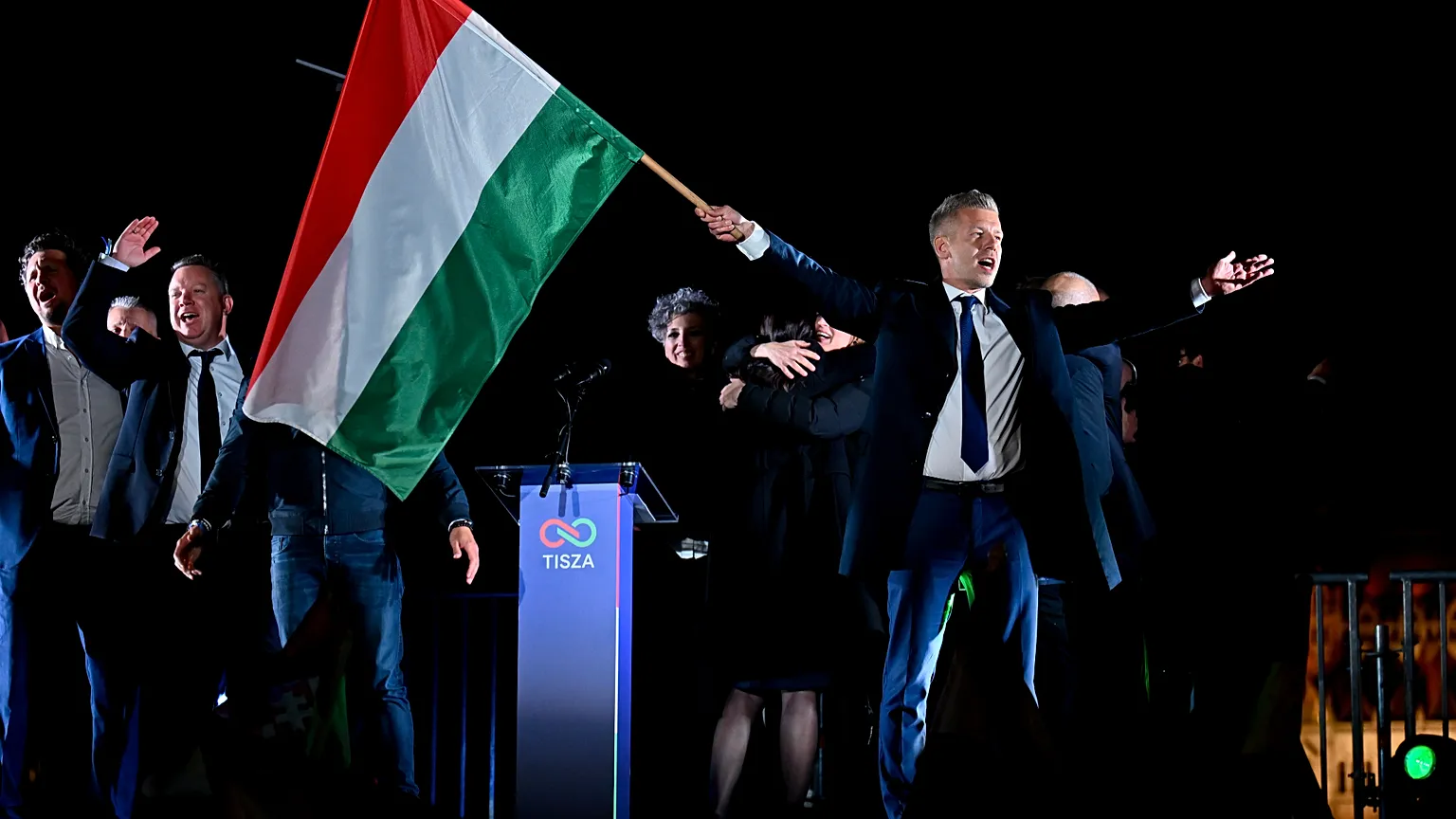
Péter Magyar, poised to become Hungary’s next prime minister, decisively won the general election, ending Viktor Orbán’s 16-year tenure and raising questions regarding Budapest’s future stance on Russian energy dependence.
The incoming Hungarian Prime Minister, Péter Magyar, could influence not only national policies but also Europe’s energy relations with Russia, following his victory on 12 April and his commitment to phasing out Hungarian reliance on Russian energy imports by 2035.
 ADVERTISEMENT
  ADVERTISEMENT
Magyar also vowed to bring Hungary’s policies into closer alignment with the European Union’s initiatives to diversify oil and gas supplies, a strategy initiated by the EU in 2022 after Russia invaded Ukraine.
Nonetheless, moving away from the energy policy established under Viktor Orbán will likely accelerate the region’s reduced dependency on Moscow but will also present significant economic and logistical hurdles.
«Geographically, neither Russia nor Hungary’s position will transform. Therefore, this energy dependence will persist for some time,» Magyar told local media shortly before the election.
«Diversification must intensify, but it is not an immediate process. If necessary, negotiations with Russia will take place, albeit without forming friendly ties,» added the Tisza Party leader.
He stated that the funding for the Paks II nuclear project, a substantial Hungarian initiative developed in partnership with Russia, would be reevaluated, while also investigating options to expedite the adoption of smaller, cost-effective modular reactors through collaborations with countries like France and the United States.
For years, Viktor Orbán has guided Hungary on a unique path within the EU, sustaining robust energy relations with Moscow, despite the broader bloc’s efforts to reduce Russian oil and gas reliance following the Ukraine conflict.
Orbán’s policies largely contradicted the EU’s energy transition objectives, prompting concerns about whether new leadership would continue to act as a weak link within the EU’s energy framework.
In 2025, Hungary imported approximately 100,000 barrels of Russian crude daily, representing about 90% of its total supply, according to analysts at S&P Global Energy CERA.
Investment and infrastructure
However, analysts emphasize that Magyar’s proposed energy transition will not be immediate, citing that phasing out Russian supplies will necessitate years of investment in infrastructure and alternative energy sources.
«Hungary has the infrastructural capacity to gradually cease Russian crude imports in the long run. Yet, accomplishing this would incur substantial financial burdens. While domestic fuel availability could be preserved, MOL Group—the country’s sole refiner—would experience decreased profitability,” stated Victoria Grabenwöger, senior analyst at Kpler, a data intelligence company, in an interview with Euronews.
Dimitar Lilkov, senior research officer at the Wilfried Martens Centre for European Studies, referred to findings showing Hungary’s full access to alternate supply routes and refineries capable of processing non-Russian crude oil.
He mentioned the Croatian Adria pipeline, also known as Janaf, as one such option, noting potential reductions in transit costs.
«Natural gas also has alternative options. While not instantaneous, this shift is entirely feasible if political will persists over the next several years,» Lilkov told Euronews.
«Péter Magyar has already indicated the new government intends to pursue diversification, suggesting hope that Hungary may finally break free from its dependence on Russian energy,» he added.
Though Orbán claimed that alternatives incur higher costs, Croatian Economy Minister Ante Šušnjar praised the Adriatic pipeline as a «dependable and credible channel for regional energy security.»
«Our infrastructure is designed to enhance resilience, diversification, and security across Central Europe. Our message to Hungary is clear—Croatia extends a hand of friendship, favoring cooperation over conflict. During uncertain times, constructive neighborly solutions prevail,» Šušnjar stated on X on 12 April.
Exemptions to Russian energy imports
Due to their landlocked status and limited alternative energy access, Hungary and Slovakia secured exemptions permitting continued imports of Russian pipeline oil until September 2027.
Nevertheless, the EU aims to cease Russian gas imports by 2027, including ending these exemptions, with a full ban on Russian natural gas planned for 30 September 2027.
It remains uncertain whether Magyar will contest this policy, given Hungary’s landlocked geography and vulnerability to energy supply challenges intensified by the broader energy crisis linked to the war in Iran, which has heightened concerns over shortages.
The EU Commission also intended to propose a ban on Russian oil imports on 15 April, but postponed the decision due to the global energy crisis and political disputes surrounding the Druzhba pipeline.
Druzhba pipeline
Hungary’s landlocked position and reliance on Soviet-era infrastructure have made it dependent on pipelines such as Druzhba and TurkStream, which deliver steady supplies of crude oil and natural gas from the east.
Damage to the Druzhba pipeline, a vital conduit transporting Russian oil to Slovakia and Hungary through Ukraine, became a contentious political matter leading up to the 12 April elections.
The pipeline has been impaired since 27 January, with Ukraine attributing the damage to a Russian airstrike—an accusation Russia denied—while Hungary and Slovakia criticized Ukraine for delaying repairs, accusing it of «political blackmail.»
The Adria pipeline has provided uninterrupted supply to Hungary and Slovakia in recent weeks, according to Minister Šušnjar. However, with Druzhba flows halted, Hungary has sought to import Russian oil via sea through Croatia, although the pipeline operator has yet to grant approval.
The status of the Druzhba pipeline remains uncertain, with EU officials reluctant to disclose details about the EU mission sent to Ukraine to assess the damage.
The European Commission requested Ukrainian permission for inspectors to examine the pipeline’s damage, responding to a key request from Orbán, who has vetoed a critical €90 billion loan to Ukraine until the pipeline is operational again.
Ukrainian President Volodymyr Zelenskyy announced on 10 April that repairs to the Druzhba pipeline were underway and expected to conclude «this spring.»
Meanwhile, Slovakia’s Prime Minister Robert Fico, a longtime ally of Orbán advocating for swift restoration of Druzhba oil flows, suggested that Magyar would also be interested in seeing the pipeline repaired.
«There remains significant shared interest among Slovakia, Hungary, and the wider Central European region in resuming operations of the Druzhba oil pipeline,» Fico commented on X following the Hungarian elections.
In September, Slovak Economy Minister Denisa Saková discussed with US Secretary of Energy Chris Wright the importance of ending Russian supplies through the Druzhba pipeline, emphasizing Slovakia’s need to diversify to avoid economic and industrial disruptions.