
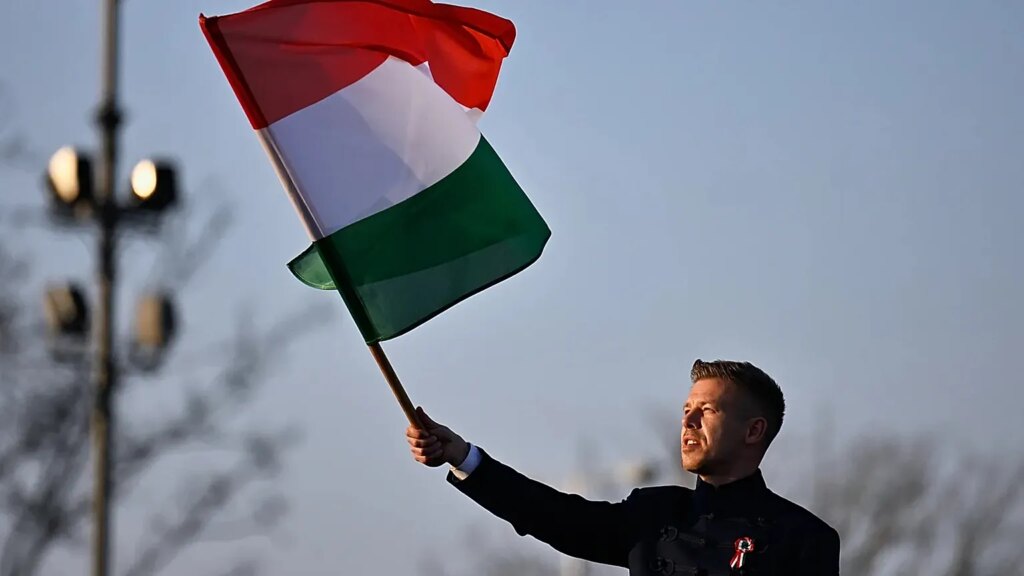
An overwhelming number of European legislators hope to witness Orbán’s defeat in the forthcoming Hungarian elections, viewed as a crucial turning point in Brussels. Even lawmakers from the left are backing Orbán’s rival, Péter Magyar, in what is seen as a decisive vote for Europe’s future.
With just two weeks remaining until Hungary’s elections, the intensity of the campaign is also rising in Brussels.
 ADVERTISEMENT
  ADVERTISEMENT
Although the European Commission has stayed reserved to prevent any disputes, a number of European lawmakers are voicing their views.
According to Euronews, most parliamentary factions—collectively representing over three-quarters of MEPs—oppose Prime Minister Viktor Orbán and generally support opposition leader Péter Magyar.
“This election is a fundamental turning point,” stated Andrey Kovatchev, a leading member of the European People’s Party. “The faction fully backs Tisza [Magyar’s party],” he told Euronews, despite recent disagreements over matters like the EU-Mercosur trade agreement. “Removing Orbán is vital for the EU’s future.”
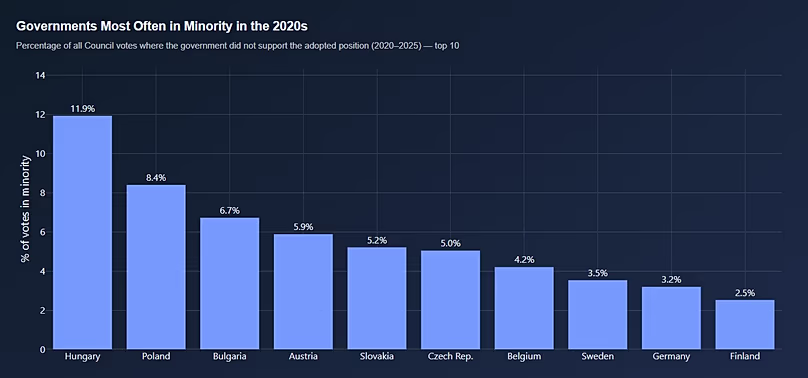
Research from the think tank EU Matrix reveals that Hungary has most frequently opposed other member states’ decisions throughout the 2020s, which likely explains why many in Brussels favor a more cooperative government than Orbán’s.
Multiple lawmakers concur that an Orbán loss would alleviate Europe from one of its most persistent internal issues, especially considering recent disclosures about Hungary’s foreign minister contacting Russia’s Sergei Lavrov before and after significant EU gatherings.
“Orbán has long acted as Putin’s agent inside the EU,” German MEP Daniel Freund stated to Euronews. “His continual vetoes and political tactics weaken European security.”
A defeat for Fidesz would represent a triumph for the majority of MEPs who have consistently criticized Hungary’s government in recent years, highlighting issues like corruption, weakening of the rule of law, restrictions on press freedom, and harassment of political adversaries.
During earlier terms, lawmakers initiated the Article 7 process against Hungary—which could end in removing the country’s EU voting privileges—labeled Hungary an “electoral autocracy,” and requested Budapest to forfeit its turn at the EU’s rotating presidency.
In the current legislature, Parliament passed a report sharply condemning judicial meddling, corruption, misuse of EU funds, and assaults on civil society within Hungary.
“[Orbán’s downfall] would signal voter agreement that the rule of law needs to be reinstated in Hungary,” stated Dutch MEP Tineke Strik, rapporteur on the issue, in an interview with Euronews. “This can only occur with his defeat.”
Péter Magyar is the shared hope, including among the left
Parliamentary opposition to Orbán translates into wide-ranging support for Péter Magyar, leader of the Tisza party.
“The upcoming elections are pivotal, a critical opportunity to restore a free, pluralistic democracy,” said Renew Europe group President Valérie Hayer to Euronews, reflecting a common perspective in the chamber, where Hungarian elections are deemed the year’s most consequential vote.
Although Tisza belongs to the center-right European People’s Party, calls for a governmental change extend past right-leaning groups. Magyar has garnered backing from left-wing MEPs, despite disagreements on environmental, migration, and LGBTQ+ policies.
Magyar’s swift rise in polls has led to a decline in support for other opposition parties, historically seen as the primary alternatives to Orbán.
The Hungarian Socialist Party (MSZP) and Momentum have withdrawn from campaigning, urging their supporters to back the strongest opposition contender in each constituency, commonly a Tisza member.
It is somewhat unusual for liberal and left-wing MEPs to quietly support a conservative, center-right politician solely because he is considered more pro-European than the incumbent prime minister.
“Ideally, I would want my Socialist colleague Klára Dobrev to govern Hungary,” said French Socialist MEP Chloé Ridel, referring to Dobrev, a member of Hungary’s Socialist party, Demokratikus Koalíció. “But right now, the priority is ending a corrupt regime, and that means removing Orbán.”
She hopes Orbán will be defeated to prevent him from “holding the EU hostage,” though it’s uncertain whether his opponent will fulfill all campaign promises.
The Greens, among the most outspoken MEPs opposing the Budapest government over recent years, plan to use their social media channels “to urge all Hungarians to vote and overthrow this regime,” an MEP from the group stated.
The Left in the European Parliament has no official endorsement but “anticipates Orbán’s downfall,» a group spokesperson told Euronews.
Who backs Orbán in Parliament?
Despite widespread criticism, Orbán retains support within the European Parliament and across the EU.
Nationalist leaders from Europe, including France’s Marine Le Pen and Italy’s Matteo Salvini, showed their backing for the current Prime Minister during an event titled The «Patriots’ Grand Assembly” held on 23 March in Budapest.
Fidesz is part of the Patriots for Europe (PFE or Patriots), the third-largest group in the European Parliament, and Orbán’s administration enjoys backing beyond its immediate allies, with over a hundred MEPs hoping for his continuation as prime minister.
The Europe of Sovereign Nations (ESN), another far-right parliamentary group, formally supports Our Homeland Movement, a small nationalist party within the group, polling around 6%.
Nonetheless, ESN MEPs express admiration for Orbán’s firm stance on migration, his anti-EU viewpoints, and anti-woke rhetoric.
“I hope Fidesz remains in government, preferably in coalition with our partners, as a balancing force. It is well known that we maintain good relations with Viktor Orbán,” Alternative for Germany (AfD) MEP Tomasz Froelich told Euronews, referring to a recent meeting between Orbán and AfD leader Alice Weidel.
The right-wing European Conservatives and Reformists (ECR) refrain from officially endorsing Orbán, although some parties within the group, such as Poland’s Law and Justice and Italy’s Brothers of Italy led by Giorgia Meloni, do support him.
“Our group is not adopting a unified stance on Hungary’s elections,” co-chair Nicola Procaccini said to Euronews, reflecting diverse opinions among national delegations.