
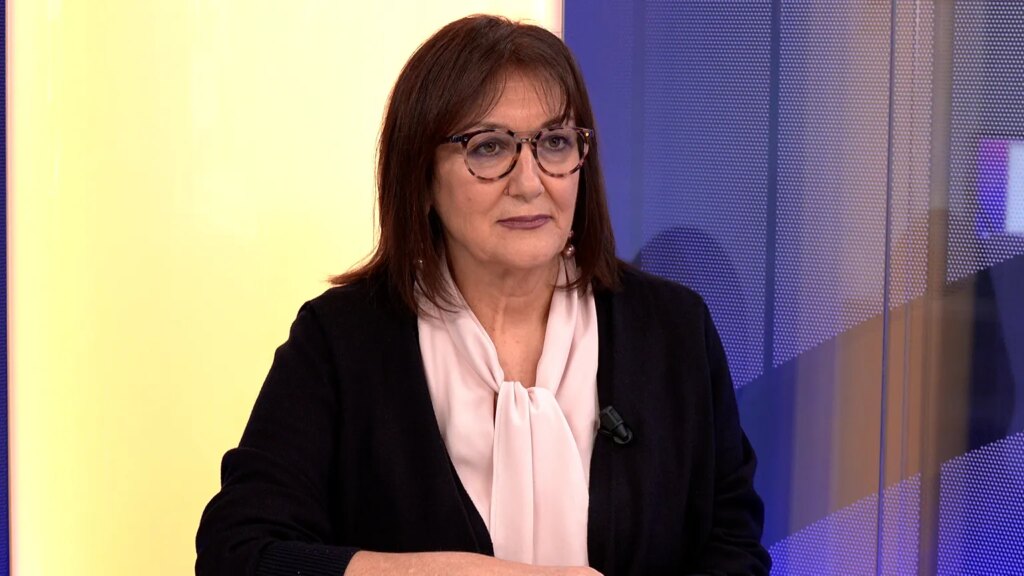
In a conversation with Euronews, Commissioner Šuica sought to distance herself from Trump’s Board of Peace but did not exclude the possibility of continuing her participation in the initiative’s meetings to aid Gaza’s post-conflict reconstruction.
Dubravka Šuica, European Commissioner for the Mediterranean, has addressed the criticisms regarding her attendance at the inaugural meeting of US President Donald Trump’s Board of Peace in February – just days before hostilities erupted between the US, Israel, and Iran – emphasizing that the EU has “not endorsed” this contentious platform.
 ADVERTISEMENT
  ADVERTISEMENT
Šuica faced a strong reaction from EU member states following her role as an observer at the gathering convened by Trump in Washington on 19 February. France and Spain argued that her presence contravened EU treaties, citing that the institution she represents lacks the authority to define the EU’s foreign policy.
Despite considerable reservations from several EU governments and the EU executive about the Board’s legitimacy and its alignment with the United Nations charter, fourteen EU members dispatched diplomatic or official delegates to the meeting.
Within ten days, the US and Israel initiated strikes against Iran, igniting a worsening conflict in the Middle East.
During a Monday interview, Šuica was questioned about the Board’s credibility amidst the ongoing war it indirectly contributed to, responding: “It’s difficult to assess whether it remains credible.”
“Initially, it was intended to focus on Gaza’s reconstruction, and despite the evolving circumstances in the Middle East, we must not lose sight of Gaza,” Šuica explained. “Attention must remain on Gaza due to the persistent severe conditions.”
The Board’s founding charter, released prior to the February session, does not mention Gaza or the Palestinian territories. It has faced extensive criticism for its worldwide scope that appears to challenge the United Nations, and for granting expansive authority to Trump as its permanent chairman.
When pressed on the Board’s relevance following the Iran conflict, Šuica clarified: “To specify, the invitation to the Board of Peace was extended to President (Ursula) von der Leyen, and I was representing her at the event.”
“This does not imply EU endorsement of the Board. Our role was strictly observational,” she stated, noting that the meeting provided a “valuable opportunity” to engage with counterparts, given her responsibility for EU relations with North African and Middle Eastern Mediterranean countries.
“Simultaneously, we do not align with certain Board of Peace procedures, its remit, and other aspects; therefore, we are not members. Attendance was purely a matter of protocol,” she concluded.
‘Only diplomacy works’
Commissioner Šuica also highlighted that the European Union advocates for “dialogue, de-escalation, and diplomatic solutions” as tensions in the Middle East escalate.
“We reject any endorsement of conflict. Our call is for all involved parties to ease tensions because conflict benefits no one,” the Commissioner emphasized.
In line with her duties, Commissioner Šuica recently introduced the «Pact for the Mediterranean,» designed to redefine relations with Southern Neighbourhood countries—including Lebanon, Syria, and Israel—amidst rising global instability.
The Pact addresses numerous areas such as trade integration, migration control, border security, and the region’s expanding contribution to the EU’s supply chains for agriculture, fertilizers, and critical raw materials. Its overarching aim is to foster peace, economic growth, and regional stability.
Asked about the Pact’s prospects in light of escalating conflict threatening regional security and economic steadiness, Šuica expressed confidence that the EU can meet its objectives and noted that a detailed action plan for the Pact’s rollout will be approved during informal EU leader discussions slated for April in Cyprus.