
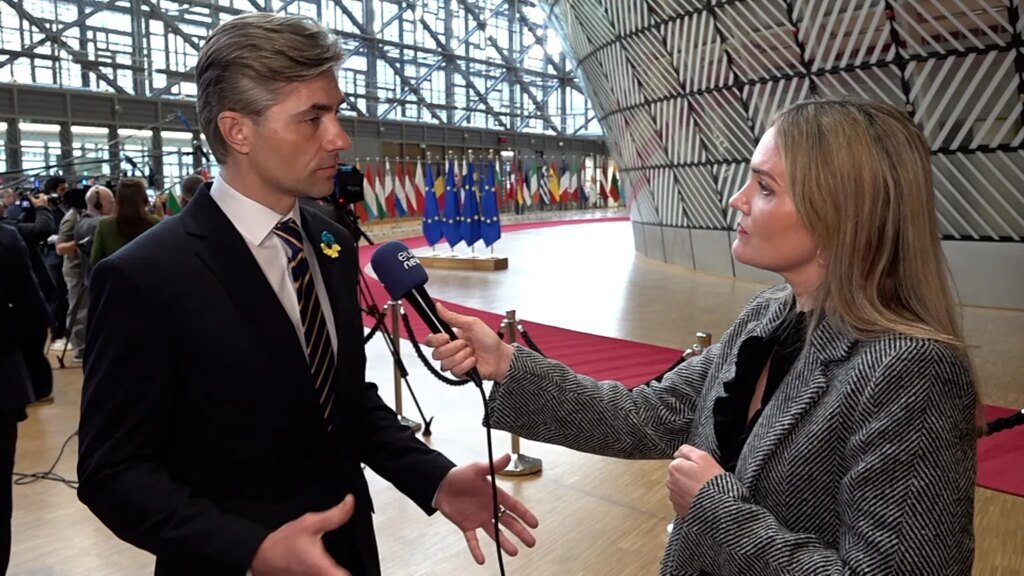
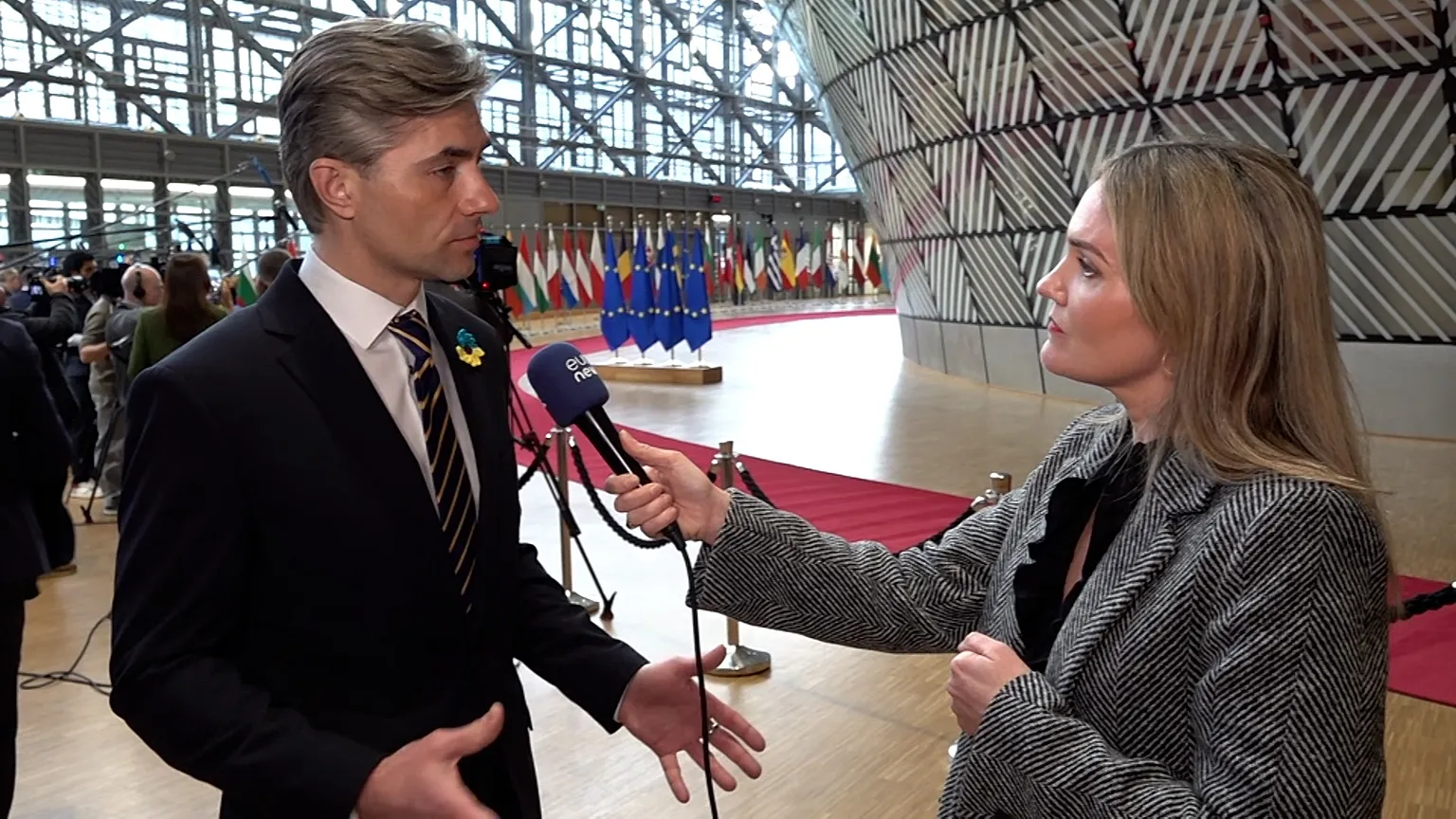
With Budapest obstructing a €90 billion emergency loan to Ukraine alongside the twentieth sanctions package against Russia, Kęstutis Budrys emphasizes the need for measures to prevent Hungary from exploiting its veto to halt essential EU policies.
Lithuania has called for a reform of the EU’s voting procedures following Hungary’s decision to block two critical resolutions concerning Ukraine, citing issues tied to Budapest’s access to discounted Russian oil via the Soviet-era Druzhba pipeline.
 ADVERTISEMENT
  ADVERTISEMENT


Prior to the foreign affairs meeting in Brussels on Monday, Hungarian Foreign Minister Péter Szijjártó announced on X: “At tomorrow’s Foreign Affairs Council, the EU intends to ratify the twentieth sanctions package. Hungary will veto it.”
“We will not permit decisions significant to Kyiv to proceed until Ukraine restarts oil transit to Hungary and Slovakia through the Druzhba pipeline,” Szijjártó declared.
This translates to Budapest blocking a €90 billion EU loan to Kyiv, previously agreed upon by all 27 member states before Christmas.
Ukraine faces a financial shortfall by early April and requires this funding to manage governmental functions and reinforce its military as it approaches a grim five-year conflict milestone.
“It was anticipated that preparations would be complete for the fourth anniversary and that the new sanctions package along with the €90 billion loan to Ukraine would be ready,” Lithuanian Foreign Minister Kęstutis Budrys stated to Euronews’ Europe Today show.
Considering one of the policy aims was to demonstrate that “Europe is united, committed, and capable of delivering,” Hungary’s obstruction “is genuinely frustrating,” Budrys added.
Hungary frequently disrupts EU processes, often threatening to block vital policies—particularly those related to Ukraine’s EU accession or the EU’s substantive support for Kyiv during its defense against Russia.
End of unanimity?
EU officials and member states have long debated whether requiring unanimous votes for foreign policy decisions remains viable.
Such exploitation of the unanimity rule happens “so often,” Budrys remarked. “A revision of the decision-making framework is necessary, or reconsideration of the powers vested in individual member states. Discussion must address foreign and security policy decision-making and whether a shift to QMV” (qualified majority voting) is appropriate.
A “qualified majority” implies a Council of the EU vote where 15 out of 27 members concur, representing at least 65 percent of the union’s population. This mechanism curtails the ability of members to veto legislation for self-serving reasons.
Budrys also proposed another solution: suspending Hungary’s voting rights in specific domains due to its recurrent breaches of EU rules and standards crucial for the union’s functioning.
“Another option is the application of Article 7, which permits reducing the voting rights of a member state if progress is blocked,” Budrys explained.
Article 7 aims to hold accountable any member state violating the EU’s fundamental values, initiated by one-third of member states, the European Commission, or the European Parliament.
Yet, once triggered, the process to actually revoke a member’s voting rights is complex and has previously failed concerning Hungary’s earlier alleged violations.
Nevertheless, Budrys warned that persisting along the current trajectory would mark “the end for the EU as a significant geopolitical actor in the future.”
“That is the core issue at stake.”