
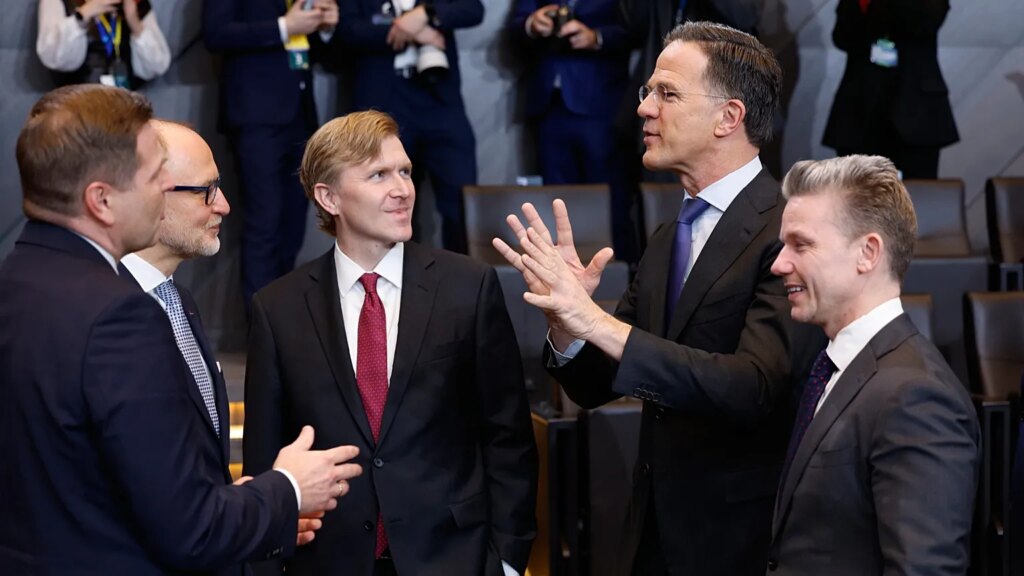
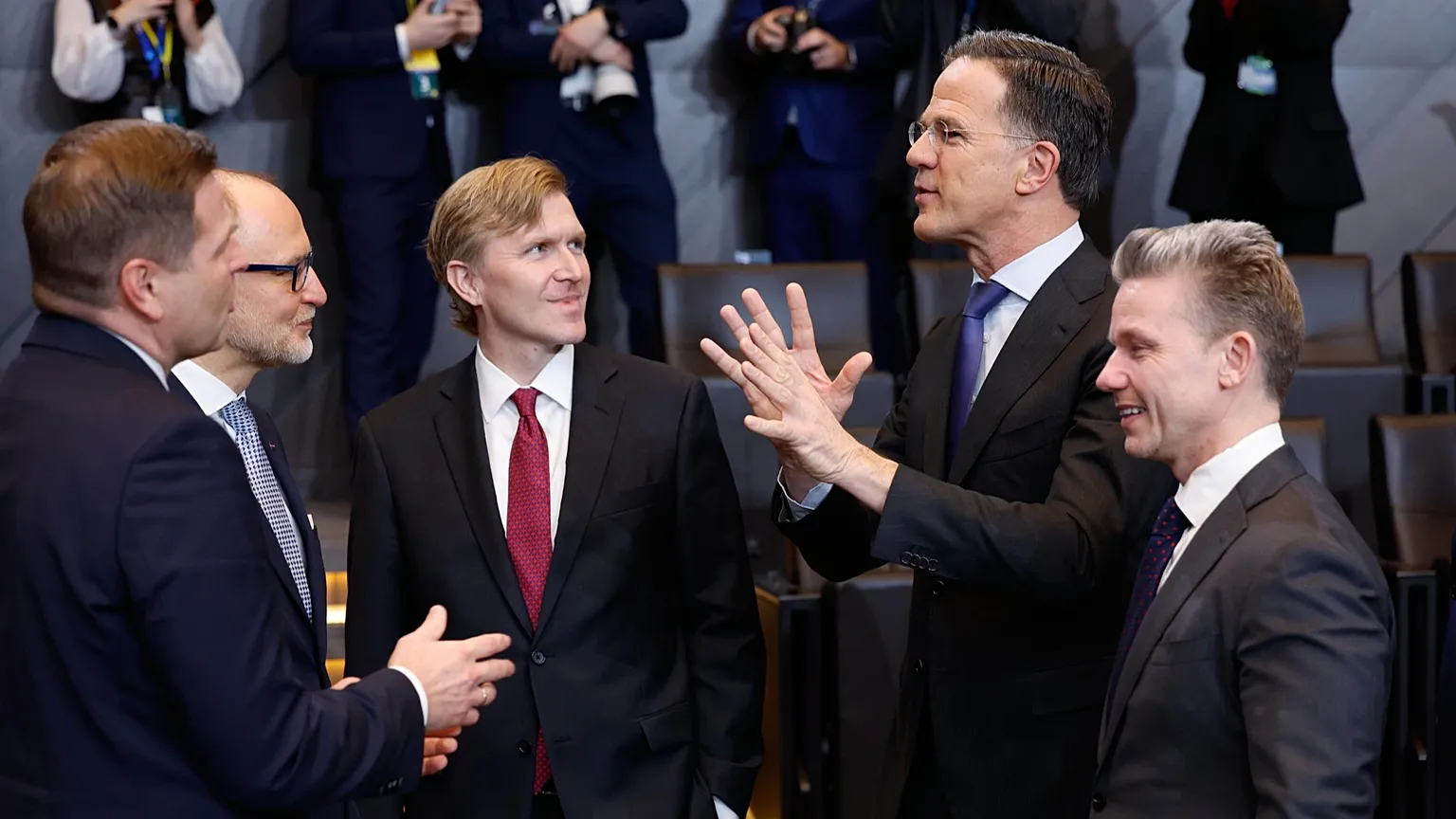
The dispute regarding Greenland last month had raised concerns about the possible collapse of the 70-year-old military alliance, yet allies now seem to be resuming normal operations.
During their meeting on Thursday, NATO defence ministers emphasized that supporting Ukraine remains the highest priority after weeks of discussions about Arctic security, which concluded with the introduction of a new alliance operation in the High North.
 ADVERTISEMENT
  ADVERTISEMENT
At the defence ministerial in Brussels, the ministers broadly praised the launch of the Arctic Sentry enhanced vigilance activity – which Secretary General Mark Rutte revealed the previous day – aimed at strengthening NATO’s operations in the High North.
This new multi-domain initiative will consolidate the efforts of the 32 allied countries active in the area into a unified operational framework. It incorporates Denmark’s Arctic Endurance, a sequence of exercises across multiple domains to improve allied operational capability in the Arctic, alongside Norway’s upcoming Cold Response exercise, where troops from various alliance members have already begun assembling.
This initiative addressed a key request from US President Donald Trump, whose threats to forcibly acquire Greenland, a semi-autonomous territory of NATO ally Denmark, had jeopardized the alliance’s cohesion.
Ministers also underscored that despite these developments, Ukraine remains their principal concern, particularly as civilian facilities there have endured heavy Russian bombardment recently, causing widespread electricity and heating outages amid freezing temperatures.
Defending the eastern flank
Þorgerður Katrín Gunnarsdóttir, Iceland’s foreign minister, cautioned against losing focus.
“It is essential that attention on the eastern flank does not diminish,” she stated to journalists at NATO headquarters, characterizing Ukraine’s fight as one for “Europe’s freedom and sovereignty.”
For Reykjavik, there is no contradiction between Arctic Sentry and backing Kyiv; both are seen as concurrent obligations, with a “just and enduring peace” in Ukraine central to the continent’s security.
Similarly, Finland’s defence minister Antti Häkkänen, representing another Arctic nation, urged Western allies to intensify their economic and military pressure on Russia.
«This is a pivotal moment to increase support for Ukraine and demonstrate to (Russian President Vladimir) Putin that the West will not retreat,» he affirmed.
Estonia’s defence minister, representing one of NATO’s staunchest critics of Russia, welcomed Arctic Sentry’s launch but emphasized that it “does not divert attention from Ukraine or the eastern flank.”
Hanno Pevkur, echoing his Finnish colleague, called for heightened pressure on Moscow beyond the battlefield, highlighting the importance of targeting Russia’s economy and society.
New support packages
Germany’s Defence Minister Boris Pistorius highlighted that NATO must “adjust its radar systems in all directions” as Russia pursues confrontations “across different regions worldwide,” including the Arctic, while affirming the ongoing priority on the alliance’s eastern frontier.
Pistorius condemned Russia’s attacks on Ukraine as “terrorism against civilians” and requested an urgent escalation in assistance.
The previous day, speaking at a meeting of European Union defence ministers, Pistorius indicated Berlin’s intention to further utilize the Prioritised Ukraine Requirements List (PURL) to finance air defence systems for Ukraine.
Through PURL, European allies procure US-made weaponry for Ukraine. This mechanism was initiated last summer after Washington halted all direct US arms donations to Ukraine.
Sweden also announced plans to assemble a third PURL package, with specific details expected after Thursday’s Ukraine Defence Contact Group (UDCG) meeting. Its initial two packages contributed over $325 million (€273.5 million).
The UK, which co-leads the 50-nation UDCG, declared an additional £500 million (€574 million) support boost for Ukraine, including £150 million (€172 million) allocated via PURL to purchase US air defence interceptors. The remainder will fund 1,000 UK-made lightweight multirole missiles.
Meanwhile, Rutte aimed to balance the alliance’s expanding focus with its established commitments, asserting that “NATO is sufficiently strong to manage both.”
“It is vital that every inch of our territory is defended,” he noted, mentioning that several allies are Arctic nations, including the US.
Elbridge Colby, the US Under Secretary of War attending the NATO meeting in Brussels on behalf of Secretary of Defence Pete Hegseth, did not reference Ukraine or the eastern flank during his brief media remarks.
The article was updated to correct Þorgerður Katrín Gunnarsdóttir’s position; she is Iceland’s foreign minister, not the defence minister.