
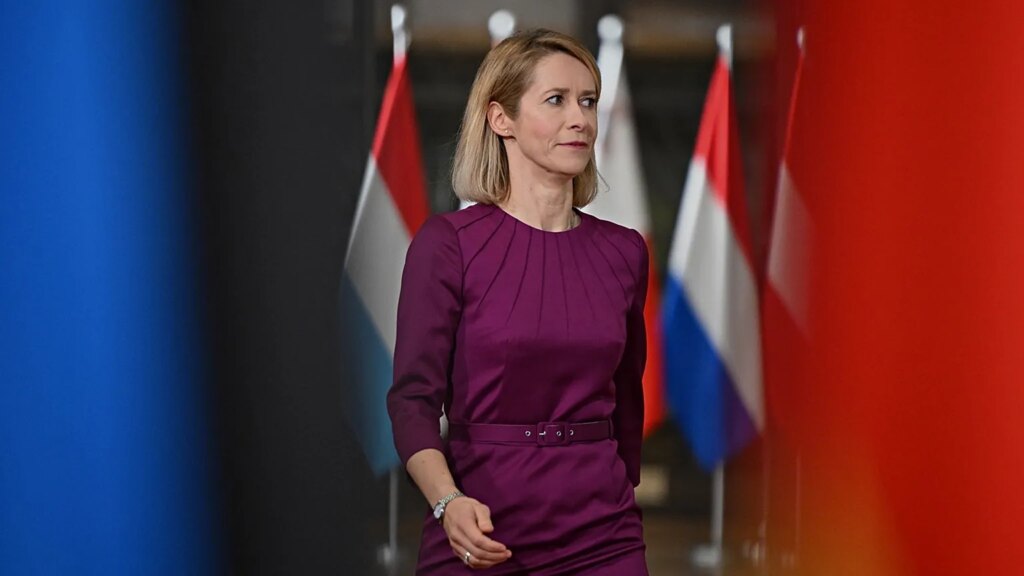
In the wake of the Greenland crisis, the EU’s top diplomat has called on European countries to cease outsourcing their security and defence responsibilities.
The transformation in the Europe-US relationship is described by High Representative Kaja Kallas as «structural, not temporary.» She cautioned against the risks posed by delegating security in an era dominated by «coercive power politics».
Her statements followed US President Donald Trump’s attempt to acquire Greenland from Denmark by imposing punitive tariffs, an unprecedented dispute that nearly dismantled the transatlantic alliance, which has lasted almost 80 years.
The tensions eased following a preliminary agreement on Arctic security, though its details are still being negotiated.
«Arguably, the most significant shift in the foundational realignment is happening across the Atlantic: a reevaluation shaking the core of the transatlantic relationship,» Kallas stated during the European Defence Agency’s annual conference on Wednesday morning.
«To be clear: strong transatlantic links are desired. The US will continue as Europe’s partner and ally. However, Europe must adjust to new circumstances. It is no longer the central point of gravity for Washington.»
«This change has been unfolding for some time,» she noted, referencing prior US administrations. «It is structural, not temporary. This necessitates Europe stepping up. History shows no great power has outsourced its survival and endured.»
In her address, Kallas painted a somber picture of the current global situation.
She identified Russia as a «significant security threat», China as a «long-term challenge», and the Middle East as a «highly unpredictable» zone.
These shifts, combined with Trump’s uncompromising foreign policy, have placed «serious strain on the international norms, rules, and responsible institutions developed over 80 years,» Kallas explained.
«The risk of a full-scale return to coercive power politics, spheres of influence, and a might-makes-right world is very real,» she warned.
The High Representative then urged European states to «recognize that this tectonic change is permanent and respond with urgency».
Following Trump’s reelection, the European Union initiated several multi-billion euro projects aiming to swiftly increase defence budgets, support the domestic defence industry, and reduce heavy dependence on US-manufactured arms.
The EU has targeted 2030 as the collective deadline to reach «full defence preparedness» to deter a possible Russian aggression against a member state.
This week, NATO Secretary General Mark Rutte dismissed these efforts, telling Europeans to «keep on dreaming» about achieving security and defence independence. His remarks triggered criticism in Brussels and Paris.
Kallas did not mention Rutte’s controversial comments in her speech. Instead, she advocated for enhanced coordination and synergy between the EU and NATO, which share 23 common members, to secure more equitable burden-sharing among allies.
«As the US directs its attention beyond Europe, NATO needs to become more European to preserve its strength,» she concluded. «Europe must act for this to happen.»