
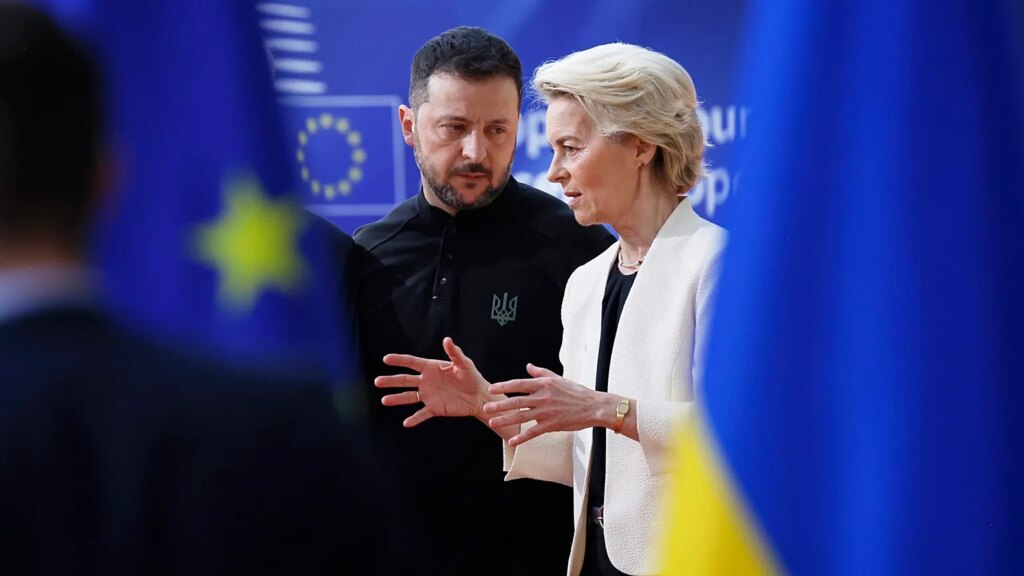
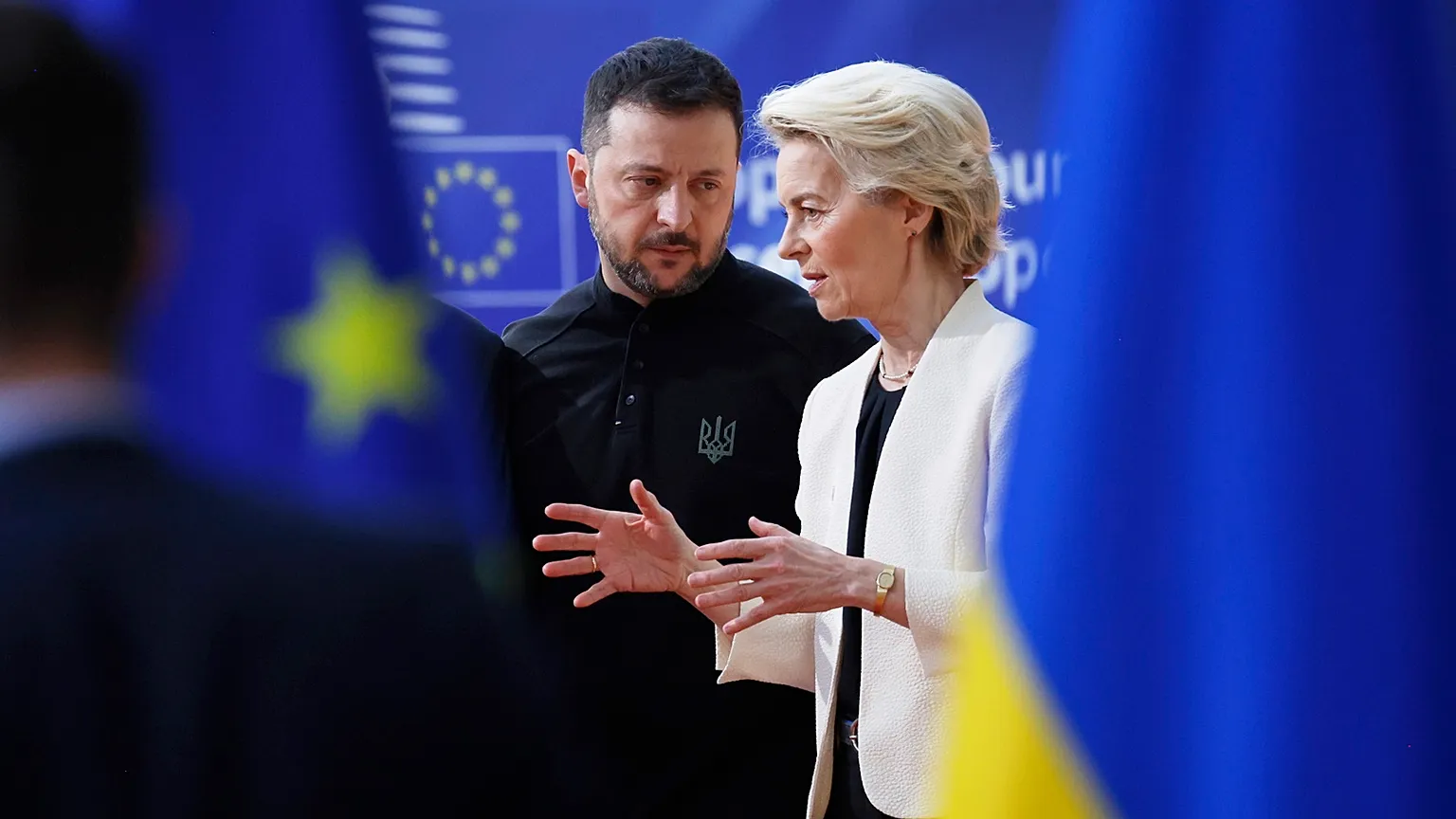
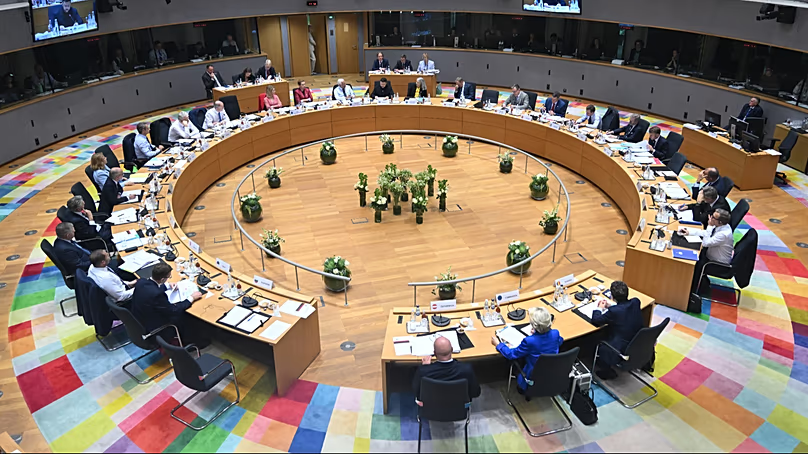
After an indecisive summit, EU leaders tasked the European Commission with examining «options» to address Ukraine’s financial and military requirements for the coming year and 2027. What might those options entail?
The urgency grows for the European Union to devise a strategy to sustain Ukraine’s financial and defense needs before foreign aid, already heavily reduced due to the Trump administration’s withdrawal, completely dries up.
The stakes couldn’t be more critical: President Volodymyr Zelenskyy emphasized that funding will be essential «from the very start» of next year.
«I’m not sure if it’s feasible. Not everything rests on our shoulders,» Zelenskyy admitted.
Last week, Belgium halted a pioneering initiative aiming to capitalize on frozen assets of the Russian Central Bank in order to issue a €140 billion loan to Kyiv. As the main custodian of these assets, Belgium is concerned it might stand alone against Moscow’s reactions and insists on ironclad guarantees ensuring full solidarity among member states.
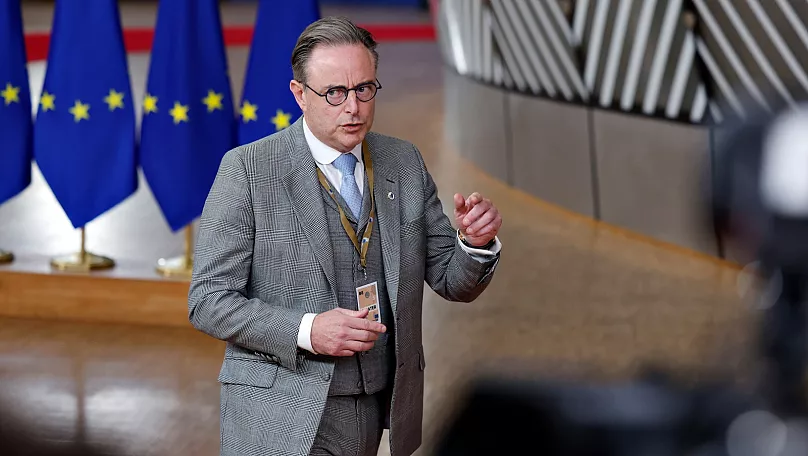
Though the concept of a reparations loan has received broad support from most capitals, doubts remain whether the EU can persuade Belgian Prime Minister Bart De Wever before leaders reconvene in December for a decisive summit.
The European Commission plans to release an options paper in the near future, outlining potential alternatives to the reparations loan, ranked from the most to the least favorable.
Here is what the eagerly awaited document might (or might not) contain.
The proposed reparations loan
Despite numerous concerns raised by Belgium, the Commission appears ready to maintain its initial plan: the reparations loan.
In this tentative framework, Euroclear—a Central Securities Depository based in Brussels—would transfer the frozen Russian assets to the Commission. The Commission would then utilize these funds to issue the reparations loan to Ukraine, amounting to €140 billion, to be released gradually and contingent on certain conditions.
Ukraine would only be obligated to repay the loan once Russia agrees to compensate for the inflicted damage. Afterwards, the Commission would reimburse Euroclear, which in turn would repay Russia, completing the cycle and theoretically avoiding outright confiscation.
Earlier this week, Ursula von der Leyen acknowledged that the plan is «complex» but maintained that it is «legally firm» and that all unresolved issues can be addressed.
Privately, officials within the Commission believe that the fragile condition of national budgets will ultimately serve as the strongest argument supporting this bold solution.
«For me, there is no alternative to the reparations loan,» stated Danish Prime Minister Mette Frederiksen, standing alongside von der Leyen.
«It remains the only viable path, and I appreciate the idea that Russia should bear responsibility for the harm they have caused in Ukraine.»
A broader reparations loan
One frequent critique from Belgium highlights that the Commission’s scheme solely relies on the assets deposited at Euroclear, approximately €185 billion. (The EU must reserve €45 billion to maintain an existing G7 credit line secured by surplus profits, which would otherwise be discontinued.)
Yet, over the past three years, the Commission has publicly estimated that frozen Russian Central Bank assets throughout the EU total around €210 billion.
This suggests that near €25 billion remain unaccounted for.
«The largest portion is in Belgium, but assets are distributed elsewhere,” De Wever remarked following the indecisive summit. “This point is rarely discussed.»
So far, the Commission has declined to reveal the whereabouts of these other assets.
A recent European Parliament research report indicates France holds about €19 billion—consistent with the €22.8 billion noted at the outset of the full-scale invasion—and Luxembourg possesses between €10 billion and €20 billion.
Initially, both countries also voiced concerns about the reparations loan concept.
In a joint statement to Euronews, Luxembourg’s finance and foreign ministers provided a markedly lower figure: “Currently immobilised Central Bank of Russia assets in Luxembourg are under €10,000,» they asserted.
The Commission could seek to identify all remaining assets within EU borders and incorporate them into its plan, potentially addressing one of Belgium’s main objections. However, if these assets reside in private accounts, banking secrecy rules could hinder transparency.
Even combined, these sums would still be considerably less than those held in Belgium, which remains the primary focus of the proposal.
The UK, Canada, and Japan also control parts of the Russian sovereign assets, but as they fall outside EU jurisdiction, the Commission cannot include them.
Joint borrowing without asset backing
If Belgium maintains its opposition, the Commission’s loan plan risks collapse, forcing alternative funding sources. One avenue is tapping financial markets.
The Commission might issue new debt collectively for member states to support fresh loans to Ukraine. This was the approach in early war years, establishing Macro-Financial Assistance (MFA) programs, which Kyiv will eventually have to repay.
Nevertheless, saddling an invaded nation facing immense reconstruction costs with additional repayable debt might be counterproductive.
Alternatively, the Commission could issue joint bonds to provide grants—effectively donations. In such a case, member states themselves bear the financial burden, a scenario difficult to accept for many fiscally constrained governments.
«If Europe chooses to create money, it can. This equates to debt,» said De Wever. «Of course, this remains a delicate issue.»
Individual bilateral deals
If EU-level measures fail to advance, direct country-to-country agreements might represent an alternate route, though such arrangements are not unprecedented.
Since the onset of the full-scale invasion, member states have delivered aid to Ukraine primarily on a bilateral basis. This approach circumvented Hungary’s veto on military assistance, but also led to significant disparities among capitals.
According to the Kiel Institute, Germany (€17.7 billion), Denmark (€9.2 billion), the Netherlands (€8 billion), and Sweden (€7.1 billion) lead in supplying weapons and ammunition. Meanwhile, countries like Italy and Spain provide substantially less despite their larger economies.
This model could continue supporting Ukraine’s financial and military requirements in the future. The Commission might serve as coordinator to ensure alignment across various support channels.
However, such a method carries the risk of political fluctuations; new governments could decide to reduce or halt aid, pressuring other members to compensate.
For this reason, the Commission favors an EU-level solution that offers protection against political instability. This rationale underpinned the 2024 creation of the Ukraine Facility, a dedicated budget instrument totalling €50 billion.
Importantly, the Facility now has only €18 billion remaining—far short of the roughly €60 billion external aid Kyiv’s budget will require for 2026-2027.
A provisional loan
Though December’s summit is expected to provide decisive guidance, Belgium or another member state might request extra time to deliberate options. Asked by Euronews if December was the «definitive deadline» after last week’s meeting, Ursula von der Leyen refrained from committing to a fixed date.
Should no agreement be reached and the issue extend into next year, the EU might adopt an interim measure: a smaller loan addressing Ukraine’s most urgent six-month needs.
This bridge loan would act as a temporary financial measure while sovereign asset discussions continue at top levels. It might encounter less resistance from governments concerned about taxpayer reactions, but ultimately delays a comprehensive solution.
In the end, EU leaders will face a critical decision regarding what constitutes an unprecedented financial operation.