
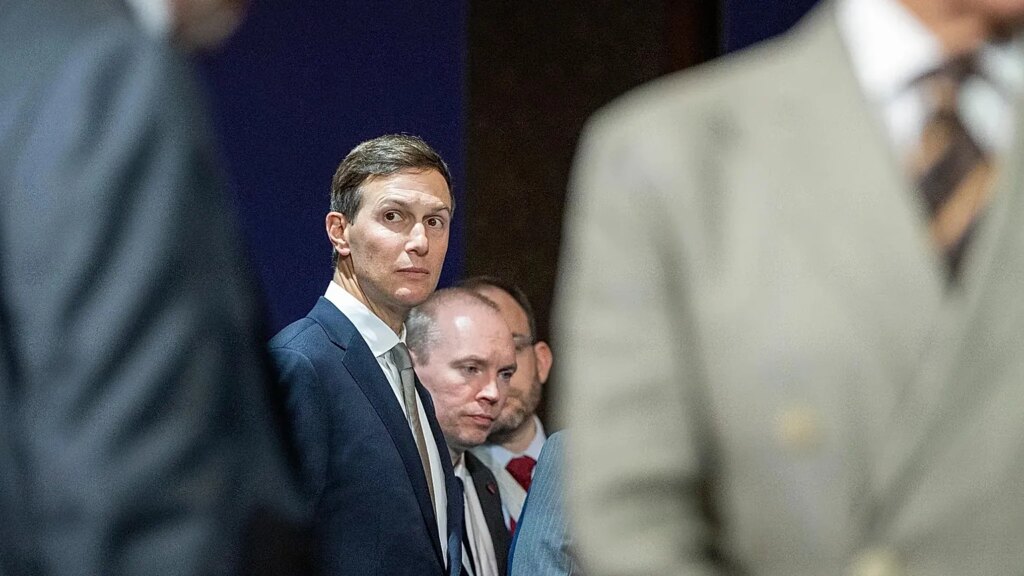
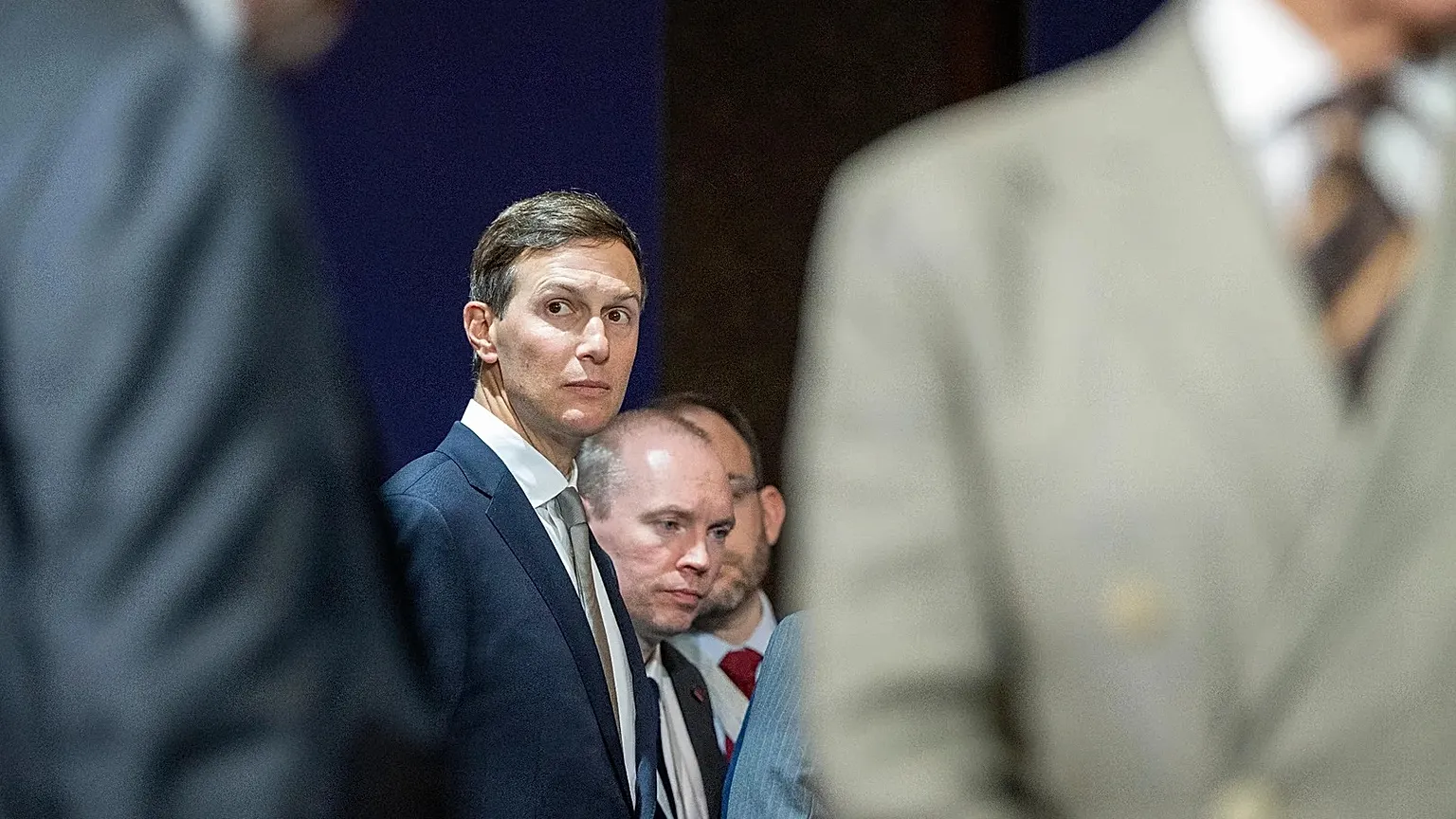
Trump’s son-in-law revealed a new framework for aid distribution in Gaza, diverging from United Nations protocols, sources familiar with a confidential Brussels meeting told Euronews.
Jared Kushner, the son-in-law of US President Donald Trump, proposed a comprehensive reform of financial assistance for Gaza during a private meeting with European and Arab officials, coinciding with the launch of nearly €900 million in recovery funds for the Strip, according to information obtained by Euronews.
 ADVERTISEMENT
  ADVERTISEMENT
Speaking via video call, Kushner criticized previous Gaza aid programs as being “meticulously crafted step by step by NGOs and terrorists,” advocating for a fundamental change in strategy to “reverse the situation,” sources close to the private discussions shared with Euronews.
Although he refrained from explicitly naming the UN Relief and Works Agency for Palestine Refugees (UNRWA), his comments suggested a push to marginalize the organisation—a stance that may clash with the EU, the agency’s largest financial contributor.
Despite lacking a formal cabinet role, Kushner has become an influential figure in efforts to secure a significant international funding deal for Gaza. In addition to serving as Trump’s envoy, he sits on the Board of Peace—a controversial panel led by the US president tasked with overseeing Gaza’s reconstruction.
Kushner is married to Ivanka Trump, the president’s daughter.
His participation in Monday’s meeting reportedly carried considerable influence, attributed to his direct connections with Israel, according to multiple EU sources.
“Change is like heaven: everyone wishes to reach it, but no one wants to pay the price,” Kushner reportedly said at the conference—which also included representatives from Arab countries—characterizing Gaza’s situation as “a never-ending, unchecked burden” where living standards remain stagnant and donors merely “apply superficial remedies.”
Kushner explicitly linked the current humanitarian aid mechanisms to the indirect funding of Hamas, asserting that a steady stream of resources has been diverted to Hamas’s coffers, which it allegedly used to acquire weapons, construct tunnels, and develop rockets. While Israel accuses UNRWA of ties to terrorist organizations, the agency denies misappropriating any aid.
Disarmament of Hamas constituted the core message of Kushner’s address. He emphasized that successful reconstruction is impossible if armed factions maintain their military power, stressing the principle of “one government with one gun.”
According to sources, Kushner argued that Gaza’s rebuilding efforts are doomed to fail unless Hamas is demilitarized. He also seemingly criticized the conference participants in a veiled manner, suggesting the ultimate aim should be to eliminate the need for future international donor meetings on Gaza.
Nonetheless, diplomats familiar with the discussions described Kushner’s overall tone as conciliatory, highlighting collaboration with the EU and regional partners.
He praised Arab nations for their expertise in rapidly developing urban centers for millions of inhabitants, positioning them as key contributors to redefining Gaza’s future for its population of over two million, while also acknowledging Egypt and Turkey.
Kushner’s invitation to the conference came from EU Commissioner for the Mediterranean Dubravka Šuica, who has devoted substantial diplomatic effort to building relations with him since the inaugural and only Board of Peace meeting in Washington last February.
Her attendance took place amid criticism from certain EU member states advocating that the UN, rather than the Board of Peace, should lead the negotiations.
“Only a collective initiative can achieve Gaza’s reconstruction,” Šuica stated after the meeting, without directly commenting on Kushner’s role or his statements during the private session.