
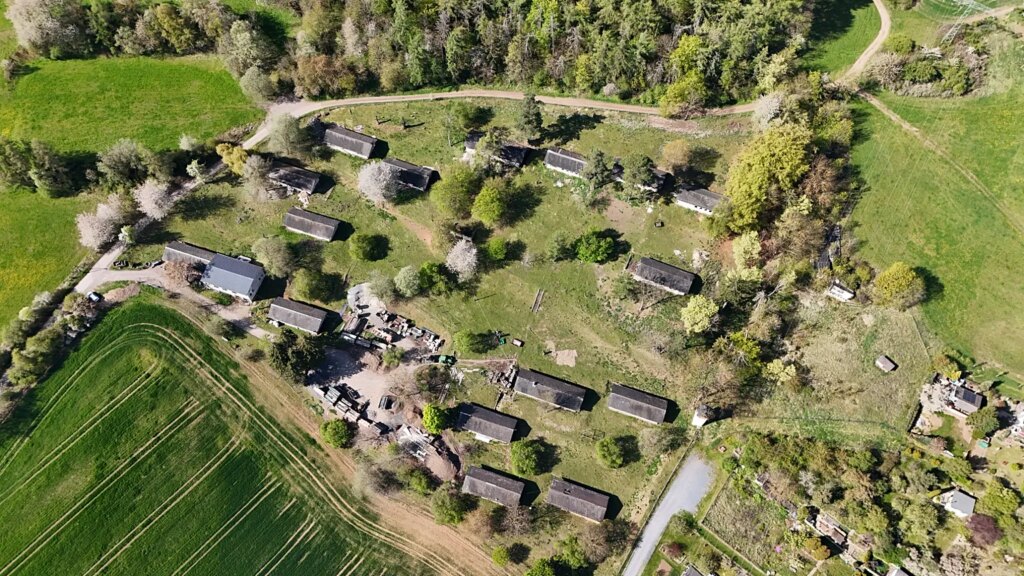
In Thuringia, Germany, a whole mini-village is listed for sale at €390,000, comprising 15 buildings, yet this opportunity carries a significant condition.
For €390,000, purchasing an owner-occupied flat in a major German city would secure only a few square metres. In contrast, in Kamsdorf, situated in the Thuringian district of Saalfeld-Rudolstadt, the same sum can acquire an entire small village.
 ADVERTISEMENT
  ADVERTISEMENT
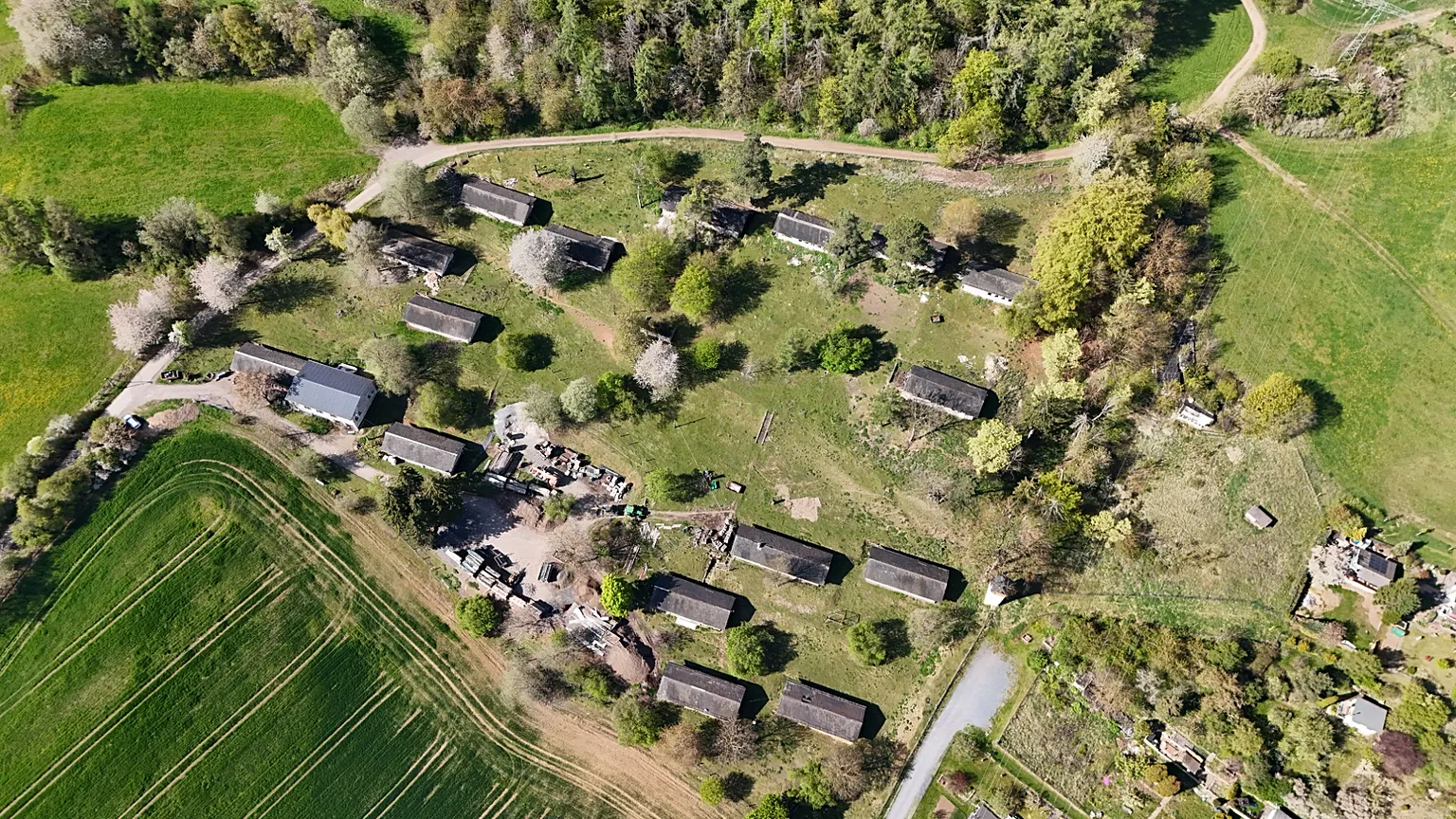
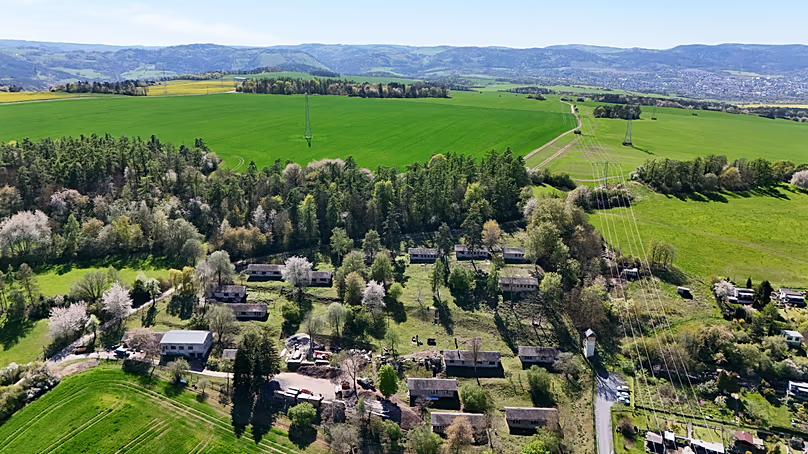
The property features 15 single-storey buildings, each approximately 100 square metres in size, alongside a main central building that includes a dining hall exceeding 300 square metres. The entire area spans about 24,000 square metres, set amidst meadows, forests, and mature trees, only several hundred metres from the Hohenwarte reservoir.
This complex is listed on popular real estate platforms. According to the advertisement, the seller seeks «not just a buyer for a plot of land, but someone with a vision who recognises the potential to develop something exceptional here».
The structures have been stripped back to their shells; electricity and mains water are connected, while wastewater disposal currently relies on a cesspit system.
From GDR holiday camp to planning conflict
The property’s origins date back to the era of the German Democratic Republic. As owner Franz Eberitsch shared with Euronews, it served from 1954 until 1990, initially as dormitories for apprentices at the Thuringian steelworks, and later converted into a holiday and recreational facility.
Following the German reunification, the site remained unused for a decade. Starting from 2000, Eberitsch indicates, individual houses resumed residential use: «Residents were officially registered at this address, and to my knowledge, state benefits such as housing allowances were even granted here.» This led to the assumption that residential use was legally recognized.
What is the catch?
According to Eberitsch’s statement, he purchased the property in 2014 after returning to Germany with his family from New Zealand. His initial idea was «to establish a place where people could live close to nature, engage in community, and collaboratively build something meaningful».
However, these aspirations have not come to fruition. The issue lies within planning law: in terms of zoning, the plot is classified as «Außenbereich»—an area outside the built-up zone—even though it is only about 200 metres from the village boundary. Since the complex was unoccupied between 1990 and 2000, authorities consider its original grandfathered status void.
Eberitsch confirms: «When attempts were made to undertake extensive renovations and further development, the planning status was re-evaluated. We were informed that the earlier registrations did not alter the planning classification, and that the grandfathering expired due to the prolonged interruption in usage.»
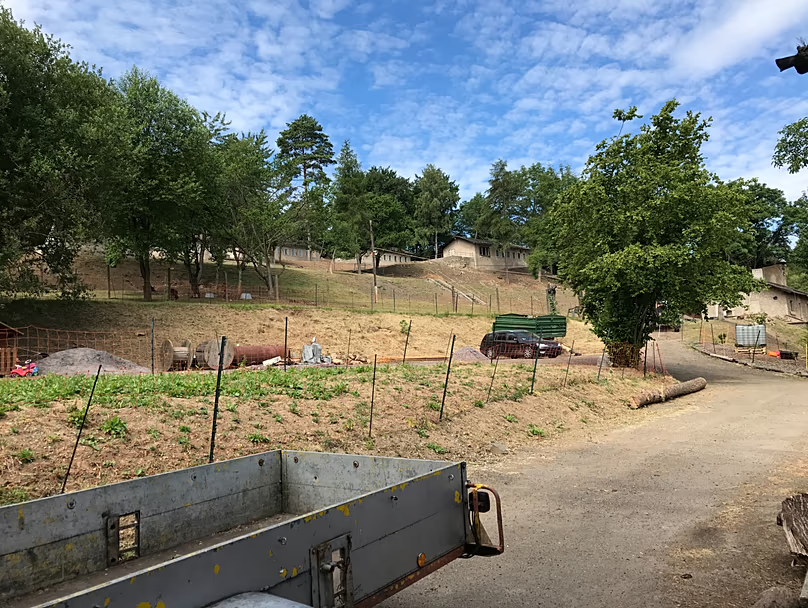
Eberitsch notes that authorities currently view permanent residential occupancy with caution, considering it «could represent a so-called scattered settlement (Splittersiedlung) within the outer zone».
Legal use would necessitate a new local zoning plan or another form of planning approval. Germany’s building and planning laws are often criticized for their bureaucratic complexity.
Between health village and scattered settlement
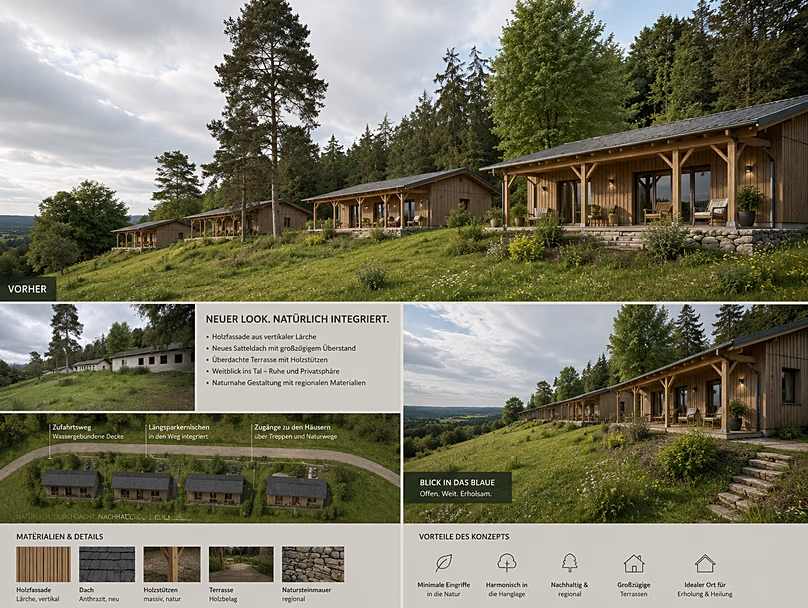
Despite ongoing permit issues, Eberitsch identifies substantial potential in the site. He envisions a comprehensive health and wellness village, where various therapy and prevention services could be centralized—such as separate houses dedicated to physiotherapy, osteopathy, naturopathy, or yoga—combined with accommodation and a communal building for seminars and shared dining.
The listing openly conveys commercial intentions, mentioning that all construction, finishing, and landscaping work could be «carried out directly by the owner’s associated construction company».
A call to politicians and Elon Musk
For Eberitsch, this case highlights a broader issue within Germany. He questions «whether, considering the housing shortage, the demand for sustainable reuse of existing buildings, and the need for new concepts of living and housing, the legal framework shouldn’t be adapted more to facilitate the reactivation of existing structures». His conclusion is clear: «Here is a complete small village with existing buildings and infrastructure. From my perspective, it should be simpler, under clear legal conditions, to bring such complexes back into productive use.»
Eberitsch would prefer to implement the project himself but acknowledges a lack of seed capital. His idea is unconventional, introducing an unexpected figure: the tech billionaire Elon Musk. «Perhaps it truly requires someone like Elon Musk. […] Should Elon Musk actually read this article, I would be grateful for an initial investment of about one million euros.»
In exchange, he even offers the Tesla CEO a retreat on his alpaca farm nearby in Unterwellenborn, «in case Elon ever needs to ground himself instead of feeling weightless,» he told Euronews.
Bizarre property listings across Europe
The village in Thuringia represents the latest unusual real estate offering. Recently, in May, an abandoned Baltic Sea island was sold for €60,000, also a relic from East Germany whose main appeal lies in its isolation.
Elsewhere, an off-grid cabin on a Scottish island attracted attention with a price of €405,000, and a Greek private island went up for auction with a starting price of €247,000. A clear pattern emerges: low asking prices paired with remote locations, uncertain usage rights, or expansive refurbishment requirements—the real value of these properties lies chiefly in their as-yet untapped potential.
Whether the former youth village in Thuringia will truly become a «village of the future» depends not only on the buyer’s vision but also on governmental authorities and Germany’s willingness to adapt in managing unused real estate stock.