
Cyprus considers the EU’s appointment of Raffaele Fitto as special representative for the divided Mediterranean territory to be a step supporting reunification, yet Turkish Cypriot leaders have strongly criticized it, calling the decision biased and a hindrance to improving EU-Turkey relations.
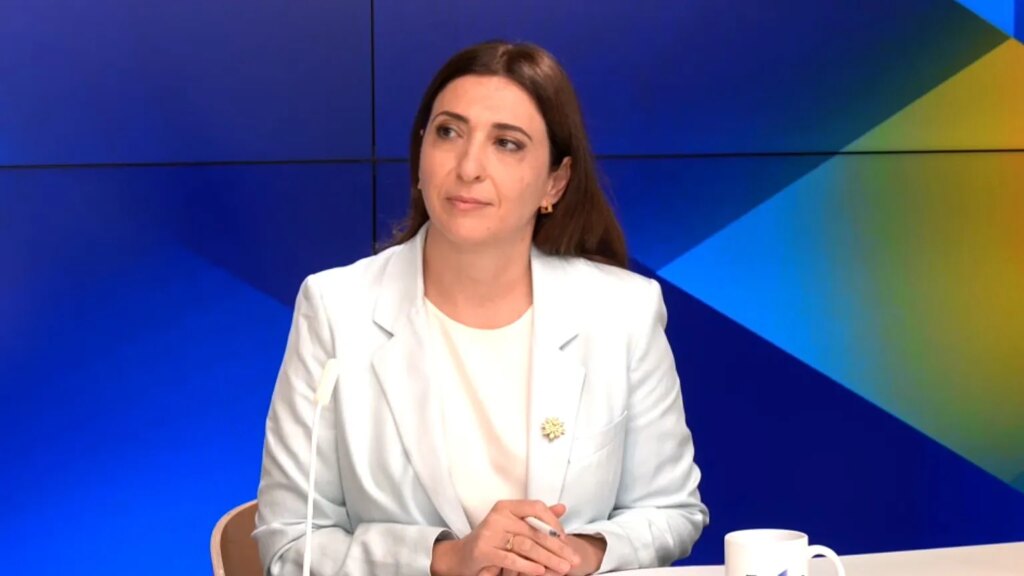
Marilena Raouna, Cyprus’s Deputy Minister for European Affairs, has expressed support for the nomination of European Commission Executive Vice-President Raffaele Fitto as the EU Commission’s special representative for Cyprus. She characterized him as a “political personality” who will back the island’s reunification process.
 ADVERTISEMENT
  ADVERTISEMENT
The administration of the occupied areas, known as the «Turkish Republic of Northern Cyprus» and recognized solely by Turkey, vehemently condemned the appointment on Monday, labeling it as “totally unacceptable.” Raouna, however, dismissed these objections.
“The Cyprus issue is fundamentally a European matter, and achieving reunification in the EU’s only divided member state will have transformative effects not only for Cyprus,” she remarked on Euronews’ flagship morning show, Europe Today. “It also holds the potential to reshape the Eastern Mediterranean region.”
“The intention is not to favor any side but rather to actively support reunification, from which all parties—including every Cypriot and EU-Turkey relations—stand to benefit.”
In an online statement, the occupying authorities claimed that the decision was made without consulting the Turkish Cypriot community, condemning it as a “provocative action” that demonstrates the EU’s “partial position” concerning Cyprus.
“It is clear that the European Union’s approach, which seeks to revive a defunct framework, aligns with the Greek Cypriot side’s policy to uphold the status quo, having rejected all settlement proposals thus far,” the statement added.
Since 1974, Cyprus has remained divided following a Greek-backed coup that led to a Turkish military intervention.
The EU executive announced on Monday Fitto’s appointment, with the objective, according to Commission spokesperson Louise Bogey, of engaging with relevant parties, fostering trust, and preparing for the possibility of resuming reunification talks.
The goal is to establish a “lasting resolution” to the 52-year stalemate under the framework outlined by the UN.
This development occurs amid sensitive EU-Turkey relations, highlighted by a working dinner last week in Ankara between European Commission President Ursula von der Leyen, European Council President António Costa, and Turkish President Recep Tayyip Erdoğan, following the NATO summit.
After the meeting, von der Leyen stated that the partnership between Ankara and Brussels is “more important than ever.”
“The renewed momentum must also be seized to advance a resolution to the Cyprus issue through the UN-led process,” she wrote on X.
The gathering of the three leaders was intended to reinforce ties between Brussels and Ankara and followed a broader diplomatic effort by senior EU officials, spearheaded by the EU’s foreign policy chief Kaja Kallas.
Turkey has been a candidate for EU membership since 1999, though its accession process has been suspended since 2018 due to concerns over rule of law and democratic standards backsliding.