
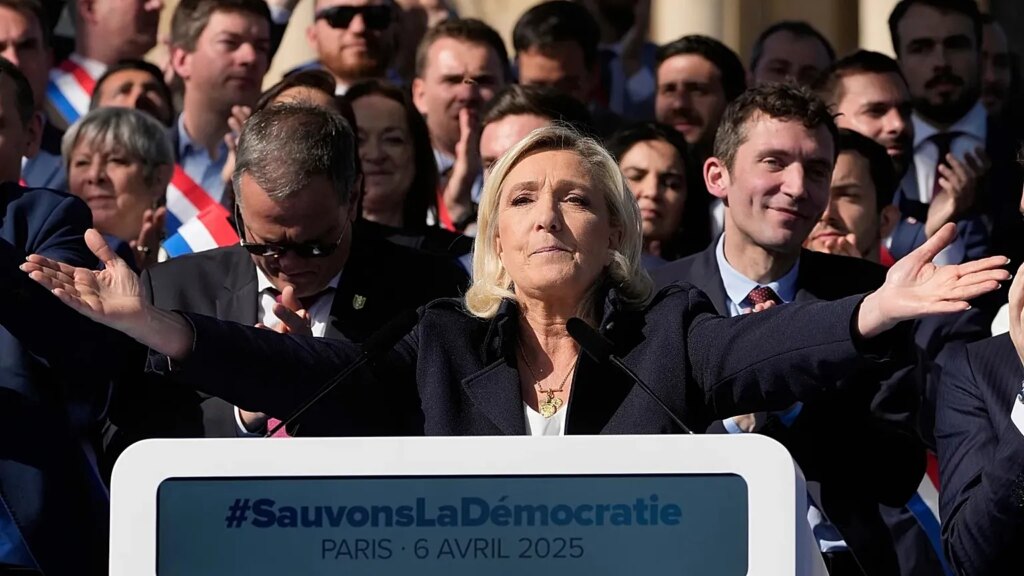
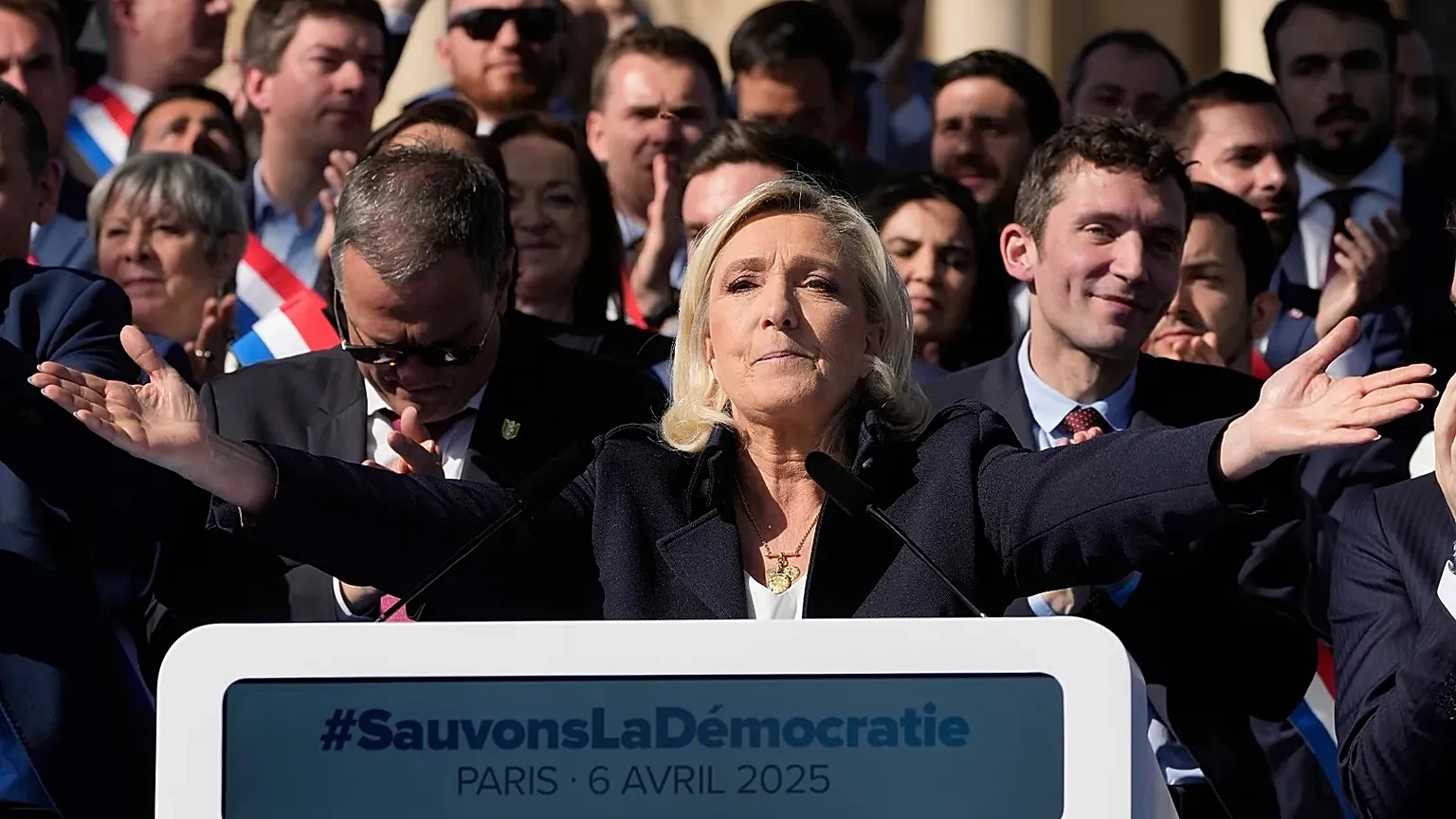
The prevailing sentiment within the European Parliament is that the seasoned far-right figure stands a stronger chance of becoming France’s president compared to her younger successor.
Marine Le Pen’s candidacy for the French presidency represents a challenge for those opposing the National Rally.
 ADVERTISEMENT
  ADVERTISEMENT
Several centrist and left-wing MEPs interviewed by Euronews suggest that the veteran leader of the French far-right is likely to connect more effectively with voters than Jordan Bardella, the young MEP expected by many to succeed her as the National Rally’s candidate if she were disqualified from running.
Following Le Pen’s announcement of her intention to participate in the 2027 French presidential race despite her fraud conviction, while Bardella is seen as a candidate for prime minister, numerous questions arose in France about whether fully passing the baton would have been preferable.
Despite polls indicating Bardella might enjoy wider backing in the initial round of the presidential contest, officials in Brussels remain certain: Le Pen has superior prospects of winning the presidency.
“French voters are seeking stability rather than an experiment with a young candidate; reassurance is their priority,” stated MEP Sandro Gozi of the centrist Democratic Movement to Euronews. He believes Le Pen is better positioned to address voters’ concerns, such as war, energy supply, and the erosion of purchasing power.
Le Pen and Bardella convey differing positions on two key economic topics important to French voters: lowering the legal retirement age to 62 and imposing exceptional taxes on the surplus profits of energy firms. Le Pen consistently adopts the more favored policy.
According to Gozi, Le Pen has centered her career on the narrative of championing the people against the elite, even drawing comparisons to a Socialist agenda. In contrast, Bardella seeks acceptance among the French elite, and his efforts to cultivate such support could risk alienating working-class constituencies.
“His entire approach appears carefully crafted to gain entrance to big industry circles, including his romance with royalty,” Gozi remarked, referencing Bardella’s relationship with Maria Carolina di Borbone delle Due Sicilie, who descends from a business-banking family and royal lineage in Southern Italy.
Against the odds
Le Pen’s personal journey, marked by three unsuccessful bids for the presidency and a legal fight that nearly barred her from contesting in 2027, has crafted an outsider persona that resonates and generates empathy among everyday French citizens.
“Her scars elicit respect,” Gozi added.
The consensus among Parliament members is that Le Pen, dedicated to her fourth run for the presidency, presents a more formidable challenge in the runoff than the relatively inexperienced Bardella.
“She possesses more experience and is prepared for presidential debates, whereas he would struggle beyond rehearsed lines,” highlighted Manon Aubry, leader of the left-wing France Unbowed delegation in the European Parliament.
A Renaissance Party MEP, speaking anonymously, affirmed that Le Pen is indeed the most difficult adversary, particularly because she has learned from earlier missteps, including a harsh debate with current president Emmanuel Macron in 2017.
Le Pen’s experience is also a crucial factor for Socialist MEP Brando Benifei, who dismisses the idea that Bardella would gain an advantage from youth voter support.
“While he may have more followers, she appeals more to the demographic segment that holds greater weight,” he explained to Euronews, noting that young French citizens with immigrant backgrounds would not support the far right regardless of its leader.
“All considered, Le Pen stands as a stronger candidate for National Rally, thus posing a greater challenge for us,” he concluded.