
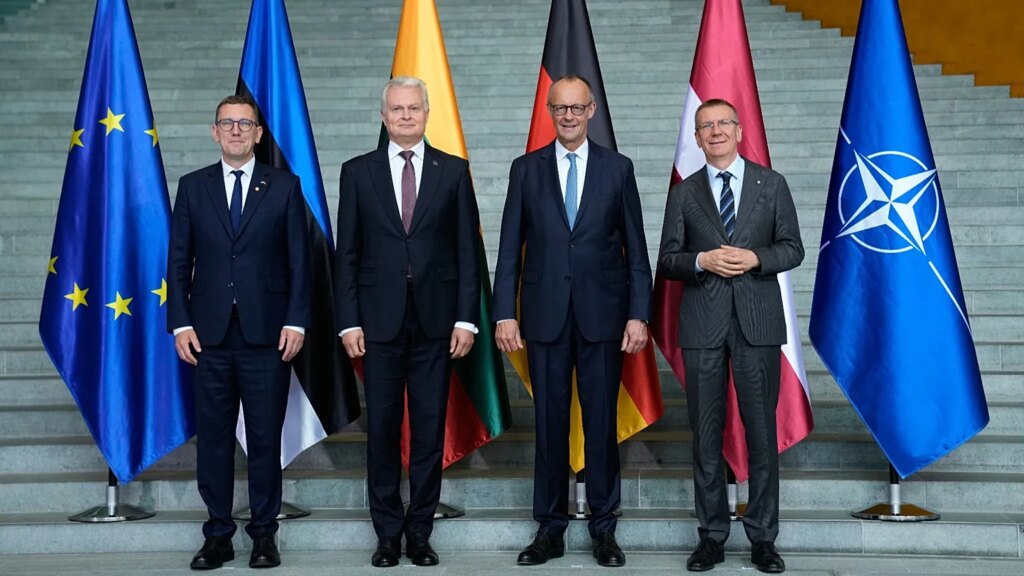
Just days before the NATO summit in Ankara, the German chancellor and Baltic leaders gathered in Berlin to pledge enhanced deterrence against Russia and increased support for Ukraine.
«The security of the Baltic states directly impacts Germany’s security,» Chancellor Friedrich Merz (CDU) remarked as he greeted the leaders from Estonia, Latvia, and Lithuania in Berlin. He referenced a plaque at Vilnius Town Hall stating:
 ADVERTISEMENT
  ADVERTISEMENT
«The security of Lithuania is our security. Defending Vilnius means defending Berlin.» This phrase was taken from a speech he gave during the inauguration of the 45th Armoured Brigade in Lithuania in May of last year.
Preparations for the upcoming NATO summit in Ankara were a central topic. At a joint press event, Merz emphasized that collaboration with Estonia, Latvia, and Lithuania «remains a priority now and beyond the NATO summit.» He stressed that the summit «must succeed» by advancing NATO’s European dimension to maintain its transatlantic character.
Estonian Prime Minister Kristen Michal emphasized that the summit «should prioritize effective outcomes.»
Three main objectives ahead of the NATO summit
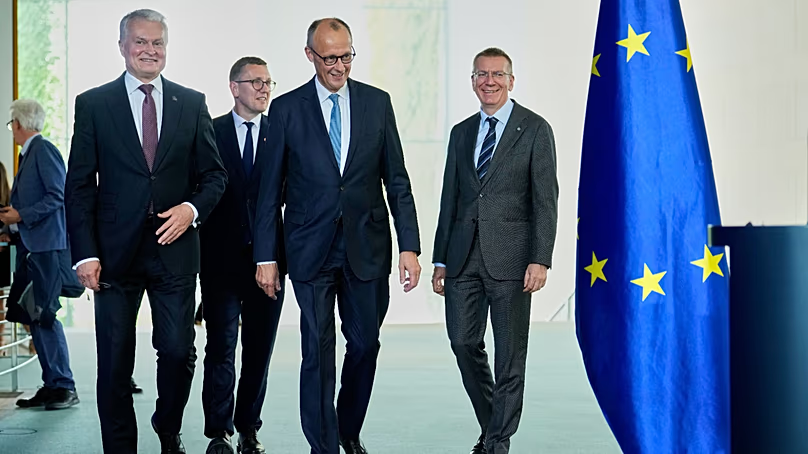
The Latvian president supported this stance, highlighting three key priorities for the summit. «First, while we agreed on 5% defence spending last year in The Hague, the crucial step now is turning this figure into actual capabilities. Often, it’s not just about funding but acquiring appropriate equipment and armaments. Strengthening the defence industry across all NATO member states is essential,» President Edgars Rinkēvičs explained.
«Second,» he continued, «unity within the alliance remains vital despite public and private discussions; the alliance must stand firm behind Article 5 and all its commitments.»
His third priority emphasized ongoing support for Ukraine. «There is hope for a consensus on addressing hybrid threats from Russia and Belarus, along with other provocations,» he added.
‘The Baltic states’ security equates to NATO’s security’
Merz remarked that Germany has drawn lessons from its Baltic allies, who recognized early the necessity of readiness to protect freedom, security, and prosperity.
«The threat is tangible, especially along NATO’s eastern border,» he noted. Merz stated Russia frequently breaches NATO airspace, executes hybrid cyberattacks, and has damaged undersea cables in the Baltic Sea.
«Moscow continuously tests NATO’s resolve and unity. For over four years, the consequences of Russian revisionism have been apparent in Ukraine,» the chancellor said. He noted the Baltic states have «surpassed» the 3.5% defence spending target set at the previous NATO summit in The Hague.
Rinkēvičs warned that failure to meet those targets could force the Baltic states to «pay a higher price» if Russia launches an attack. «Defence spending is a crucial form of deterrence, which we urgently require,» he stated.
Estonian Prime Minister Kristen Michal also stressed translating commitments into capability enhancements. «While Estonia already allocates over 5% of GDP to core defence, and the other Baltic states and Poland do likewise, we must improve cooperation in defence industries and increase joint procurements. This approach accelerates closing capability gaps,» he said.
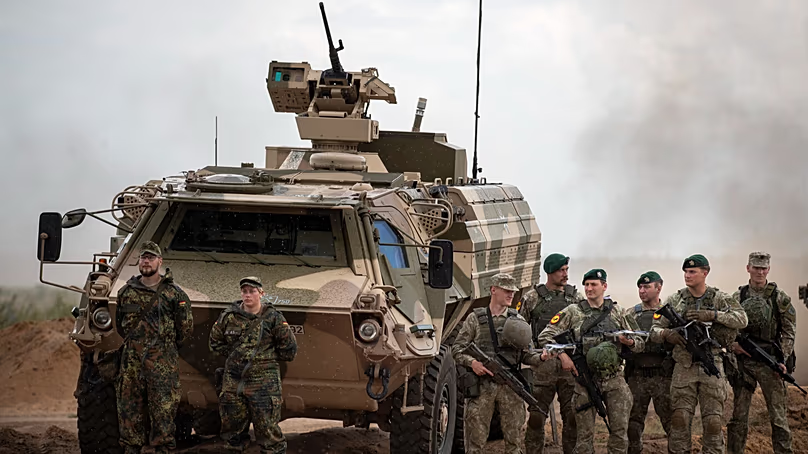
He emphasized that the security of the Baltic states equals «NATO’s security,» explaining that the region «is well acquainted with their neighbour» and «fully grasps the threat.» Highlighting Germany as «one of the closest allies and a main contributor to Baltic security,» Michal pointed out the significance of the German-Dutch Corps, which commands NATO land forces tactically in Estonia and Latvia, alongside Germany’s role in NATO’s Baltic Air Policing mission.
He further stated the EU has the potential to «intensify these initiatives» by enhancing support for military mobility, the defence sector, critical assets, and the eastern border, which constitutes a «shared EU interest.» Lithuanian President Gitanas Nausėda referenced the permanent stationing of Germany’s 45th Armoured Brigade, expected to be fully deployed in Lithuania by 2027, describing this as a «fortification of regional defence.»
«If Lithuanians were asked about German troops in Vilnius or other cities, they would warmly welcome them. This stands as a clear testament to our solidarity and friendship,» Nausėda commented.
‘Europe must take a larger role in its defence’
Nausėda also maintained that Europe should increase its responsibility for its own security. «A stronger Europe, partnered with a robust NATO, must remain our shared strategic aim.» Hence, the Lithuanian president emphasized that the upcoming summit must yield measurable outcomes. He noted Lithuania’s trajectory to allocate nearly 7% of GDP to defence and security this year—»well above the pledge made at the Hague summit.»
Latvian President Edgars Rinkēvičs underscored that any aggression toward the Baltic states signifies a «direct confrontation» with NATO. «Such realities are sometimes overlooked when discussing the security of every ally and the alliance as a whole,» Rinkēvičs stated. Merz relayed that the four leaders also deliberated on enhancing support for Ukraine and reiterated their backing of Kyiv. He added Germany would persist in supporting U.S. initiatives aimed at a sustainable resolution to the war in Ukraine.
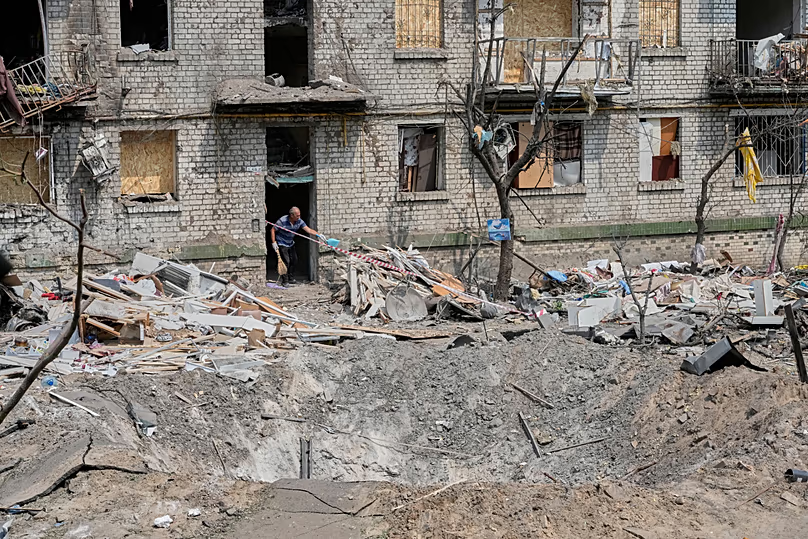
«The Russian threat is taken very seriously, and preparations are underway: we aim to meet the 3.5% defence spending goal set in The Hague by 2029, well ahead of the deadline,» the chancellor affirmed. Alongside NATO targets, Merz highlighted Germany’s assistance to Ukraine, while recognizing that the Baltic states contribute more on a per capita basis.
«Years ago, the Baltic states pledged to allocate 0.25% of their GDP to help Ukraine,» he stated, describing this commitment as «exemplary.» Merz insisted that the war’s end—or at least a ceasefire along current frontlines—depends entirely on Russian President Vladimir Putin’s willingness. «It is up to President Putin to halt this conflict.» He noted the Baltic states would actively participate in efforts to bring Putin to negotiations. The talks also included discussions about the U.S. nuclear umbrella.
Nausėda mentioned an agreement within Lithuania’s parliament, initiated by him, to gradually lift the constitutional prohibition on nuclear weapons and foreign military bases in Lithuania. He explained that this step would allow Lithuania to assume a larger role in NATO’s nuclear deterrence strategy against Russia.
Ukraine’s EU accession prospects
Merz also commented on Ukraine’s journey toward European Union membership, promoting his idea of «associated membership.»
“In my opinion, this is an unprecedented offer; no candidate country has received such terms before. This status would already bring Ukraine closer to the EU today,” Merz stated.
He clarified that this arrangement would not replace full membership but act as a milestone toward it, while acknowledging that formal accession “will still require time.”
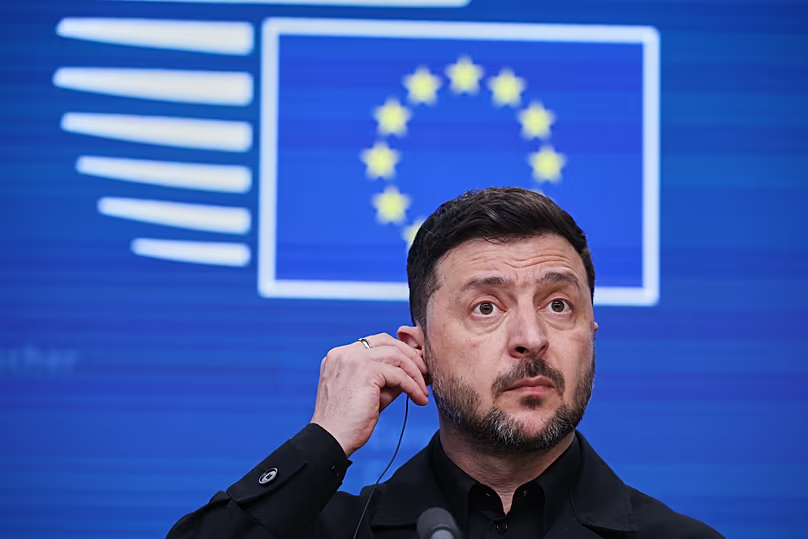
Estonian Prime Minister Kristen Michal also emphasized Ukraine’s European aspirations.
«Achieving a just and enduring peace demands a clear EU accession pathway,» he asserted. «Ukraine has been ready for a long time,» Michal added, urging the EU to open the remaining accession chapters for Kyiv.
He described this move not as a favour to Ukraine but as serving the EU’s own «strategic and economic interests.»