
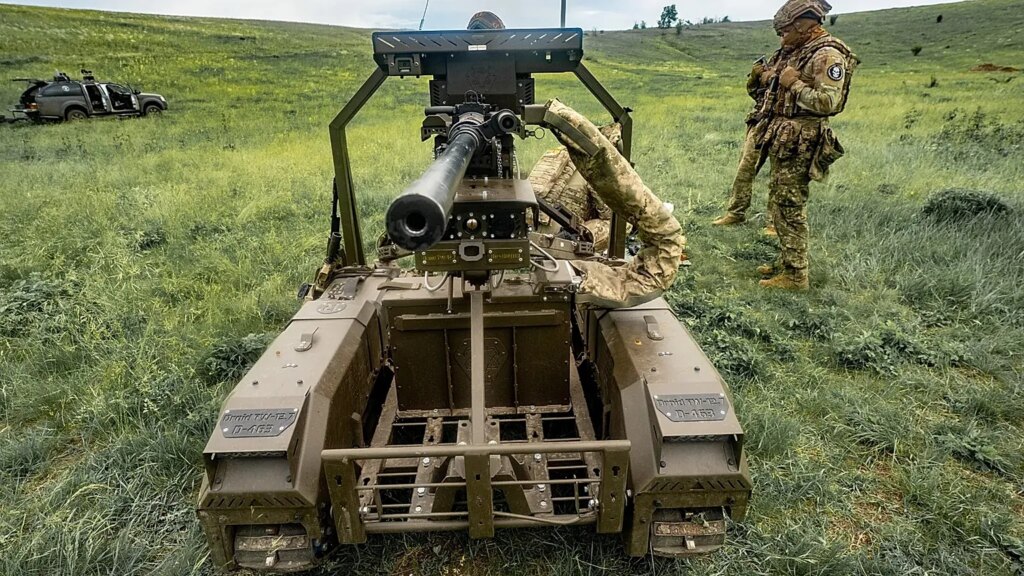
A substantial European aid package could assist Ukraine in safeguarding vital regions more than four years after Russia's full-scale invasion began.
The EU’s €90 billion loan for Ukraine is expected to commence distribution in mid-June, though certain uncertainties surround this financial support.
 ADVERTISEMENT
  ADVERTISEMENT
Up to now, Ukraine has kept the details of the procurement list tightly confidential. It appears that the majority of funds will be allocated to counteract Russian military actions, but specific spending plans and locations remain undisclosed.
Ukrainian President Volodymyr Zelenskyy has indicated that the defence portion of the package will reinforce the Ukrainian armed forces in light of Russia’s ongoing large-scale invasion, now entering its fifth year. Approximately €60 billion is projected to enhance Ukraine’s wartime defences, while the remainder will support the national budget.
The funds will target the manufacture of weapons and acquisition of essential arms, which if not produced domestically, will be sourced from allied countries, Zelenskyy announced in an April statement shared on social media platform X.
As is typical for issues concerning national security, Ukraine’s Ministry of Defence did not provide a response to Euronews’ inquiry regarding the allocation of finances for defence purposes.
During the loan’s formulation, several EU member states expressed reservations, emphasizing that since the funding is European, expenditures should prioritize European capabilities.
Luigi Scazzieri from the EU Institute for Security Studies (ISS) noted that France was among the most vocal opponents, insisting that to expand production within Europe, contracts must benefit European manufacturers. Ultimately, however, the entire agreement was structured to address the interests of the bloc collectively.
“Countries such as Sweden, the Netherlands, Poland, and to an extent Germany advocate for maximum flexibility,” Scazzieri explained. “A balance is always struck among these varying viewpoints.”
So, what middle ground was achieved? Here is the current understanding of Ukraine’s intentions and the challenges ahead.
Norms and requirements
The EU mandates a three-level framework outlining permissible uses for the defence funds.
Primarily, all procured items must originate from Ukraine, Europe, or the EEA/EFTA; if unavailable, Ukraine may purchase from 12 countries partnered with the EU on security matters, including the United Kingdom and Canada.
European Commission spokesperson Balazs Ujvari stated that if these options have been exhausted and a justified need exists to source outside these boundaries, Ukraine can lawfully acquire systems from other nations.
Two EU diplomatic officials speaking with Euronews confirmed expectations that purchases will favor European products whenever feasible, as stipulated in the loan policy.
“European products are the default unless the acquisition falls under agreed exceptions, such as product unavailability in the EU or lengthy delivery timelines,” one official clarified. “The key question is which specific country.”
Another source noted that in urgent cases lacking European equivalents, Ukraine can approach other vendors. “This urgency must be genuine, and the supplies need to be delivered promptly,” they emphasized.
A senior EU representative confirmed the institutional consensus that the funds should primarily boost Europe’s defence sector—an area historically weakened by insufficient investment and persistent fragmentation.
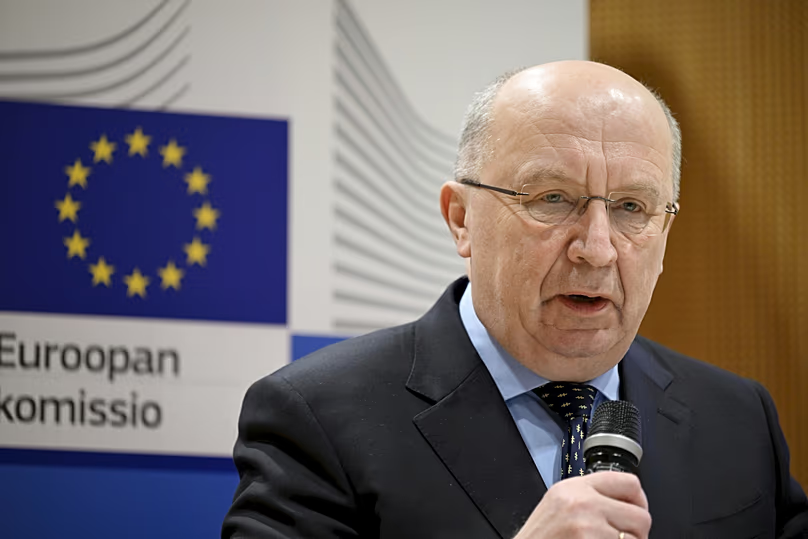
With intelligence agencies warning that Europe might face a Russian attack against a member state by decade’s end, pressure is mounting to inject funds into Europe’s defence industry to counter such threats. Concurrently, the sector faces a pressing demand for greater agility.
The EU’s inaugural Commissioner for Defence, Andrius Kubilius, has consistently stated the EU must focus on producing “adequate” weapons rather than “high-end” models.
This means manufacturing cost-effective and scalable arms for Ukraine’s needs, instead of refining complex systems over many years—a process that risks them becoming outdated.
European military equipment production trails significantly behind Ukraine’s, particularly in unmanned aerial vehicles, likely explaining why the initial tranche will focus on acquiring Ukrainian drones.
Allocation of funds
The initial €5.9 billion defence funding tranche, approved by the Commission, is anticipated to be released later this month. Oscar Luigi Guccione from the German Marshall Fund estimates this could purchase roughly 3 million drones at an average unit price of €2,000.
“Ukraine aims to allocate most of these funds domestically,” he remarked.
An EU insider mentioned that exceptions exist for the March 12 order, noting “some drone components originate from outside the EU and Ukraine.”
Scazzieri suggested these parts are likely Chinese-made microchips, crucial components also used in Russian Shahed drones.
European Commission spokesperson Balazs Ujvari confirmed the March 12 order included a derogation request “which was approved.” However, due to information sensitivity, further details were withheld.
A source involved in the discussions indicated the second tranche will probably fund ammunition, missiles, and air defence systems, though the final amount remains undecided.
Whether these purchases will be European-made is uncertain. A senior EU official acknowledged mutual interest in keeping acquisitions European, but noted that Europe’s defence industry currently lacks capacity to fulfill Ukraine’s needs.
One example is Europe’s counterpart to the US-made Patriot missile system: the Franco-Italian SAMP/T air defence system.
As US involvement escalates in conflicts in Iran and Lebanon, Patriot missile reserves are diminishing. Nevertheless, the Eurosam consortium—a collaboration between MBDA and Thales—has been manufacturing a long-range system designed to protect against aircraft, cruise missiles, and tactical ballistic missiles. Denmark announced last year it would acquire two systems to integrate into its ground-based air defence network.
“The systems were chosen based on a comprehensive evaluation of operational, financial, and strategic factors,” the Danish Defence Ministry stated at the time.
This decision followed months of threats by US President Donald Trump to claim Danish territory, specifically Greenland, and was viewed as a significant setback for Washington.
Guntram Wolff from the European Policy Centre highlighted that the shortage of Patriot missiles and the political will behind such large-scale purchases should be fully leveraged.
“This development is clearly in Europe’s interest,” he stated.
However, Europe has yet to ramp up production sufficiently to match the conflict’s demands.
An EU diplomat revealed that Patriot missile stocks are depleted until 2029, with little prospect of fulfilling Ukrainian orders before then. Another senior official added that SAMP/T system orders are stalling due to limited production capacity. Wolff stressed the urgency of changing this pattern.
“Everyone automatically sources from the US. It’s time to begin purchasing from our own manufacturers,” he concluded.