
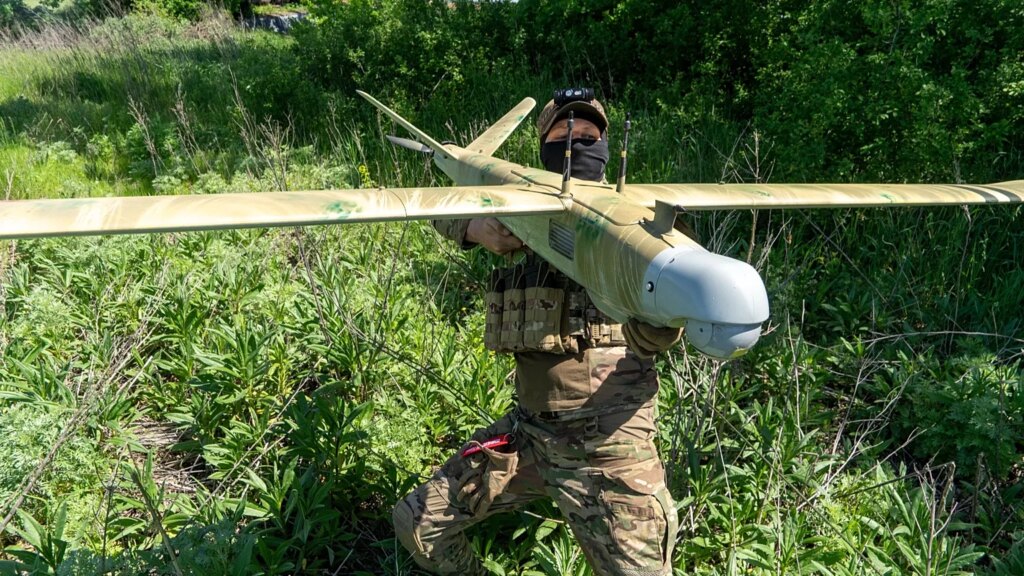
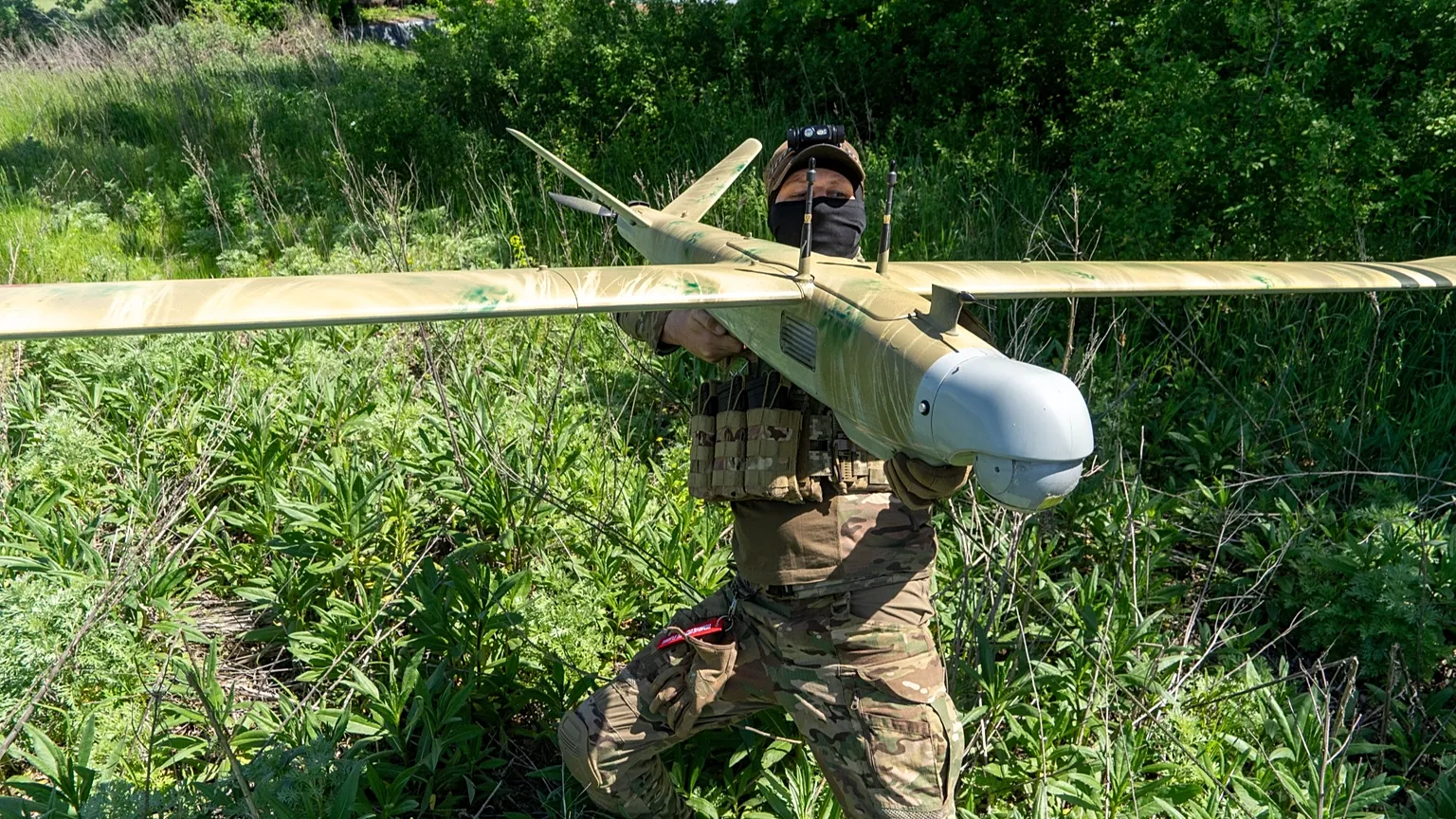
Ukrainian drone commanders on the frontline state that modern combat has evolved more rapidly than European armies can keep pace with. As Germany accelerates its rearmament, Kyiv’s troops maintain that the future of warfare will depend not only on tanks, but also on drones, mass manufacturing, and skilled pilots.
The full-scale Russian invasion of Ukraine has fundamentally transformed contemporary warfare. «In the past year, I noticed just one tank on the battlefield,» noted Corporal Dmytro Zhluktenko, who oversees combat lesson analysis within the 413th Unmanned Systems Regiment «RAID» of the Ukrainian Armed Forces.
 ADVERTISEMENT
  ADVERTISEMENT
«When discussing with the German military, they emphasize the need for tanks since they consider them crucial in war. We disagree, because combat has shifted so drastically since 2022 that old methods no longer apply. Drones can be procured quickly, as the technology constantly evolves,» Zhluktenko explained during a press event held by the German-Ukrainian Bureau in Berlin.
«I would say it’s a matter of mindset and doctrine. Some traditional warfare tactics—we believe—are somewhat outdated.»
Has Germany kept pace with modern combat?
In the last four years, Russia’s full-scale war against Ukraine has triggered a Zeitenwende, or turning point, in Germany. Berlin has notably increased its defense budget to swiftly restore the Bundeswehr’s capabilities, both regarding personnel and military equipment.
This effort includes conventional heavy assets like battle tanks. For instance, by 2027, the 45th battletank brigade stationed in Lithuania is expected to receive 123 Leopard 2A8 tanks along with thousands of attack drones.
While this is a positive shift, it remains insufficient according to four Ukrainian drone officers from the 413th Regiment «RAID» within Ukraine’s Unmanned Systems Forces.
«I observed numerous problems concerning drones within the German army,» stated Captain Oleksandr Voitko, deputy commander of the unit.
Voitko stressed that militaries require «as many FPV kamikaze drones as they do bullets.»
«Bullets are cheap and easy to manufacture. Yet you wouldn’t say you’ll produce bullets only at the last moment because that moment is when you engage the enemy. Nobody knows exactly when that moment arrives.»
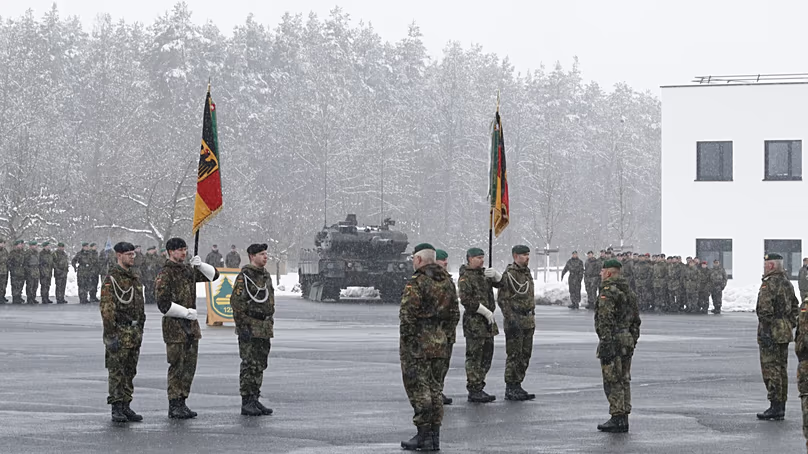
Voitko emphasized that although the Bundeswehr possesses some advanced drone technology—like fixed-wing kamikaze drones and extended-range reconnaissance systems—it lacks what he calls «the two most potent tools against enemy infantry.»
These are FPV kamikaze drones and bomber drones designed to deploy explosives. According to the deputy commander, «these two drone types are responsible for eliminating 80% of Russian infantry in Ukraine.»
«To my knowledge, this issue isn’t currently prioritized by the German military, yet these drones are the most efficient tools against ground forces,» Voitko remarked.
He added that Germany would require such assets to effectively protect the Baltic states if Russia launched an assault. «At present, Germany is not equipped to counter the style of combat that Russia has refined in Ukraine,» Zhluktenko elaborated. «Globally, only two militaries are proficient and prepared with drone-centric warfare knowledge: Ukraine and Russia.»
Voitko further explained that even with sophisticated drones, the German army’s quantities are insufficient. He pointed out that nations like Russia «can sustain extremely high casualty rates.»
«You need vast quantities of drones to destroy enough targets to truly damage a large force like Russia’s. While you can hit many targets even with advanced drones, the enemy’s rate of acceptable loss is high — meaning this alone won’t secure victory.»
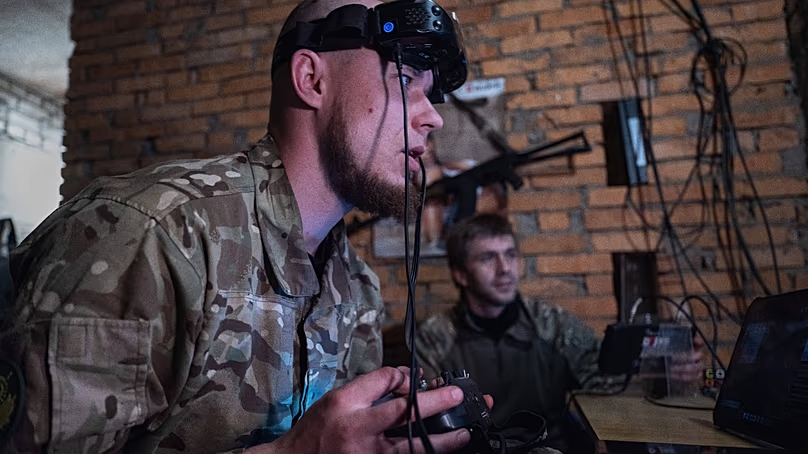
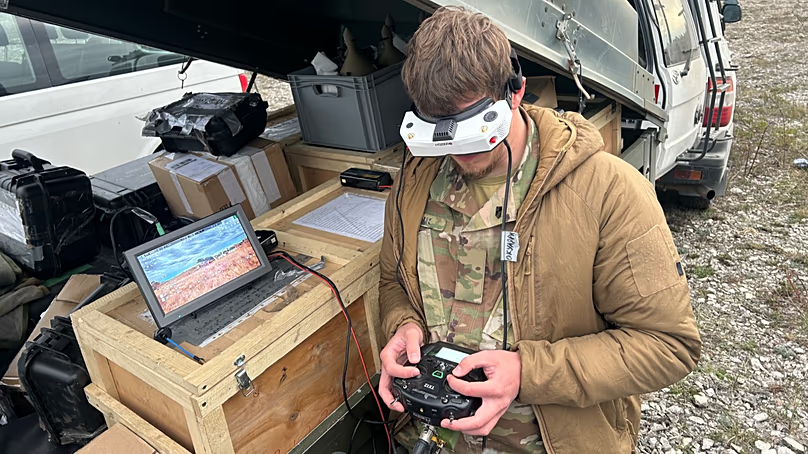
Ukrainian troops instructing German soldiers
«A critical factor isn’t just the drone count but the availability of trained pilots,» mentioned Voitko. «I am unsure about the number of well-trained drone pilots in the German military; I suspect it’s quite low.» Due to security protocols, Germany does not disclose current drone operator numbers, although it plans to considerably expand drone training nationwide.
The German defense ministry states that drone operation training will become part of basic military instruction later this year, as the Bundeswehr speeds up adaptation based on the Ukrainian conflict’s lessons. Ukrainian officers assert that Kyiv could directly assist training German forces. «Indeed, we are prepared now,» said Captain Markiian Yatsyniak, Deputy Commander, on whether Ukrainian instructors would train German soldiers. One potential method involves sending Ukrainian trainers with frontline combat experience to Germany.
«The simplest solution, naturally, would be to conduct training on Ukrainian soil, allowing German troops to arrive here and receive comprehensive instruction.»
Only united defense ensures security
In February 2026, Germany’s and Ukraine’s defense ministries signed an agreement permitting Ukrainian soldiers to participate in the training of German troops. Combat-experienced Ukrainian fighters are now instructing Bundeswehr personnel at military schools in locations like Munster and Ingolstadt, focusing on tactics, drone countermeasures, and frontline insights gleaned from the war. «The primary objective is to incorporate the knowledge of Ukrainian soldiers into military training,» a German army spokesperson told the news agency dpa.
Further details were not publicly disclosed.
«The military aims to leverage expertise from the Ukrainian armed forces in every possible domain,» stated Lieutenant General Dr. Christian Freuding, inspector of the German army, in an April interview with the newspaper Welt am Sonntag.
«Training must currently mirror the drone threat, and the integration of drones within our own forces needs to become instinctive. At this moment, no one offers better lessons than the Ukrainians.»
Freuding mentioned that Ukrainian instructors have already been assigned to the armoured corps school, the army’s unmanned systems training center, and the engineers’ school, with plans to expand programs to the artillery school. «Our intention is to broaden this initiative significantly across the army,» he noted.
The Ukrainian officers pointed out that sharing drone expertise centers on Europe’s and NATO’s collective security. «Our defense and that of the continent depend on joint efforts,» Zhluktenko concluded. «At the very least, if you are as capable as we currently are.»