
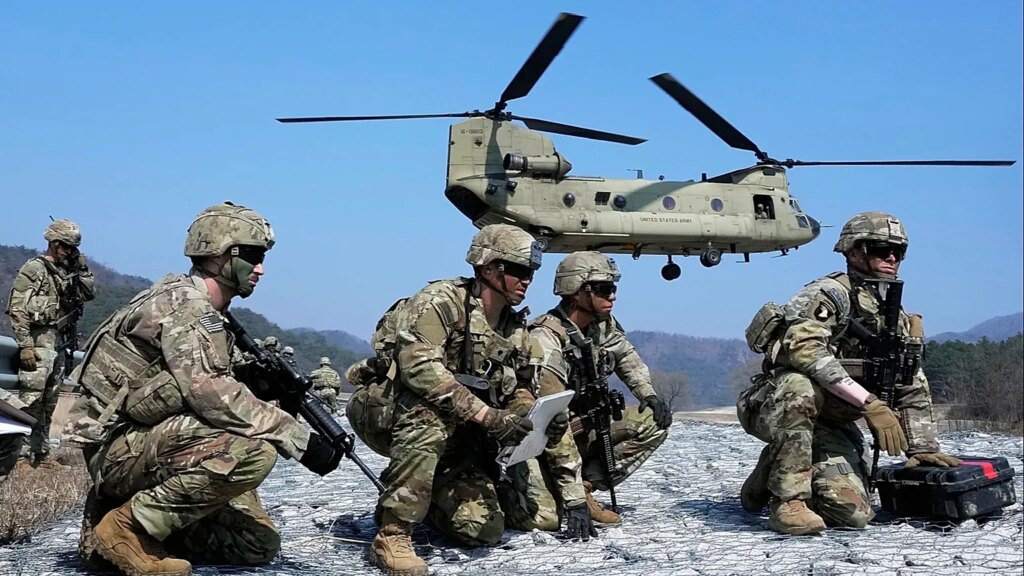
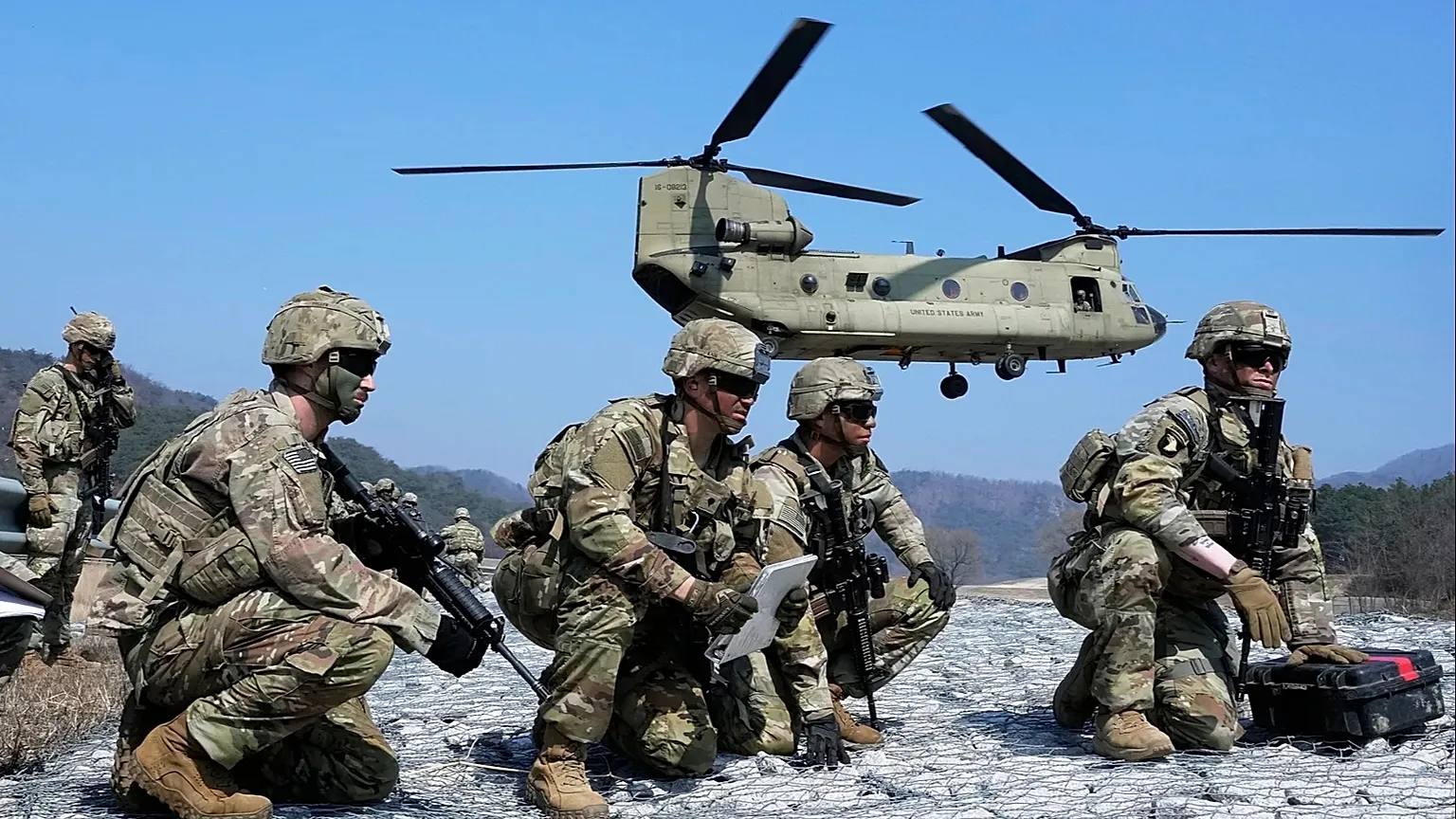
The initiative follows a month after US Defence Secretary Pete Hegseth announced Washington’s intentions. The Trump administration has consistently criticized European allies concerning their reaction to the conflict in Iran.
On Monday, the United States initiated a reassessment of its military deployment in Europe, following multiple criticisms from US President Donald Trump aimed at members of the alliance in Europe.
 ADVERTISEMENT
  ADVERTISEMENT
US Under Secretary of Defence Elbridge Colby explained on X that the review aims to «guarantee NATO advances quickly and irreversibly toward Europe assuming primary responsibility for its conventional defense.»
«This assessment will expedite NATO’s shift towards becoming a stronger, fairer, and more sustainable alliance,» Colby remarked.
This development comes a month after US Defence Secretary Pete Hegseth conveyed Washington’s plan to NATO partners.
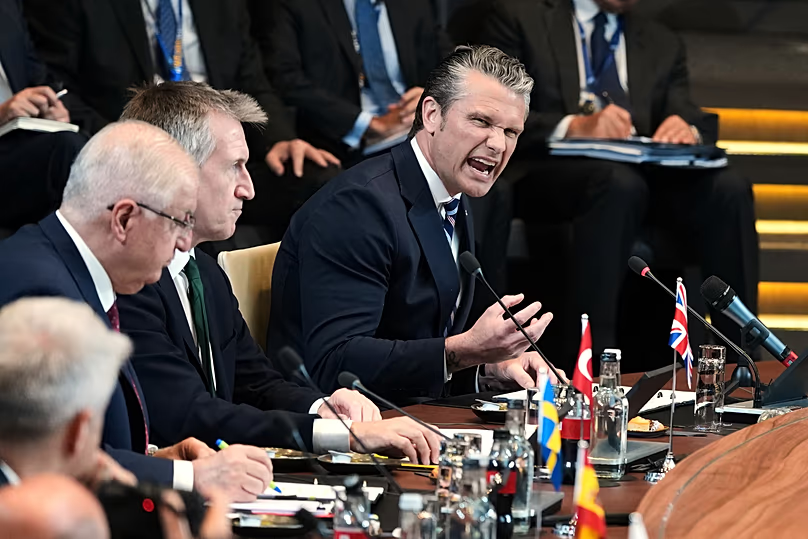
“This will be a comprehensive review aimed at ensuring NATO rapidly and irreversibly evolves with Europe leading and shouldering the main burden for Europe’s defense,” Hegseth stated during a meeting with NATO representatives in Brussels in June.
“Certain countries will not meet the review’s standards, while others will excel,” he added.
During his address at NATO’s headquarters in Brussels, Hegseth reiterated Trump’s repeated criticisms and condemned European allies for their inadequate response to the joint US-Israeli military actions in Iran, including their refusal to grant US forces access to European bases for launching attacks.
He also warned of possible reductions in Washington’s financial contributions to NATO if member states fail to meet defense spending objectives.
This development represents a setback—though not entirely unforeseen—for European partners, as they adjust to an increasingly unpredictable ally.
Last month, German Chancellor Friedrich Merz acknowledged that the allies had prior knowledge of Washington’s eventual plans to withdraw troops from Europe and stressed the necessity for the bloc to independently manage its security.
“We understand the need to increase our efforts, and we are acting accordingly,” Merz stated.
In recent months, European nations alongside Canada have intensified their efforts to bolster their defense capabilities amid growing doubts about Washington’s security commitments.
Prior to this month’s NATO summit in Ankara, European Commission leader Ursula von der Leyen and NATO Secretary General Mark Rutte emphasized the importance of advancing NATO’s European dimension, aiming to lessen the alliance’s long-standing dependence on American security guarantees.
“Continuing to rely heavily on the United States as we have is no longer viable. A stronger Europe within a reinforced NATO is essential,” Rutte declared, praising the “unprecedented” progress driven by enhanced cooperation between the EU and NATO.