
Despite mounting worries about cross-border security challenges, there is no EU-wide registry or official statistic showing how many individuals with confirmed ties to terrorism remain under surveillance.
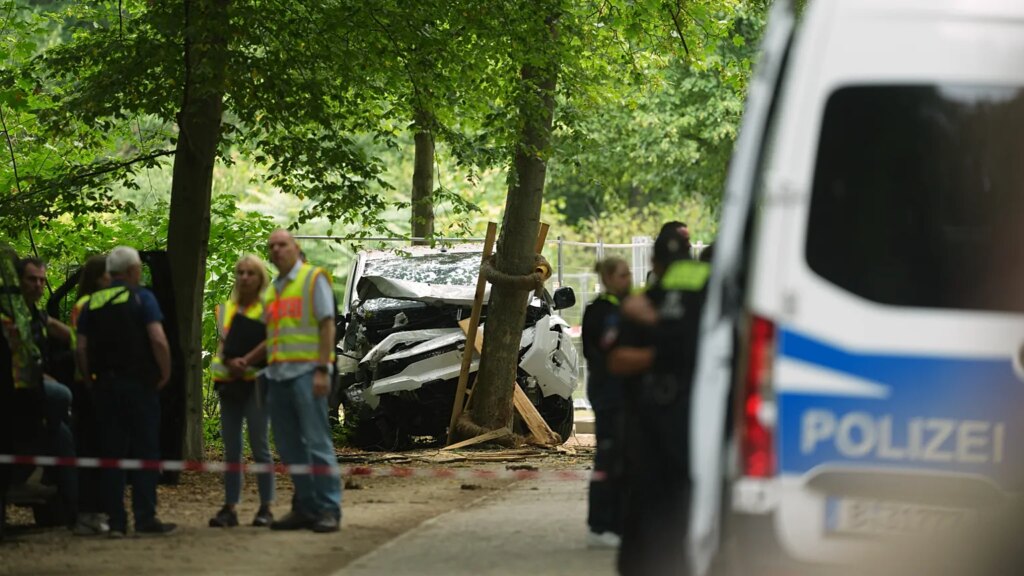
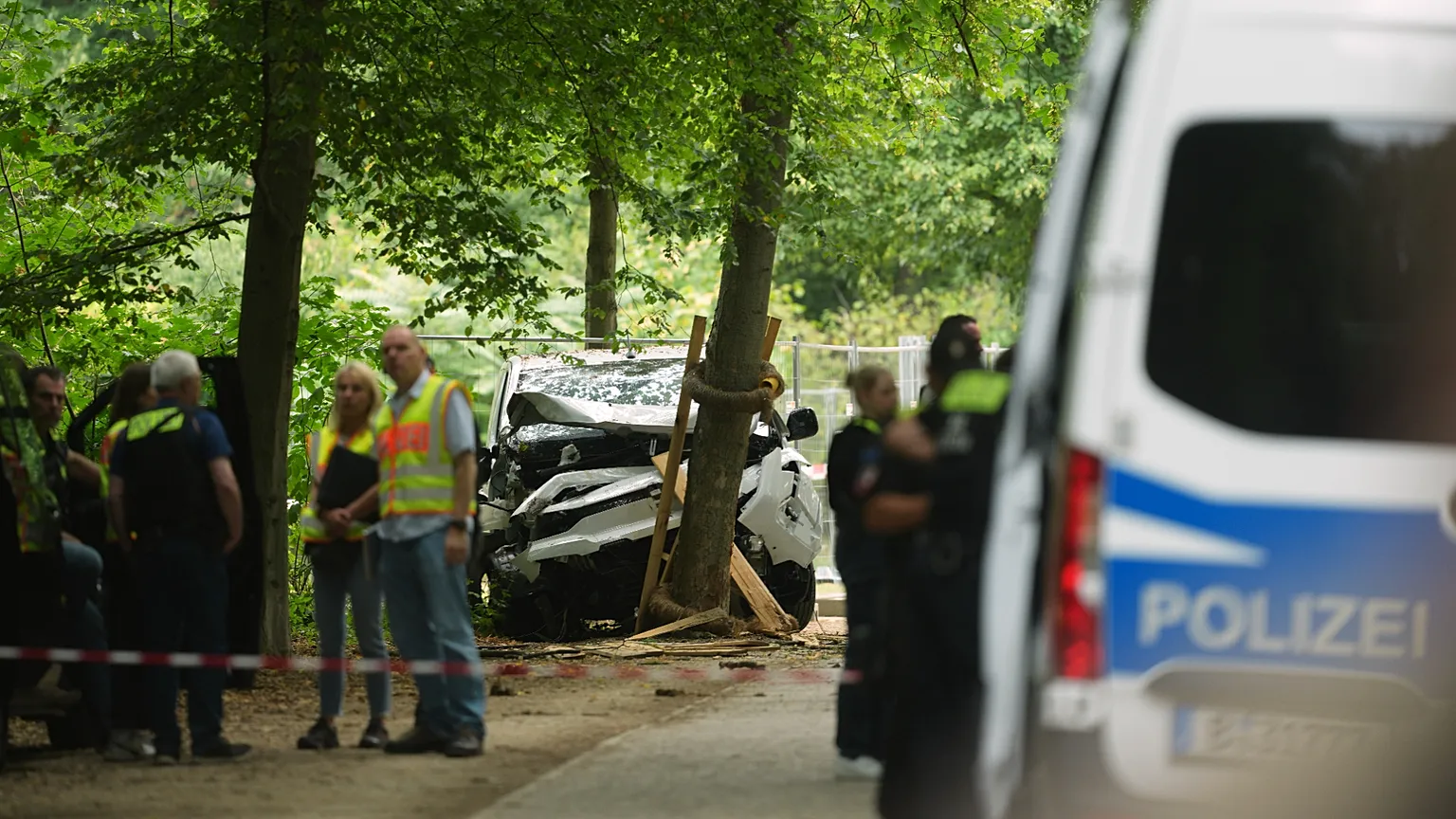
The attack at the Berlin Pride event has sparked renewed debate regarding Europe’s capacity to effectively monitor people with histories of radicalisation and terrorism-related convictions, especially when suspects cross national boundaries.
 ADVERTISEMENT
  ADVERTISEMENT
There is currently no EU-wide list or official estimation of how many people linked to terrorism are actively being monitored. Europol officials explained to Euronews that intelligence and security functions operate at the national level, with each member state using its own legal criteria, surveillance standards, and monitoring procedures.
Individual monitored by police since 2022
The matter has gained attention after German authorities identified the Berlin attacker as 21-year-old Abdul Ballout, a German national of Lebanese heritage known to law enforcement for earlier violent crimes and connections to Islamist groups.
Officials are treating the incident, which resulted in the death of one woman and injured 29 others, as an Islamist terrorist act. The suspect was fatally shot by police.
Ballout had been on the radar of German authorities for several years due to his criminal history, Islamist radicalisation, and multiple attempts to join the Islamic State in Syria.
He was convicted in 2022 for assault and robbery-related charges and subsequently tried to travel to Syria via Turkey and Lebanon, where he was detained briefly before being repatriated to Germany.
In May 2026, a Berlin juvenile court sentenced him to 22 months in juvenile detention for preparing a serious state-endangering act of violence, attempting to join the Islamic State, and distributing the group’s propaganda online.
He was released after the court determined pretrial detention grounds were insufficient, even as prosecutors appealed seeking a stricter sentence.
Earlier this month, authorities searched his residence on suspicion of weapons offenses, but the probe was dropped when only a toy gun was found.
Prior to the attack, Ballout was ordered to participate in a deradicalisation programme, though the overseeing body concluded he tried to deceive evaluators by feigning abandonment of extremist beliefs.
Germany counts hundreds of possible Islamist threats
Germany is one of the few European nations that publishes precise data on Islamist extremism, distinguishing between the broader extremist environment and individuals identified as higher risk for violence.
The Federal Office for the Protection of the Constitution (BfV), Germany’s domestic intelligence agency, estimates approximately 28,000 individuals within the Islamist extremist milieu.
Only a limited number are considered potentially violent.
«Within the broader Islamic extremist community, about 450 to 470 are assessed as potentially prone to violence,» Dr. Raphael Bossong from the German Institute for International and Security Affairs (SWP) told Euronews.
These persons fall under Germany’s security classification «Gefährder»—a label for those believed to be capable of committing serious politically motivated crimes.
The current count of Islamist Gefährder is around 446, according to figures cited by Bossong from the Federal Criminal Police Office (BKA), though this fluctuates as investigations evolve and individuals are added or removed from surveillance lists.
Numbers differ across Germany’s federal states; Berlin authorities have identified approximately 100 persons under the Islamist Gefährder category, though statewide data is not always publicly disclosed.
Terrorism risks in Belgium
Belgium maintains a national watchlist of persons prioritized for observation under its Terrorism, Extremism and Radicalisation Strategy (T.E.R.), combining intelligence collection with prevention and rehabilitation efforts.
According to the Coordination Unit for Threat Analysis (CUTA), Belgium’s Common Database on Terrorism, Extremism and Radicalisation held 529 entries in July 2026. Of these, 446 were associated with Islamist extremism, 47 with right-wing extremism, 12 with left-wing extremism, six with nihilist extremism, and 10 with anti-establishment extremism.
«Inclusion in the database does not imply conviction or imprisonment,» a CUTA spokesperson told Euronews.
«Each individual in the database undergoes a personalized risk assessment to determine appropriate follow-up actions, which may include security measures as well as guidance and preventive support through local partners.»
CUTA emphasized that Belgium’s approach perceives terrorism and extremism as challenges that blend security concerns with societal aspects.
Absence of a unified European overview
Various other European nations have their own national monitoring systems, but their data are not directly comparable.
France operates one of the continent’s most transparent frameworks through the FSPRT watchlist, which includes several thousand individuals deemed at risk of violent radicalisation linked to terrorism. French officials underscore that inclusion on this list does not necessarily indicate involvement in crimes or membership in terrorist organisations.
Outside the EU, the UK reports that MI5 manages about 43,000 «subjects of interest» covering all terrorism investigations, including Islamist and far-right extremism.
The Netherlands also releases threat assessments but does not disclose the exact number of monitored individuals.
Security analysts caution that these varying figures cannot be aggregated, as they represent different categories ranging from broad extremist groups to active intelligence inquiries and suspected attackers.
Europol: No centralized registry, yet intelligence sharing persists
The lack of a Europe-wide statistic has raised questions about whether the absence of a unified database impacts cross-border surveillance of suspected extremists.
«Europol does not maintain data on how many known terrorist suspects are currently investigated or monitored across the EU, as member states are not obligated to share such details with us,» a Europol spokesperson told Euronews.
The agency highlighted that lacking a central figure does not imply missing information-sharing frameworks.
«Counterterrorism investigations primarily remain a national duty,» the spokesperson explained. «When cases involve individuals with possible cross-border elements, member states can share relevant operational data with Europol.»
Europol analyses this information, assists in uncovering connections between cases, and facilitates cooperation among national authorities.
«Europol’s role is to support member states when international collaboration is necessary, rather than maintaining a central registry of persons under investigation,» the spokesperson added.
The agency pointed to the EU Terrorism Situation and Trend Report (EU TE-SAT) as the principal publicly accessible source for monitoring terrorist threats throughout the bloc.
This decentralized approach means European security services rely on national intelligence databases complemented by information-sharing mechanisms, as opposed to a singular EU-wide watchlist gathering individuals potentially involved in terrorist activities.