
In today’s briefing: The enchantment of the FIFA World Cup concludes, European Commission President Ursula von der Leyen addresses competitiveness, and several European capitals undergo ministerial shifts.
Good morning. Angela Skujins is here to present this week’s newsletter, while Mared Gwyn leads the Europe Today broadcast from the studio.
 ADVERTISEMENT
  ADVERTISEMENT
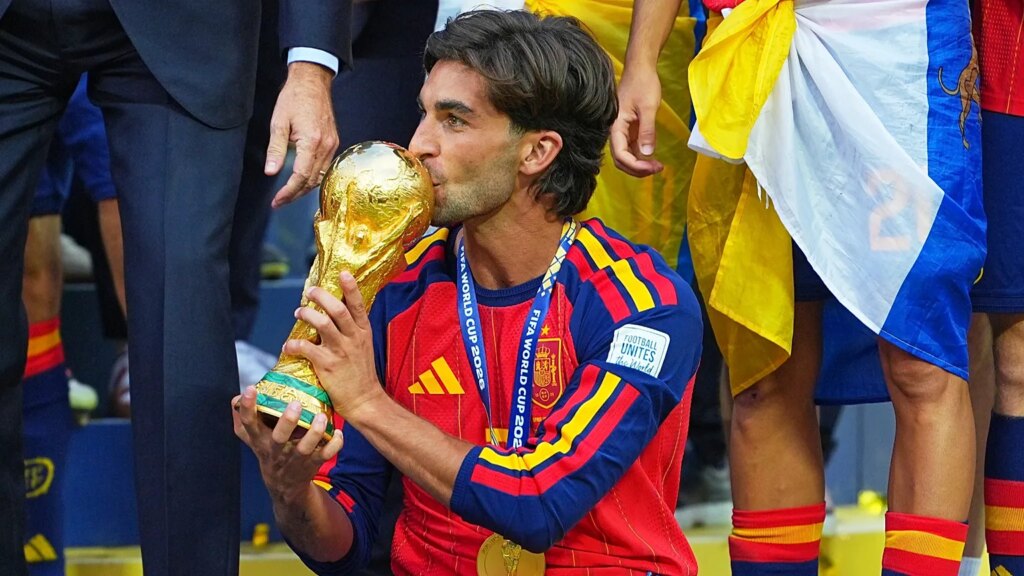
This edition aims to help digest the latest news — including last night’s men’s FIFA World Cup final. The champion: Spain’s La Roja.
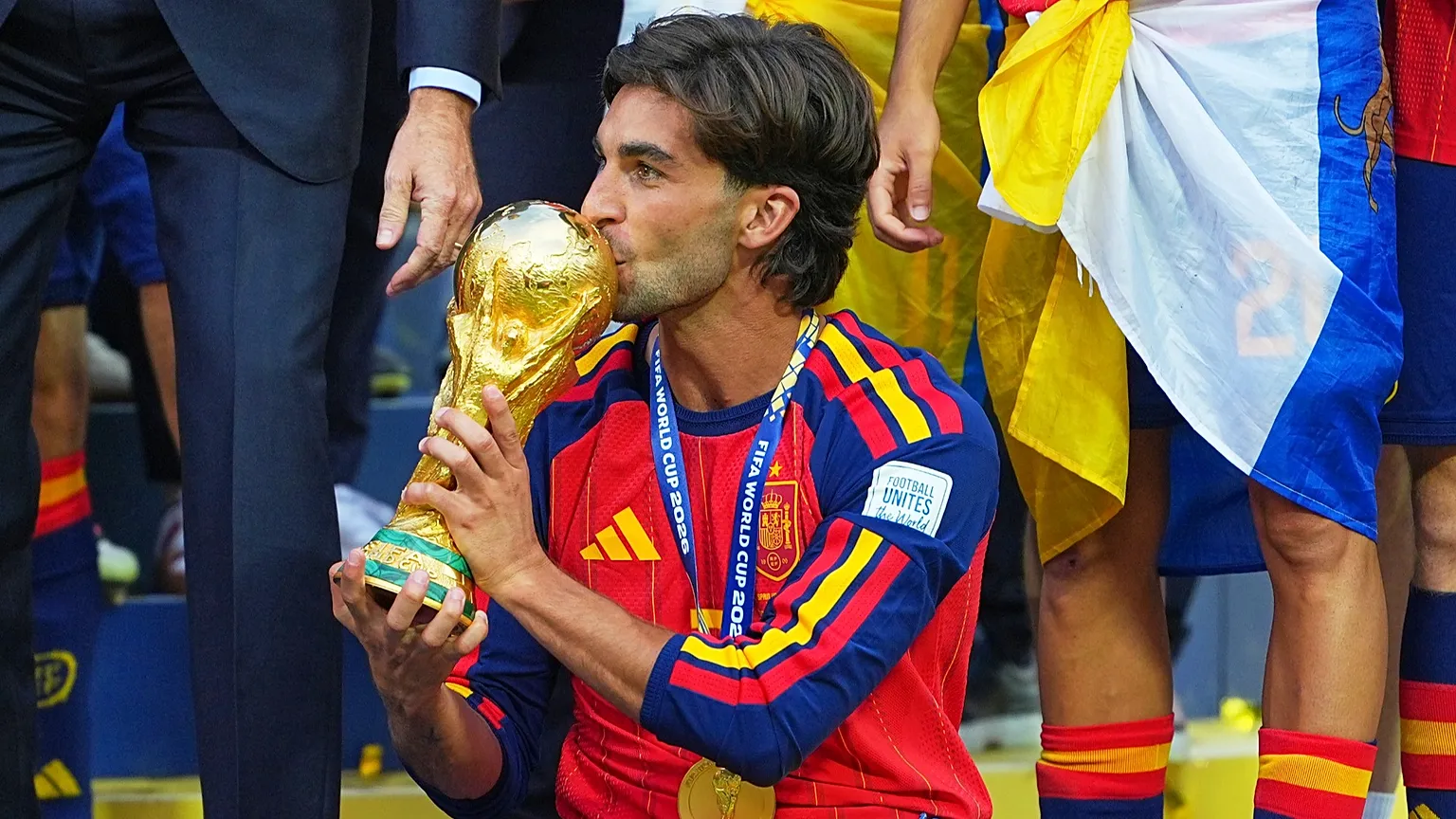
Congratulations to Spain! For those who missed the match, the final held in New Jersey was largely scoreless, but in extra time, Spain ended Argentina’s reign as world champions when forward Ferran Torres netted the only goal, securing Spain’s second World Cup championship.
“It was a goal scored by 47 million people,” Torres said, referring to Spain’s population when questioned about the decisive strike.
“I feel proud, genuinely,” stated Spain coach Luis de la Fuente, now the oldest coach at 65 to claim a World Cup victory. “It’s an honor to accompany the team through this journey.”
The final marked the conclusion of the largest tournament in the history of the competition, spanning 96 years. At the closing whistle, a record-breaking 104 matches had taken place over nearly six weeks across three nations. The grand event delivered intense drama on and off the pitch, including thrilling highs, somber lows, spectacular goals, Norwegian rowing, a Tartan takeover, among many unforgettable moments.
Yet, the headlines over nearly five weeks were not fueled solely by sports achievements.
Politics played a significant role off the field, from US President Donald Trump’s alleged pressure on FIFA to overturn the red card suspension of striker Folarin Balogu, to Belgian footballer Jeremy Doku missing a game to attend the birth of his son, which sparked both criticism and praise.
Who attended the final? Argentine President Javier Milei chose not to travel to New Jersey, watching the game from Buenos Aires due to personal superstitions. Meanwhile, Spanish Prime Minister Pedro Sánchez made the journey and was seated in the VIP section alongside US President Donald Trump and other notable figures.
The shared moment between Trump and Sánchez in a luxury box at MetLife Stadium followed months of tension concerning defense spending and American policies in the Middle East.
Relations have begun to improve recently, after Trump acknowledged that Spain had “fully redeemed itself” by committing to a significant boost in its NATO defense spending at the recent Ankara summit.
The exact conversation between the two remains unknown; however, it appears Sánchez used a pre-game interview with Spanish public broadcaster RTVE to congratulate Trump on the US’s 250th anniversary, seemingly aiming to foster goodwill.
When asked if Trump might present the World Cup trophy, the Spanish prime minister refrained from speculation, stating, “What matters isn’t who presents it, but who receives it.”
A setback for Trump. Despite the cordial atmosphere, Trump and FIFA President Gianni Infantino faced boos during the victory ceremony following Spain’s win, according to the Guardian. Trump briefly stood with the team stage-side before being escorted away by Infantino.
Heading to the US. EU Justice Commissioner Michael McGrath will visit Washington on Monday, described by his press team as an “important moment” for transatlantic relations. Amid tensions over Greenland and football politics, McGrath’s agenda focuses on the Digital Fairness Act and protecting minors online.
“What occurs in the US digital economy directly affects European consumers and companies,” he explained.
“Strong cooperation across the Atlantic is essential to ensure fair online treatment of consumers, transparency in data usage, and robust protection for children online.”
Political changes in London. Andy Burnham is expected to become the 59th Prime Minister of the United Kingdom today, having been officially confirmed as Labour Party leader last Friday with 379 parliamentary votes in his favor.
He now awaits formal approval from King Charles III to assume office, amid pressing questions about his plans, particularly regarding relations with the European Union.
Tim Bale, a Politics Professor at the University of London, recently told Euronews’ Europe Today that Burnham is likely to continue supporting Ukraine, manage interactions with an unpredictable US president, and pursue closer ties with the EU. Watch.
Political shifts in Budapest. Commencing today, Ágnes Forsthoffer, President of the Hungarian National Assembly, assumes the role of interim head of state until the election of a new president, writes Sándor Zsíros.
Last week, Magyar removed Tamás Sulyok, the country’s president, who he frequently described as a puppet of former prime minister and rival Viktor Orbán.
Who is the frontrunner for the presidency? Judit Polgar, renowned as the greatest female chess player ever, has been nominated for the position. “I will meet her tomorrow to see if she is willing to serve our nation in this new capacity until the new constitution is enacted,” Prime Minister Péter Magyar posted on Facebook over the weekend.
Government changes in Kyiv. Ukrainian President Volodymyr Zelenskyy is considering replacing his commander-in-chief today, as protests continue amid a broader ministerial reshuffle.
Yesterday, Zelenskyy met with military leaders including Mykhailo Drapatyi, favored by civil society to take the commander-in-chief role.
Back to Brussels. European Commission President Ursula von der Leyen will host former Italian Prime Minister and European Central Bank President Mario Draghi for discussions centred on EU competitiveness. Press representatives, including Euronews, were not briefed further on the meeting’s objectives beyond this topic.
The 21st sanctions challenge. Ambassadors alongside the European Commission will work this week to resolve what many call a Greek tragedy, aiming to agree on the diluted sanctions package against Russia before the summer recess.
Efforts to finalize the 21st sanctions package have encountered strong opposition from Greece, which insists on reopening the ban on Russian LNG imposed last year to allow continued transport, reports Jorge Liboreiro.
This stance is closely tied to Dyangas, a company owned by Greek billionaire George Prokopiou, who also controls another firm profiting from transporting Russian oil.
Dynagas and its subsidiary have chartered 11 ships, including seven icebreakers suited for Arctic conditions, to Russia’s Yamal LNG facility, the largest in the country.
Dynagas argues that an outright ban on Russian LNG could cause “self-inflicted damage to Europe’s maritime capacity, Arctic shipping expertise, employment, and strategic influence,” while failing to meet geopolitical goals.
It also cautions that breaking long-term contracts with Yamal, some extending to 2065, risks default and renders its icebreakers unusable. These points mirror Athens’ arguments in Brussels to prompt a revision of the 2025 legal measures.
“It’s quite the dilemma,” a senior diplomat confided to Jorge. “I’m thankful I am not the Greek prime minister.”
Major wildfires continue as Spain’s burned area reaches 70,000 hectares this year
Two significant wildfires remain active in northeastern and central Spain, with emergency teams concentrating efforts on fires near La Mierla in Guadalajara province and near Orés in Zaragoza province. Together, these rank among the most destructive fires recorded in Spain for 2026.
The fire close to La Mierla, approximately 100 kilometers northeast of Madrid, began on Thursday and has since burned close to 13,000 hectares, according to the latest official data.
In the early hours of Sunday, firefighters focused on two fronts: one team tackled the southern border of the fire near Gascueña de Bornova, while others worked to safeguard the villages of Navas de Jadraque and Bustares.
Authorities have evacuated 16 villages and surrounding areas, including communities adjacent to the Beleña reservoir.
Read the full story.
More from our newsrooms
Iran launches retaliatory strikes after ninth night of US attacks
Escalating conflicts between the United States and Iran have caused near shutdown of traffic through the Strait of Hormuz, driving Brent crude prices to $90 per barrel. Evelyn Ann-Marie Dom reports.
Thousands of Italian military and police personnel march in Rome over pay and pensions
About 6,000 members from Italy’s armed forces and security sectors conducted a march in Rome on Saturday, demanding improved wages, enhanced pensions, and stronger workplace protections. Fortunato Pinto provides the details.
German Chancellor Merz hints at possible cabinet reshuffle after top CDU figure resigns
German Chancellor Friedrich Merz has suggested a potential government reshuffle following the resignation of Jens Spahn as parliamentary leader, increasing pressure on conservatives ahead of key regional elections. Read the report by Kirsten Ripper.
We’re also keeping an eye on
- European Commissioner for Environment, Water Resilience and a Competitive Circular Economy, Jessika Roswall, holds a video call with the EU co-chairs of the 2026 UN water conference.
- European Commissioner for Fisheries, Costas Kadis, meets Joao Vasco Costa, Vice-President of the Regional Assembly of the Azores in Faial, Azores, Portugal.
That wraps up today’s briefing and the week’s newsletter. Contributions came from Sándor Zsíros, Sasha Vakulina, and Jorge Liboreiro.