
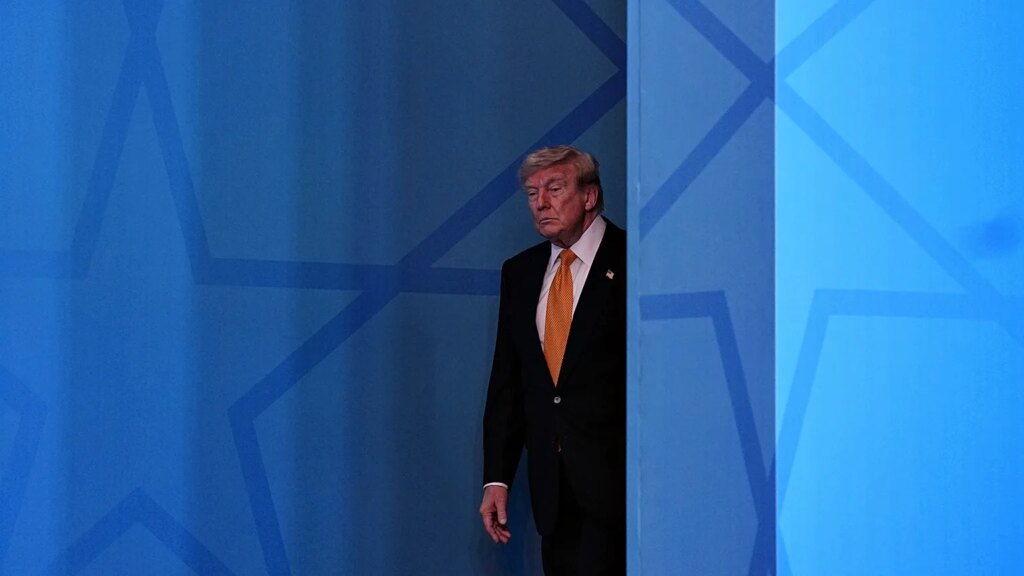
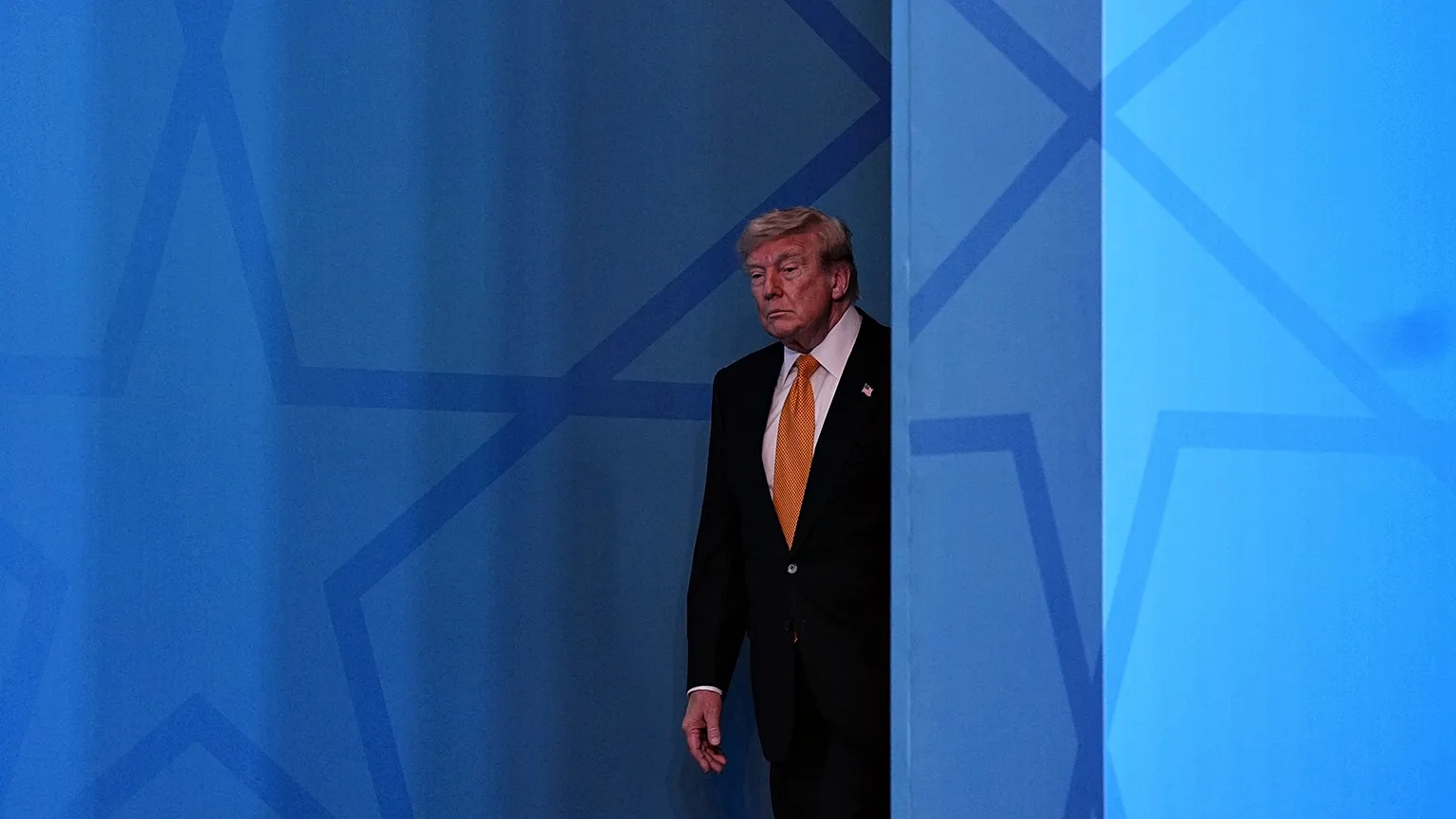
The dispute over Greenland’s destiny continues as Trump reignites his attempt to claim the island, reopening Europe’s deepest concerns.
Amid a multitude of national and global challenges, Europeans had hoped Greenland would no longer figure among their worries.
 ADVERTISEMENT
  ADVERTISEMENT
That expectation, nevertheless, lasted only half a year.
Shortly after arriving in Ankara, Turkey, to attend the annual NATO summit, US President Donald Trump reiterated his goal of acquiring Greenland, the mineral-abundant territory under the jurisdiction of the Kingdom of Denmark, which the former Manhattan businessman has long eyed as a prime real estate opportunity.
Trump declared on Tuesday, following his meeting with Turkish President Recep Tayyip Erdoğan, that Greenland «ought to be under United States control, not Denmark’s.»
«Greenland offers no benefit to Denmark. Denmark does not really invest financially to support Greenland,» he added. (In reality, Denmark grants Greenland an annual block subsidy nearing €600 million.)
The next day, Trump reaffirmed his stance.
«Greenland is critically important to the United States but lacks significance for Denmark,» he stated. «I am dissatisfied with NATO regarding their handling of Greenland.»
These statements instantly garnered global headlines, prompting Danish Prime Minister Mette Frederiksen to once more uphold her nation’s sovereignty amid a rare dispute within a military alliance summit.
«Unluckily, the US stance on this issue is very explicit. Our position has remained consistent: Greenland is not on the market. I expect all allies to honor the Greenlandic people’s right to determine their own future,» Frederiksen told reporters in Ankara.
«We are prepared to safeguard every inch of NATO, including our own lands.»
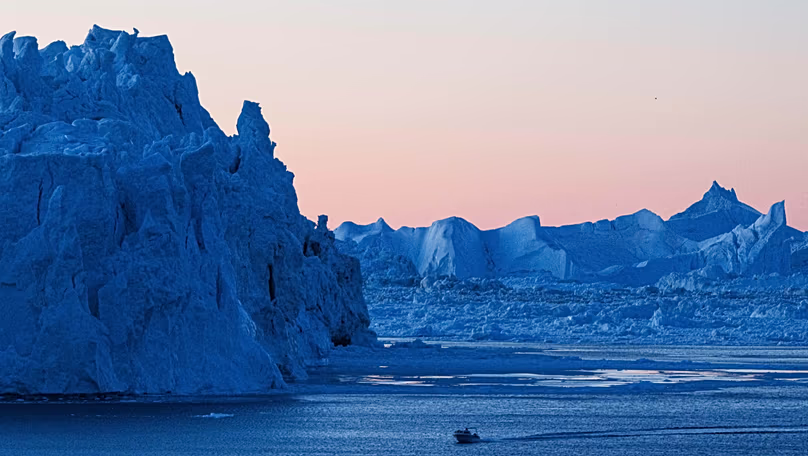
For Europeans, this triggered a painful recollection of January, when Trump threatened to impose a 10% tariff on eight European nations to pressure Denmark into surrendering Greenland.
This turbulent episode, which spanned five days, brought the transatlantic alliance closer to disintegration than ever in its 77-year existence. The EU, sharing 23 members with NATO, convened an emergency summit of leaders preparing for a potential full-scale trade conflict.
Ultimately, the tension was eased when NATO Secretary-General Mark Rutte met Trump in Davos, Switzerland, and reached a «framework agreement» aimed at boosting security cooperation in Greenland and the broader Arctic area.
Europeans felt relieved as, by the emergency summit in Brussels, the mood had shifted completely. While stressing the importance of mutual respect and increased vigilance, leaders shared smiles and backslaps, indicating readiness to close this chapter and proceed.
Greenland quickly faded from the spotlight, with focus refocusing on issues like Ukraine, Russia, China, and the Middle East.
Far from over
Nevertheless, in Copenhagen, serious concern persisted, since the main point of the contentious dispute had not been settled comfortably.
After January’s events, Denmark and Greenland quietly entered trilateral discussions with the White House to establish a renewed mutual understanding concerning the ice-covered territory, which remains governed by a 1951 bilateral defence pact.
Progress on the diplomatic front has been sluggish, with no concrete outcomes so far.
In May, the New York Times revealed that the US sought to secure permanent terms on military presence and a veto over new investments intended to counteract Russian and Chinese influence—demands directly challenging Greenland’s sovereignty.
On Tuesday, Rutte pledged to ensure a «gradual implementation» of the agreement, enabling Trump ultimately to deploy the Golden Dome on Greenland. (This multi-tiered, multibillion-dollar defence system remains in early development stages.)
Although Copenhagen and Nuuk are eager to make diplomacy successful, doubts remain regarding whether any agreement will fully satisfy Trump’s personal obsession. He has described Greenland alternately as a maximalist property acquisition, a national security issue, and a passionate ownership goal.
Danish officials privately caution that the White House might still employ alternative strategies beyond military means to push for annexation and advise European counterparts to remain vigilant rather than become complacent.
In Brussels, the issue is handled delicately to prevent exacerbating tensions.
During the previous month’s G7 summit in Évian, France, a camera captured Trump engaging in an intriguing open-microphone exchange with António Costa, president of the European Council.
«Do you understand?» Trump seemed to say to Costa. «Greenland.»
Although this footage and audio were widely disseminated by media outlets, Costa’s team strongly denied that the controversial topic had been discussed.
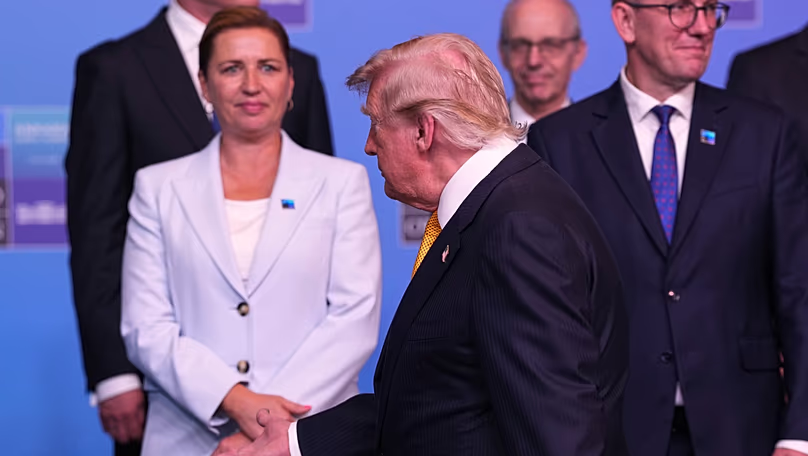
In response to the Ankara remarks, Brussels maintained a similarly cautious approach.
«The concepts of territorial integrity, national sovereignty, and border inviolability represent foundational principles of international law. They are vital not only for the European Union but also for nations worldwide,» the European Commission declared.
«We will persist in defending these principles, and the EU fully supports Denmark and the people of Greenland.»
The Commission is revising its Arctic security framework to enhance European presence in the region and increase investments aimed at addressing Trump’s longstanding criticism that the continent does not contribute sufficiently.
President Ursula von der Leyen initially intended to visit Greenland in March to present an increased financial support package, but this trip was postponed indefinitely after Frederiksen called snap elections. The visit remains a possibility.
How far Trump will push his territorial claims remains uncertain.
Currently, his administration is primarily focused on ending the conflict with Iran. Additionally, his authority to impose tariffs has been curtailed by a significant US Supreme Court decision, while upcoming congressional midterm elections—where opposition to Greenland’s annexation is strong—pose a political risk for the remainder of his second term.
One thing is clear: the battle over Greenland’s future is far from being resolved.
«From geopolitical, strategic, or economic perspectives, President Trump’s reasons for asserting US ownership over Greenland lack solid foundations. His obsession with Greenland appears to be driven by a real estate urge, which explains its persistent reappearance,» explained Tiago Antunes, an associate senior fellow at the European Council on Foreign Relations (ECFR).
«This situation is deeply concerning for a defense alliance when a member insists on taking control of an ally’s territory, as it undermines the essential trust on which the alliance depends.»