
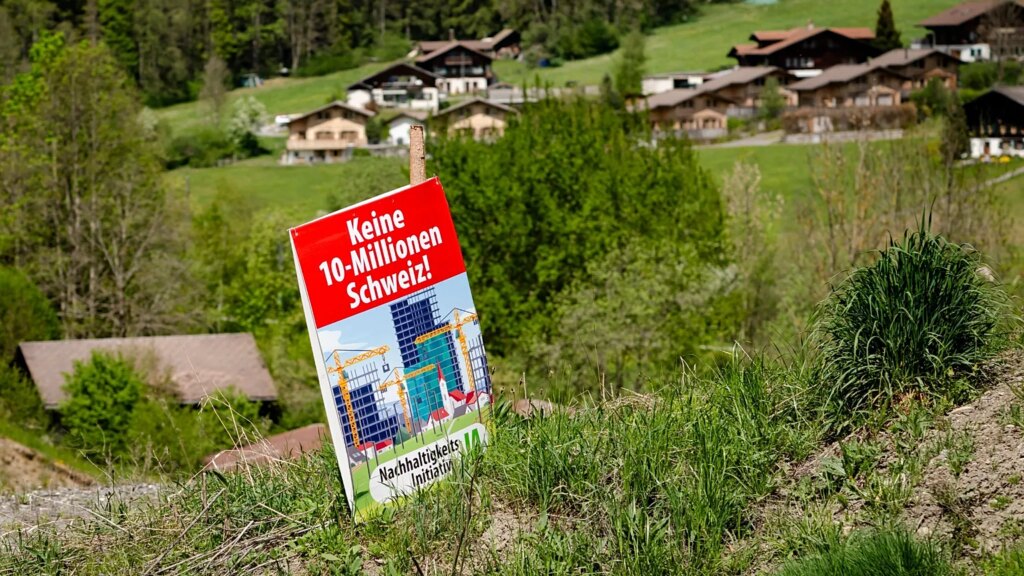
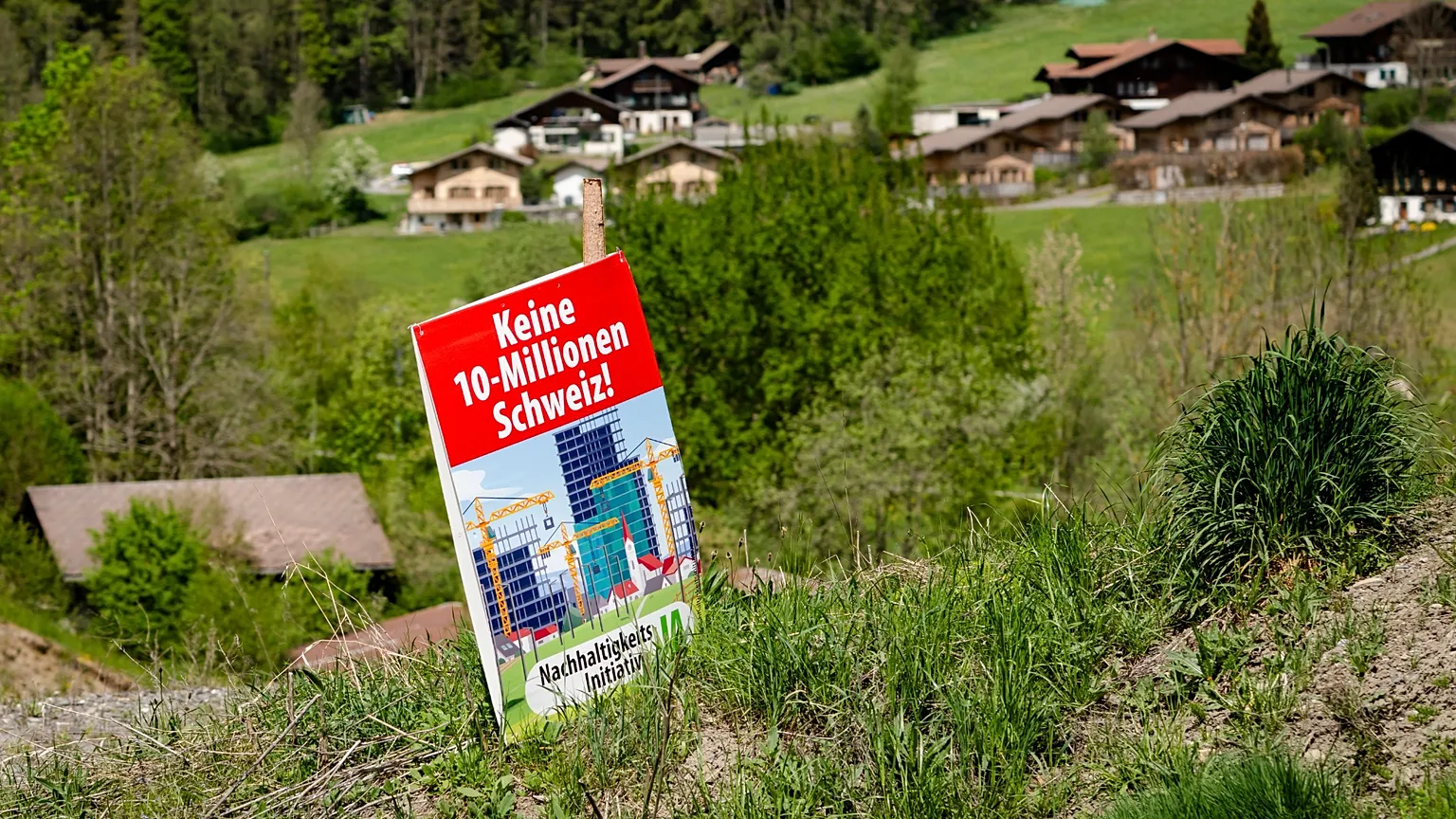
A “yes” vote would have mandated the Swiss authorities to implement measures aimed at limiting the population by 2050, including restrictions on immigration.
Swiss voters cast their deciding ballots on Sunday regarding an initiative promoted by the right-wing Swiss People’s Party (SVP), which sought to cap the population of this affluent Alpine nation at 10 million.
 ADVERTISEMENT
  ADVERTISEMENT
Preliminary figures released by the federal government show that almost 53% of participants voted against the proposal, with voter turnout surpassing 57% nationwide. Many of Switzerland’s 26 cantons had yet to report final results.
Polls conducted recently by the gfs.bern institute indicated the referendum could be narrowly decided.
A “yes” vote would have obliged the Swiss government to act towards capping the population by 2050, including measures to curb immigration.
The SVP, holding the largest number of parliamentary seats, has long fueled and cultivated anti-immigration feelings, especially concerning the influx of workers from neighboring EU countries.
Given that the referendum risked undermining Switzerland’s strong connections with the European Union—anchored by agreements supporting economic growth, cultural exchanges, and cross-border mobility—some commentators have labeled the proposal a “Swiss Brexit.”
Switzerland is not a member of the EU’s 27 countries but is almost entirely encircled by four of them.
Foreign nationals constitute nearly one-third of Switzerland’s population
The Swiss population has risen by almost 25% over the past generation, and immigrants now account for close to one-third of the approximately 9.1 million residents.
Opponents argue that the increase in immigration has supplied valuable labor and expertise to industries such as healthcare, finance, pharmaceuticals, and technology.
The SVP introduced the “sustainability initiative,” claiming that rising demographic growth has placed pressure on Swiss infrastructure, housing availability, social services, natural resources, and traditional lifestyles.
The federal government, Parliament, and EconomieSuisse—a key business group—all stand against the initiative.

Initial counts indicated that around two-thirds of voters in Geneva, Switzerland’s second-largest city and a center for UN and humanitarian organizations, opposed the measure.
Maria Lalu, a former diplomatic mission employee from the Philippines who relocated to Switzerland in the early 1980s, expressed her support for the proposal. “I don’t oppose immigration. I am also a foreigner,” she remarked after voting, adding that she advocates for more structured immigration policies.
Schoolteacher Natascha Robert voted against the initiative, voicing worries that approval could damage Switzerland’s relationship with the EU. She also highlighted that growing diversity enriches the country.
“People always have something valuable to contribute,” she stated outside a polling site in the central Paquis district, emphasizing her birth in Switzerland to two Swiss parents. “Does having more foreigners make me feel less Swiss? Certainly not.”
Swiss democratic processes allow citizens to influence policy directly through referendums, typically held quarterly. Most votes are submitted by mail, with in-person voting concluding at noon on Sunday.
If passed, the government would be required to restrict asylum requests, family reunification, and residence permits, potentially leading to Switzerland terminating its EU agreement on the free movement of persons if the population surpasses 9.5 million beforehand.
Separately, voters approved a referendum to amend the Civil Service Act on the same day.
This “yes” result will bring into effect six new provisions within the Civilian Service Act nationwide.