
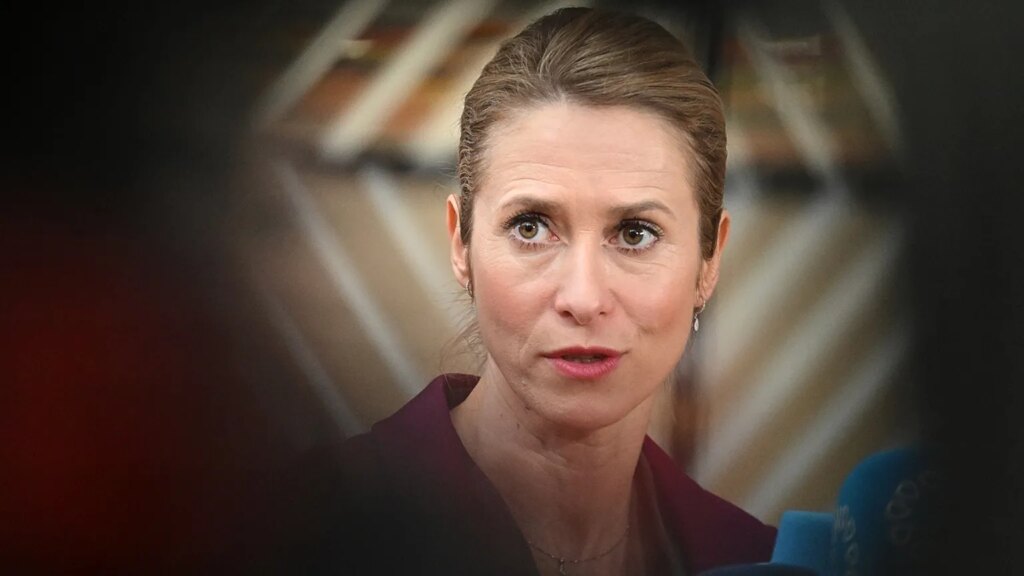
The mounting criticism towards Kaja Kallas as High Representative has exposed inherent structural flaws and conflicts within the European Union’s foreign policy framework.
Kaja Kallas has found herself at the center of a political storm after an informal paper associated with the French government proposed several measures aimed at significantly reshaping her role as the EU’s High Representative for foreign affairs.
 ADVERTISEMENT
  ADVERTISEMENT
The document outlines three alternatives, one of which would enhance her responsibilities by incorporating trade and economic development into her portfolio. Conversely, the other two alternatives would substantially reduce her authority by reallocating powers either to the European Commission, headed by Ursula von der Leyen, or back to the member states.
Amid the critical media coverage, Kallas signaled openness to renewed discussion but emphasized that ultimately, the EU treaties defining the High Representative’s mandate will be the decisive factor.
«It is essential to remember that the duties and powers of EU institutions are explicitly set out in the treaties. This framework remains as is,» Kallas stated in a confidential email to her team, as disclosed by Euronews.
The French memo emerged just as dissent against Kallas was gaining momentum, with critics increasingly vocal about discontent regarding her performance. The High Representative has sparked controversy due to her remarks on China, her push to utilize Russia’s frozen assets to aid Ukraine, strained relations with the US administration, and for proposing ambitious initiatives without prior coordination with member capitals.
Critics overall contend that she continues to act like the former Estonian prime minister known for outspoken views, championing positions exceeding the consensus among the EU’s 27 member states and occasionally reflecting personal judgment.
Slovak Prime Minister Robert Fico, noted for his opposing views toward Brussels, has repeatedly demanded her removal.
Speaking anonymously, several diplomats from diverse countries confirmed that resistance to Kallas has grown stronger over recent weeks. Nevertheless, they disagreed with the French paper, which few have thoroughly examined.
«Regrettably, she has done much to erode support. She struggles with alliance-building within the Council,» a senior diplomat remarked.
«Yet France is currently in full offensive mode against all EU institutions.»
France later downplayed the document, describing it as exploratory and not officially endorsed by the government.
Mission impossible
Diplomats argue the core challenges extend beyond Kallas herself.
These difficulties arise from an intricate and outdated institutional arrangement positioning the High Representative between the European Commission—the independent executive where she is one of the vice presidents—and the European External Action Service (EEAS), the Union’s diplomatic service, which she leads independently.
Furthermore, EU foreign policy decisions require unanimity, meaning any single member state’s veto can block actions, even on routine declarations.
This situation effectively places Kallas at the helm of directing a foreign policy whose ultimate course lies beyond her control.
«The EEAS and the High Representative’s role were designed for a different era, when global dynamics were very different. If the system were created today, it would look nothing like the current setup,» another senior diplomat explained.
«Could the EEAS operate more effectively? Likely yes. Could the High Representative adjust her cabinet’s approach? Probably yes. Still, the primary obstacle remains a divided Council,» where member states convene.
«Maintaining a robust High Representative is crucial for the EU’s interests.»
A third diplomat highlighted that the role’s intrinsic constraints—set by leaders at the start of every five-year term—render success nearly impossible regardless of the individual’s capabilities.
«By design, the High Representative lacks the tools to succeed. All predecessors have fallen short, and so will future ones. Therefore, this is not about the person’s identity,» the diplomat noted.
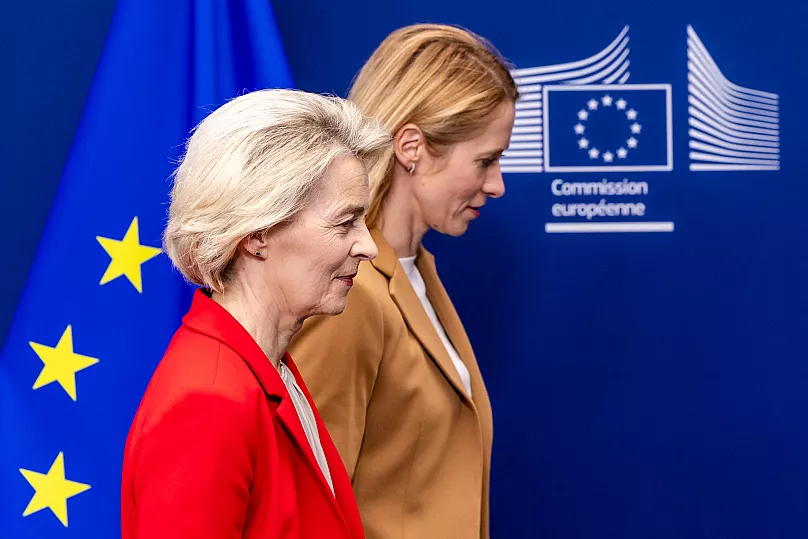
The diplomat added that Kallas’s Eastern European background contributes to the political opposition, given her firm stance on Russia that some Western and Southern European countries view as excessive.
Her efforts to reject the prospect of direct talks with Moscow aimed at peace negotiations for Ukraine have not gained traction. Leaders from France and Germany continue to explore this path alongside the United Kingdom.
In contrast, Poland, the Baltic states, and Nordic countries consistently align with Kallas’s positions, offering her a support base.
«Kallas isn’t flawless and makes mistakes, but they don’t exceed those of her predecessors,» the diplomat said.
An additional dimension in this debate involves escalating tensions between Kallas and the EEAS on one side, and von der Leyen with the Commission on the other.
Under von der Leyen’s leadership, the Commission has assumed a self-defined «geopolitical» role, spearheading responses to global crises, ranging from Russia’s invasion of Ukraine to the energy emergency and China’s excess production capacity. Foreign policy frequently features as a prominent theme in von der Leyen’s addresses.
On several occasions, this expanded role has backfired on the Commission president. Nevertheless, in general, member states have permitted this expansion, further encroaching on the mandate assigned to Kallas.
Some diplomats suspect the publicity generated by the French document results largely from institutional rivalry.
When asked whether von der Leyen aimed to dismantle the EEAS, her spokesperson replied: «The European External Action Service is an integral part of the institutions implementing EU policies, and our President supports it clearly.»
Luca Bertuzzi and Maïa De la Baume contributed to this report.