
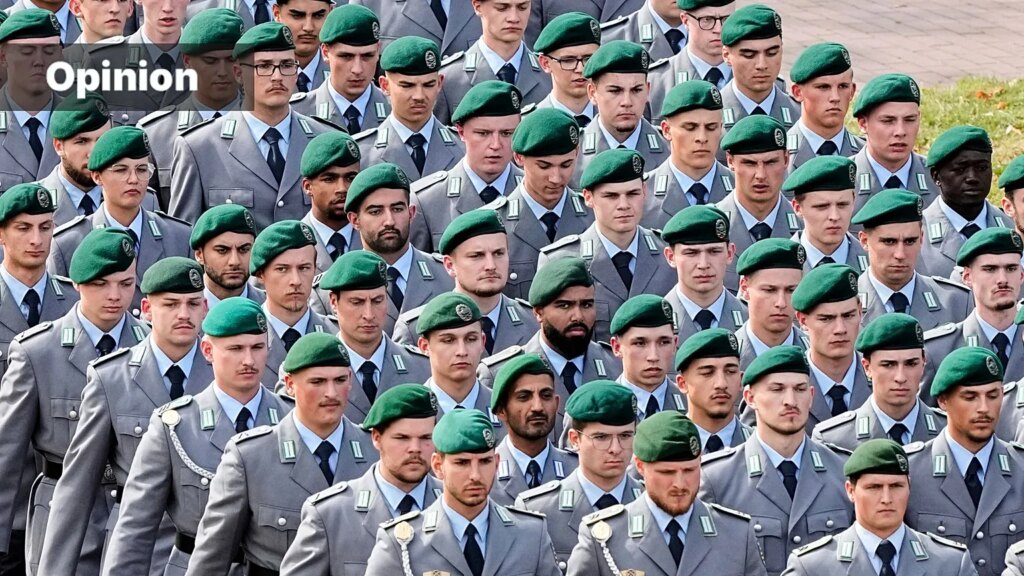
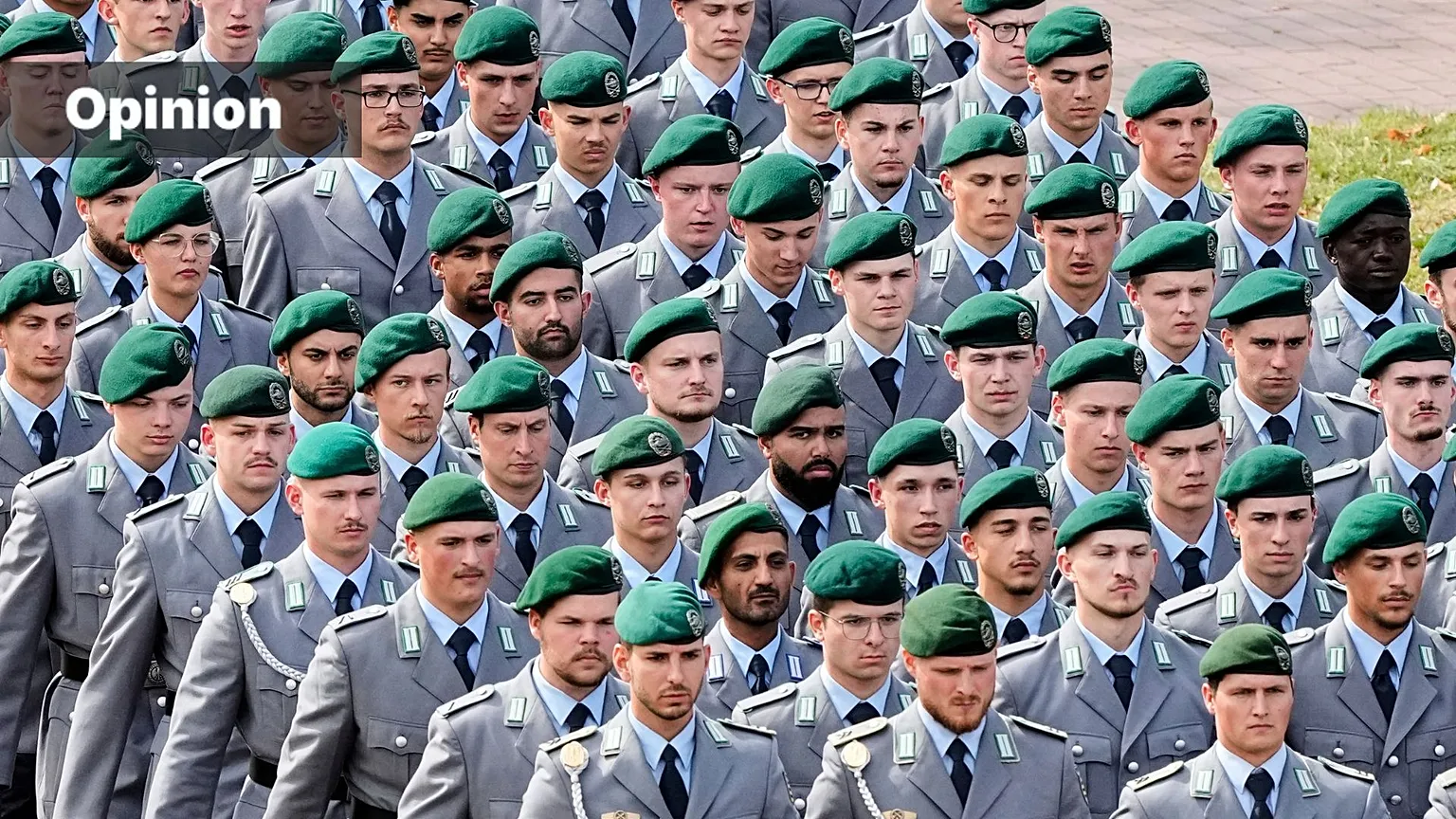
Much of the public assumes Germans are unprepared for defence. In a contribution to Euronews, military sociologist Dr Timo Graf draws on recent survey research to reveal why this perspective undervalues German society’s defence capabilities.
Russia is conducting an offensive war against Ukraine alongside a hybrid campaign targeting Europe at large. Concurrently, the US is stepping back from its role as Europe’s military security guarantor.
 ADVERTISEMENT
  ADVERTISEMENT
Within this context, Germany is taking on increased responsibilities for Europe’s defence. Indeed, Germany is allocating substantial resources to enhance its defence forces and stands as Ukraine’s leading military supporter in Europe. Nonetheless, skepticism remains regarding German citizens’ readiness to protect their nation.
Polls often indicate that most Germans would not take up arms if the country faced a military attack. Such results frequently headline German and international news outlets, unsettling Germany’s allies, encouraging adversaries, and weakening public confidence in national resilience.
Closer analysis of the data reveals markedly different insights about the German population’s defensive commitment.
Germany’s overlooked defence strength
It is accurate that, on average, personal readiness to defend one’s country tends to be higher in Nordic and Baltic nations than in Germany (as well as many other European states). The elevated support rates in those regions are often presented as proof of Germany’s comparatively lower willingness to fight.
To avoid ill-fitting comparisons, however, one must consider differences in military frameworks (such as conscription, voluntary enlistment, or professional armies) alongside distinct historical experiences, particularly regarding Russian aggression. Moreover, to realistically evaluate national defence potential, willingness-to-defend survey data should be weighed against population size.
Compared to Baltic and Nordic countries, Germany enjoys a scale advantage. Lithuania’s population is just under three million and Finland’s fewer than six million, while Germany has approximately 83 million inhabitants. According to the annual representative study by the Bundeswehr Centre for Military History and Social Sciences (ZMSBw), 54% of German men and 21% of German women currently express willingness to defend the country with arms.
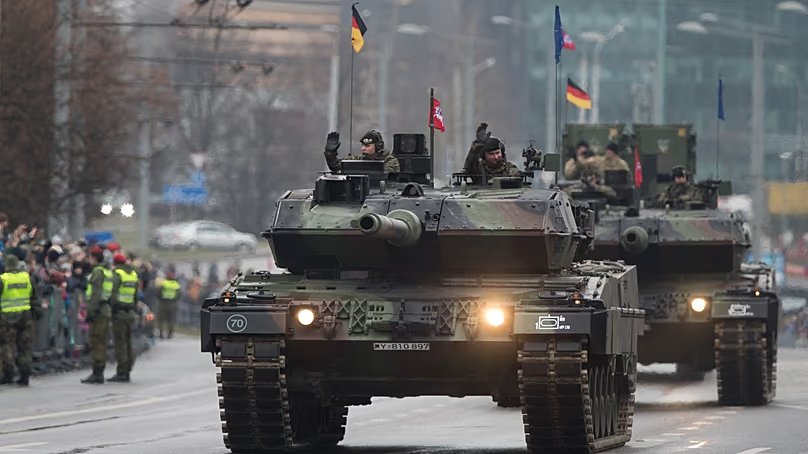
Defence extends beyond the frontline
Considering only the 20 to 40-year-old demographic—those generally fit for service—54% of men and 23% of women express readiness to participate in armed defence. Numerically, census data imply this represents over five million men and two million women.
Therefore, there is no sign of an absolute scarcity of individuals willing to support national defence. Moreover, a population’s practical defence capacity transcends simple willingness to engage in combat; only a fraction of citizens must actively participate in military roles, much like frontline troops constitute a limited segment of armed forces.
The comprehensive defence strategy encompasses the entire government and society, not just military efforts. Ukraine’s recent conflicts highlight that national defence and endurance depend on a broad base involving the state, civil society, and industry. In Germany, surveys on civil protection involvement show a notably higher readiness to assist compared to armed willingness. Hence, significant contributions to national defence do not require universal military service.
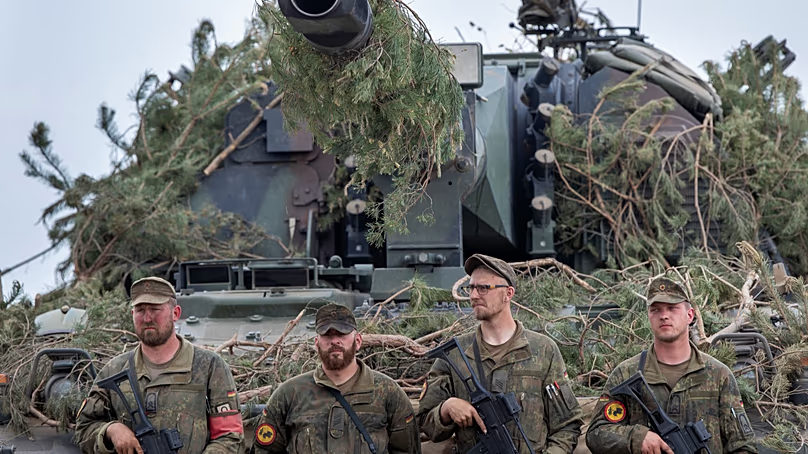
Indeed, resilience begins even earlier—with the recognition of a threat.
Since 2022, over 60% of Germans perceive Russia as a direct military threat to national security; prior to 2022, only about 25–33% shared this view. This perception spans all socio-demographic groups and political affiliations. Based on this widespread societal agreement, a strong majority endorses significant defence spending (64%) as well as reinstating military conscription (53%).
Contrary to the prevalent belief that Germany distrusts military institutions, public approval of the armed forces remains robust. Since 2000, at least 75% of surveyed individuals have maintained a positive opinion of the Bundeswehr. A similar majority trusts the military and views it as a standard component of society. This fundamentally favorable attitude towards the Bundeswehr has persisted unchanged since 2022, affirming existing support.
The misconception of German pacifism
Is it true that Germans are predominantly pacifists? The concept of “German pacifism” represents more a constructed narrative—an idealized stereotype—that reflects the ideological biases of its proponents rather than the reality of German public strategic culture.
Empirical research based on ZMSBw survey findings reveals that even before 2022, no more than 27% of Germans were consistent pacifists regarding foreign and security policy. In contrast, a clear majority exceeding 60% comprised pragmatists or realists who accepted both military and non-military means as legitimate foreign policy tools.
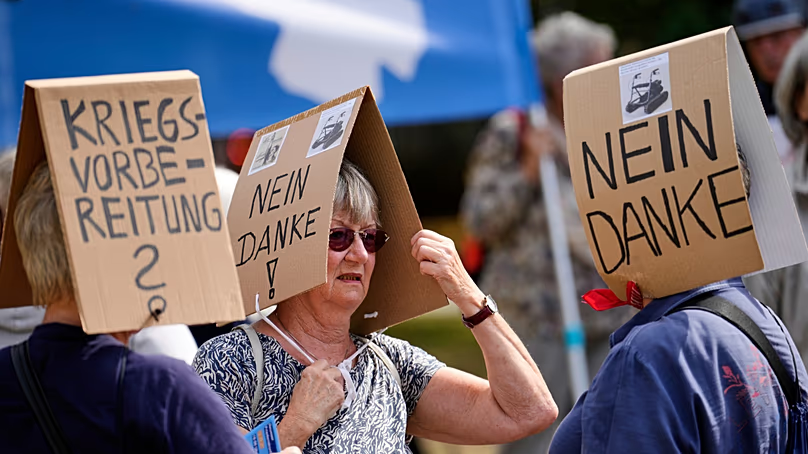
Since 2022, the proportion of pacifists has decreased to 13%, while realists now approach 70%. Realists form the majority across all social and political groups. Thus, the broad public endorsement of Germany’s defence policy shifts since 2022 reflects a pragmatic majority responding to altered security threats.
Resilience amid skepticism
Germany is Europe’s largest economy and most populous nation. In absolute spending, it leads European countries on defence and stands as the strongest military backer of Ukraine against Russian invasion.
The majority supports this stance because they are security pragmatists acknowledging Russia as a concrete threat to Germany’s security. This stance reflects reactions to indirect war effects.
Should Germany face a direct military assault, millions would be willing to bear arms in defence.
Despite frequent critical media portrayals, neither Russia nor Germany’s allies—and especially not Germans themselves—should underestimate the country’s self-defence potential.
Dr Timo Graf is a senior research officer in the Military Sociology Research Division at the Bundeswehr Centre for Military History and Social Sciences (ZMSBw) located in Potsdam.