
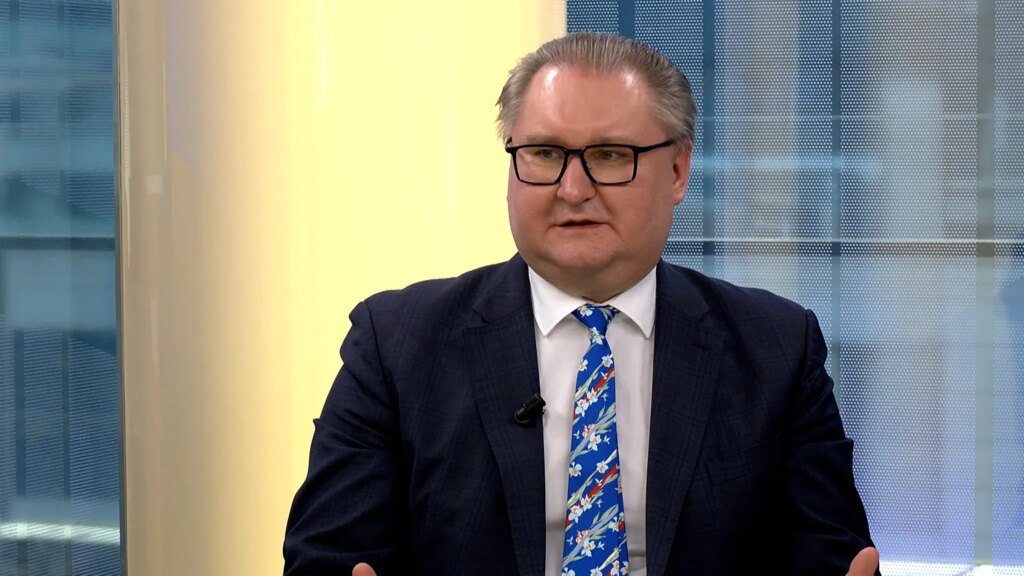
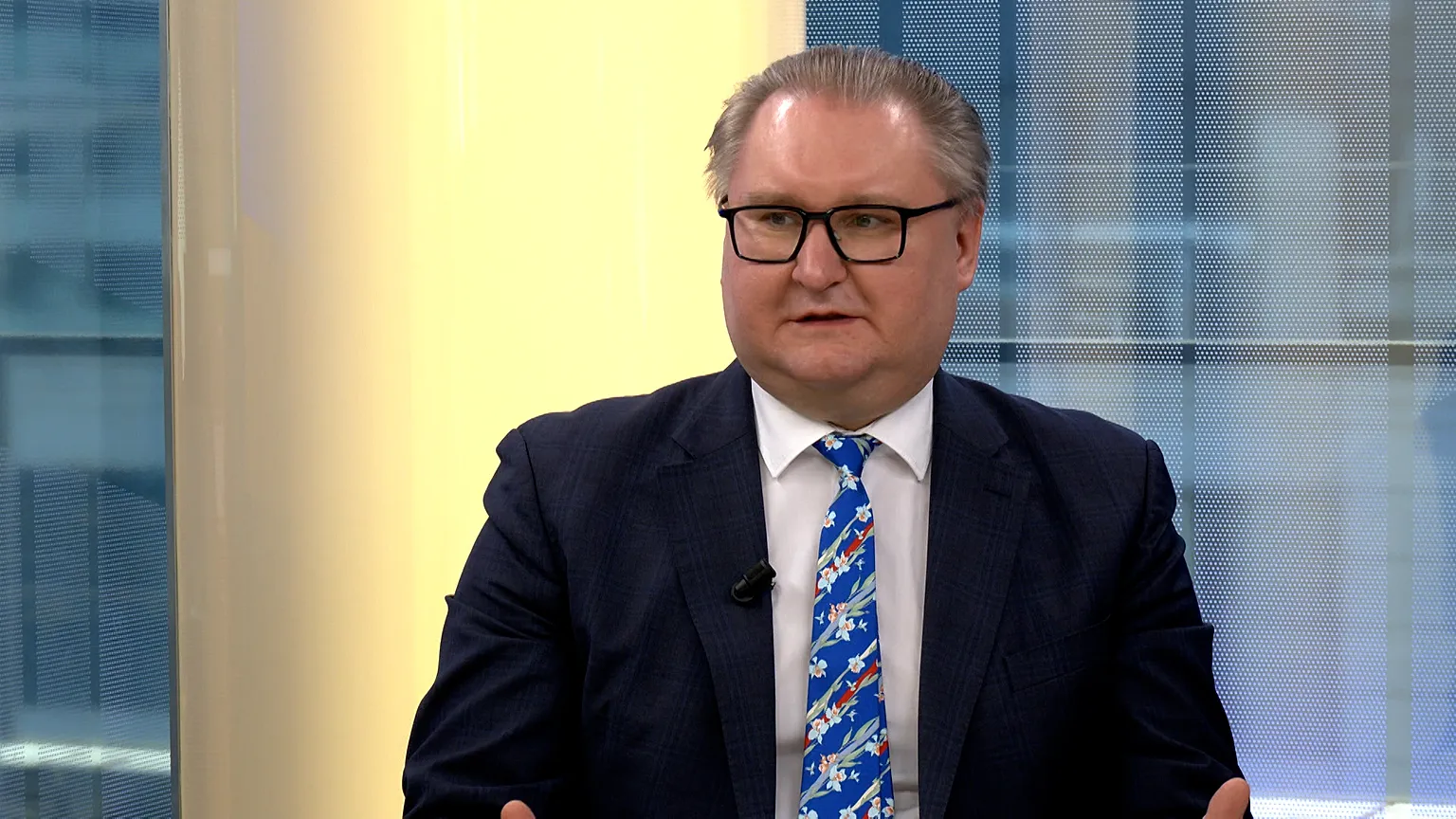
Ukraine is experiencing delays in its EU accession timetable, stated the country’s Deputy Prime Minister for European and Euro-Atlantic Integration in an exclusive interview with Euronews, emphasizing the need to launch all accession clusters as soon as next month.
In a renewed push to accelerate the EU membership procedure, Kyiv calls on Brussels to start all Ukrainian negotiation clusters in June, advancing the previously set target from July.
 ADVERTISEMENT
  ADVERTISEMENT
“Our assessment is that all six clusters could open already in June,” Ukraine’s Deputy Prime Minister for European and Euro-Atlantic Integration, Taras Kachka, told Euronews in a one-on-one conversation. “Our schedule shows we are already past the deadline.”
Kachka’s statements follow remarks by European Commissioner for Enlargement Marta Kos, who indicated the first negotiation cluster might begin in June during Cyprus’ EU presidency, with the other five expected after Ireland assumes the presidency in July.
Negotiation clusters focus on crucial reform areas necessary for EU alignment, including judicial reform and rule of law. Candidate countries must fulfill criteria in each area, and final consent requires unanimous approval from all 27 EU member states.
Despite Ukraine’s technical readiness, progress has been stalled due to Hungary’s veto stance under former Prime Minister Viktor Orbán.
Longstanding disagreements exist between Budapest and Kyiv over the significant Hungarian minority in Ukraine’s western Transcarpathia region; resolving these disputes is pivotal to opening Ukraine’s first EU accession chapter.
With Hungary’s new government expressing willingness to engage on Ukraine’s EU integration, Brussels anticipates a more cooperative approach from Budapest that could facilitate Kyiv’s membership process.
Kachka noted that Hungary’s Foreign Minister, Anita Orban, has already stated Budapest “will not block anything.”
Both nations have initiated discussions about minority rights, marking a tentative step toward mending bilateral relations.
Kachka assured Euronews that Ukraine’s stance on minority rights remains firm: “Ukraine respects the Hungarian community within its borders fully.”
“We have also offered previous administrations, and continue to propose to the current government, fine-tuning of legislation so that this very positive environment remains unchanged,” he added.
According to Kachka, three negotiation clusters were prepared to start a year ago, prior to Hungary formally obstructing the process. In March, Brussels announced it would informally open all six clusters, covering internal reforms, budget, and justice.
Kyiv maintains that it has completed the necessary groundwork, so officially opening the accession clusters will not constitute a new beginning for the nation.
“Everything is already in place, which is why we are behind schedule,” Kachka said.
He also mentioned that Ukraine faces “certain biases” regarding the timing and circumstances of its EU accession process commencement.
“For Ukraine, this process started about 15 years ago, or even before, during many years of association agreement negotiations,” he explained. “All benchmarks set by the EU can be met within the next 8 to 12 months.”
The minister reiterated Kyiv’s opposition to German Chancellor Friedrich Merz’s suggestion of granting Ukraine “associate member” status in the EU without voting rights, describing the idea as “unacceptable.”
Ukrainian President Volodymyr Zelenskyy has already dismissed the proposal, insisting that Ukraine deserves full EU membership.
“It is unacceptable if this is an alternative to full membership, and this principle guides all discussions on Ukraine’s future. There are no substitutes for rapid, merit-based, full inclusion in the European Union,” Kachka concluded.