
The latest report reveals that despite significant investments in hydrogen-powered buses in Poland, electric buses prove to be more economical and environmentally friendly due to Warsaw’s dependence on hydrogen derived from non-renewable sources. Meanwhile, Germany stands out as a positive example for hydrogen bus integration.
Poland’s ambitious endeavor to develop a hydrogen-based public transportation system faces setbacks, with several buses idled by soaring fuel expenses and delicate infrastructure, as highlighted in a recent analysis by the NGO Central and Eastern Europe Bankwatch Network.
 ADVERTISEMENT
  ADVERTISEMENT
According to the report, Polish local governments initially chose hydrogen buses mainly due to subsidies covering up to 100% of purchase expenses, whereas electric buses typically had support ranging from 60% to 80%. However, once hydrogen buses were operational, operators found that fuel costs far exceeded those of electricity.
The study suggests hydrogen buses were marketed as a speedy route to greener transport backed by generous EU and national funds; nevertheless, many municipalities are now switching back to battery-electric options, deterred by steep fuel prices and insufficient refueling infrastructure.
Cities such as Rybnik noted that operating hydrogen fleets costs more than three times as much as diesel and four times the cost of hybrids. In Rzeszów, fuel expenses over 15 years were projected to surpass the buses’ own purchase costs, states the CEE Bankwatch Network report.
By the end of April, Poland possessed a total of 247 hydrogen buses, either already in operation or under contract by municipalities. Of these, 140 buses are active in service, while 107 have been ordered but not yet deployed.
Despite ambitious hydrogen goals, by the end of 2025, Poland had only nine hydrogen refueling stations compared to the 32 planned in the government’s 2021 hydrogen strategy. Conversely, the country features over 12,500 electric charging stations as of early 2026.
Reconsidering ‘zero-emission’ buses
EU regulations aimed at reducing emissions from public buses mandate each member state to ensure a portion of new public transport buses operate on cleaner energy sources instead of conventional diesel.
This requires cities and transport authorities, when procuring new buses, to include some that use cleaner technologies such as electric batteries or hydrogen, or fuels with lower carbon footprints such as biofuels.
Hydrogen was promoted by EU officials as a flagship technology for decarbonizing transport while supporting a domestic hydrogen sector. Yet, the technology’s high fuel prices, limited availability of renewable hydrogen, and immature infrastructure revealed significant systemic challenges, particularly in Poland.
The report also questions whether buses powered by non-renewable hydrogen should be categorized as «green» public transport, since more than 97% of hydrogen fuel in Poland is produced from fossil gas. The NGO contends that hydrogen buses are labeled “zero-emission” only because they produce no tailpipe emissions, while overlooking emissions tied to fossil fuel production.
«Polish hydrogen buses have been largely presented as clean and zero-emission, but in reality, the fuel was primarily fossil-based, and even the small share of electrolytic hydrogen did not comply with strict EU renewable criteria,» notes the study, highlighting Poland’s use of biomass-generated electricity, which the report argues does not qualify as “green energy.”
In contrast, battery-electric buses showed significant progress in range, charging networks, and cost-effectiveness over the same period, the report highlights.
Poland’s power sector is rapidly transitioning from coal to renewables such as wind and solar. According to the energy think tank Ember, renewables contribute roughly 30% of electricity generation, although coal still supplies about half of the country’s electricity.
Cities including Wrocław, Płock and Żory adjusted their procurement strategies after determining that electric vehicles present lower financial and operational risks, the report states. Kraków also reduced its hydrogen ambitions because of uncertainties around fuel availability and infrastructure development.
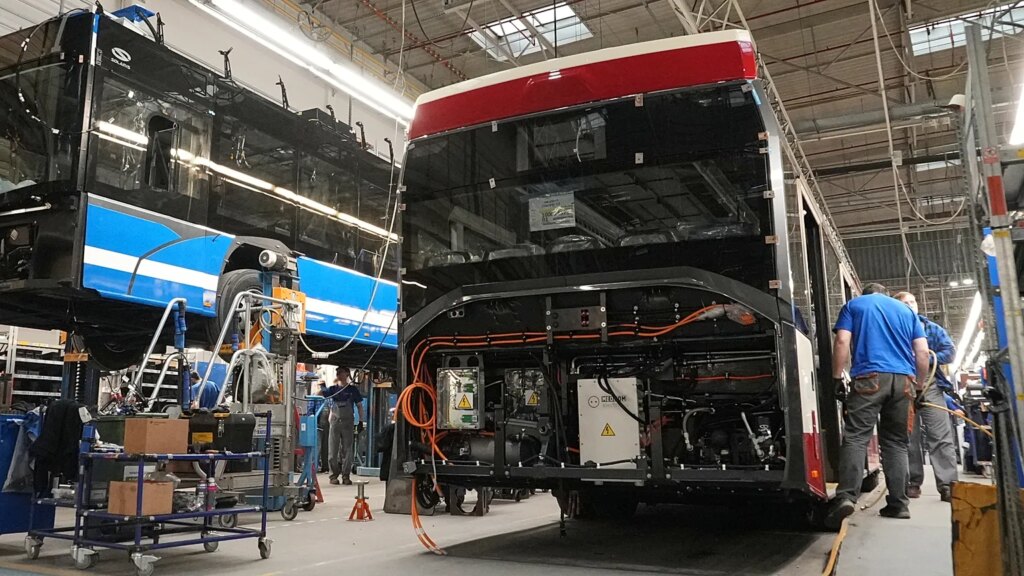
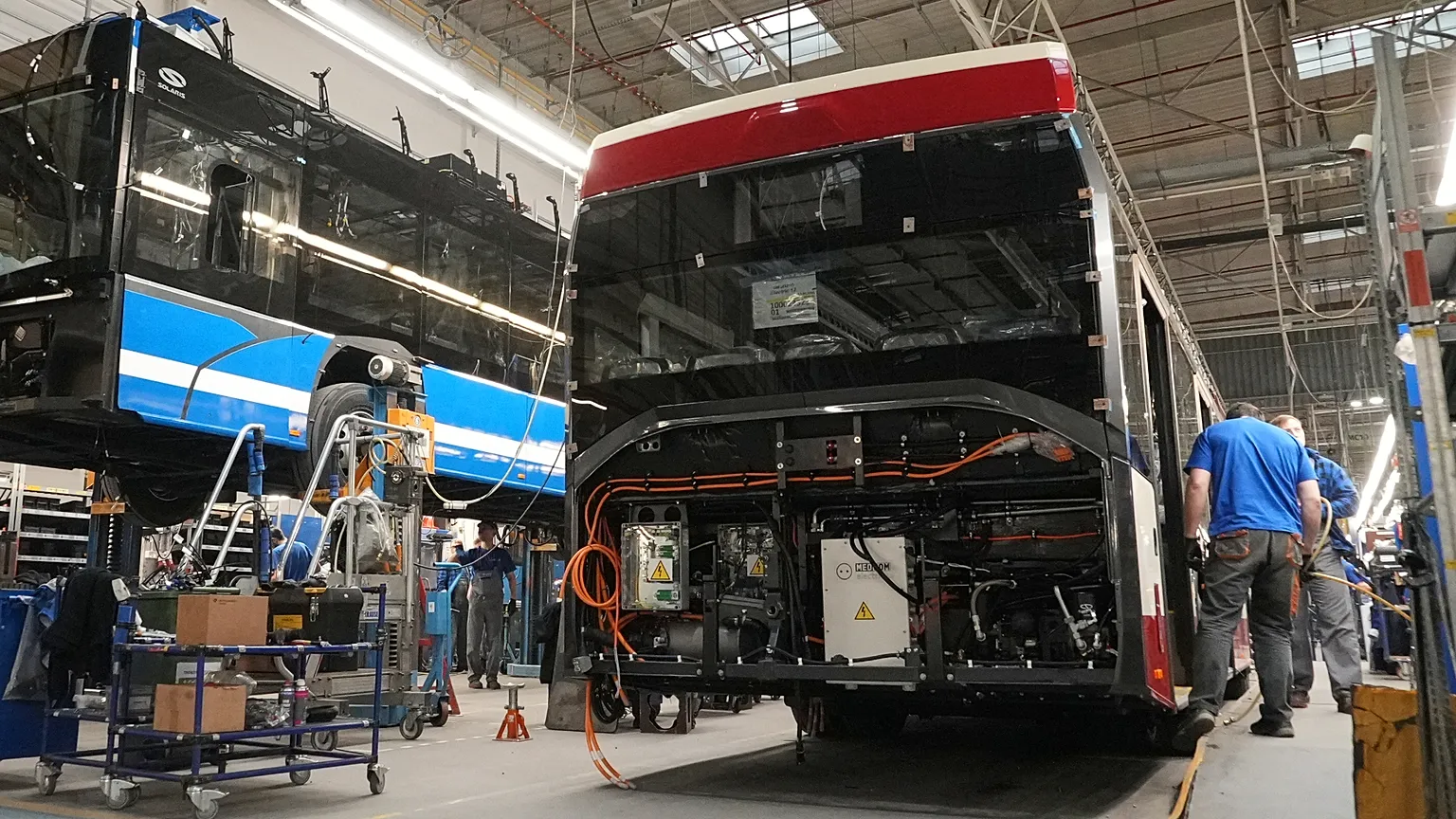
Polish manufacturers Solaris Bus & Coach and NesoBus have introduced numerous hydrogen and electric buses in cities like Poznań, Konin, Lublin, and Wałbrzych.
Problematic financing
Despite ongoing difficulties, the Polish government received a new tranche of EU funds totalling €7.2 billion on April 23, with €500 million earmarked to stimulate hydrogen investments, focusing notably on growing private sector activities in renewable and low-carbon hydrogen production, according to the European Commission.
Leveraging EU grants, Warsaw is contemplating deploying over 1,000 electric and hydrogen buses and trolleybuses to expedite the move toward cleaner public transport. Nonetheless, uncertainty remains as to whether the focus will be on electric or hydrogen vehicles.
The Polish government did not respond before publication to Euronews’ request for comment.
The CEE Bankwatch Network reports that projects involving hydrogen bus procurement or hydrogen refueling station development have received upwards of €120.7 million in non-repayable grants and almost €6.08 million in loans, supporting the deployment of 163 buses and two stations.
Additionally, 73 fuel-cell electric buses and one refueling station were financed through combined projects that also included battery-electric buses, charging facilities, and other investments, which the NGO states makes it impossible to specify exact funding proportions allocated strictly to hydrogen components.
«Hundreds of millions of euros from EU public funds spent to artificially stimulate hydrogen demand in Polish public transport could and should have been directed toward deploying proven solutions that already offer advantages to local communities and the climate,» said the report’s author, Diana Maciaga.
Germany’s hydrogen success
In contrast to Poland, Germany stands out as a success in hydrogen deployment, currently operating over 600 hydrogen-powered public buses. The country is set to receive 19 additional hydrogen buses following Solaris Bus & Coach’s successful tender on May 4.
Solaris has delivered more than 800 hydrogen buses serving passengers in numerous European cities, with Germany leading the sector. France, Italy, the United Kingdom, and the Netherlands have also introduced significant numbers of hydrogen buses in recent years.
Laurent Donceel, director for transport, sustainability, and industrial policy at industry association Hydrogen Europe, described Poland’s early struggles to secure green hydrogen supply as “completely normal,” considering the country is in the early stages of this emerging sector.
The trade association recognizes Poland as the “leading EU country in fuel bus production” and emphasizes the importance of exploring the full range of clean-tech transportation solutions given Warsaw’s key role in the national road transport landscape.
«With appropriate incentives and regulatory frameworks at both EU and national levels, Poland will quickly catch up to countries like Germany. It is also important to recognize that, with Poland’s current reliance on coal for power, clean hydrogen remains the most effective decarbonization option,» Donceel told Euronews.