
In 2025, Germany recorded approximately 334,000 cybercrime incidents, with two-thirds originating from foreign or unidentified sources, and it’s believed that many cases remain unreported.
On Tuesday, Germany announced plans to establish «active cyberdefence» measures aimed at countering a significant surge in cyberattacks, several of which have intensified in severity due to artificial intelligence.
 ADVERTISEMENT
  ADVERTISEMENT
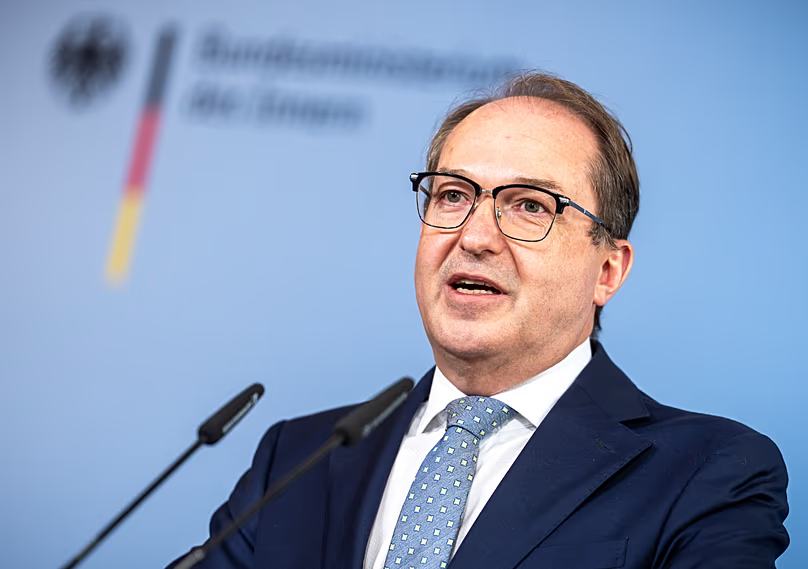
Interior Minister Alexander Dobrindt indicated he intends to propose new legislation to the cabinet this month, permitting security agencies to retaliate against servers employed in cyberattacks.
His objective is to «disrupt and dismantle the infrastructure used by attackers,» he stated during a Berlin press briefing, highlighting that a large share of attacks stem from Russia.
«This implies preventing any future attacks directed at German targets, such as energy firms, from foreign server systems by disabling those servers, software, or platforms responsible.»
The ministry reported a rise in severe cybercrimes targeting German businesses, governmental bodies, and critical infrastructure, inflicting economic damages exceeding €200 billion last year.
The ministry noted that «AI-based tools play an increasingly crucial role in cybercrime,» enabling perpetrators to execute attacks faster, with greater accuracy and professionalism.
In 2025, roughly 334,000 cybercrime cases were officially recorded in Germany, with two-thirds originating from overseas or unidentified locations, and the actual number likely much higher due to unreported incidents.
Dobrindt emphasized that «there is a need to expand active cyberdefence capabilities.»
He further highlighted one of the primary cyber threats, stating, «Since Russia’s full-scale invasion of Ukraine in 2022, there has been a marked rise in activism originating from that country.»
According to the ministry, over 1,000 ransomware incidents were documented last year in Germany, a 10% increase compared to the previous year, during which attackers extorted upwards of $15 million (€12 million).
The count of denial-of-service attacks rose by 25%, reaching 36,706 cases.
Mark Branson, head of the German financial regulator BaFin, also warned of AI-driven cyberattacks, announcing that the agency is intensifying its oversight of cyber risks faced by financial institutions.
«New AI models possess the ability to swiftly identify and exploit numerous vulnerabilities in IT systems,» Branson stated, urging businesses to accelerate their remediation efforts for these security gaps.
He concluded by emphasizing that «investment in cybersecurity is both critical and urgent.»
Additional sources • AFP