
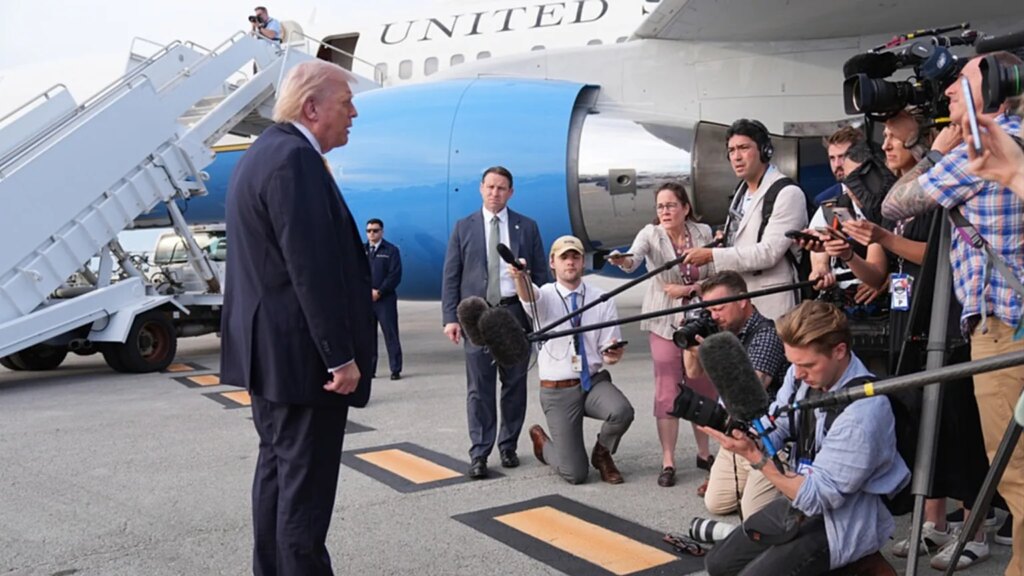
Trump insinuated, without providing specifics, that a significant additional reduction of US military forces in Germany is forthcoming, a day after the Pentagon revealed plans to withdraw 5,000 troops. Earlier this week, Trump also threatened troop reductions in Spain and Italy.
US President Donald Trump announced late Saturday that the United States intends to drastically decrease its military presence in Germany, intensifying tensions with German Chancellor Friedrich Merz.
 ADVERTISEMENT
  ADVERTISEMENT
The Pentagon stated on Friday its intention to remove 5,000 troops from the NATO ally within the next six to twelve months, following Merz’s criticism of the US-Israeli approach to the Iran conflict, noting the absence of a clear American strategy.
When questioned on Saturday about the reason behind the troop reduction in Germany, Trump refrained from elaborating, only indicating that a larger cutback is imminent while aiming to reduce US commitments to European defense.
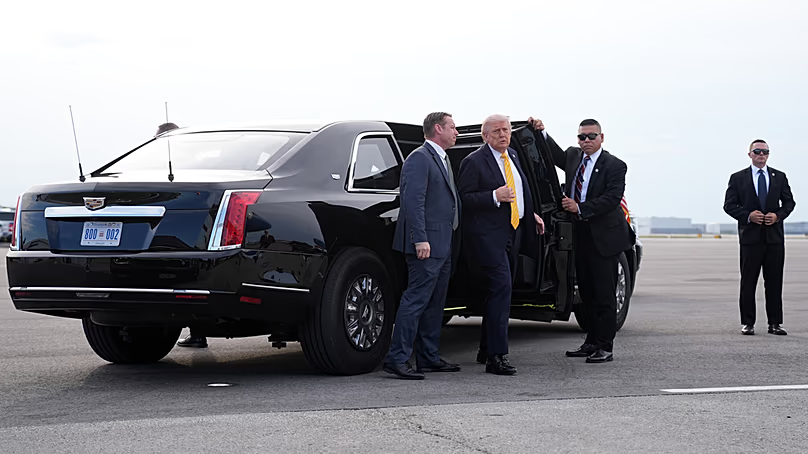
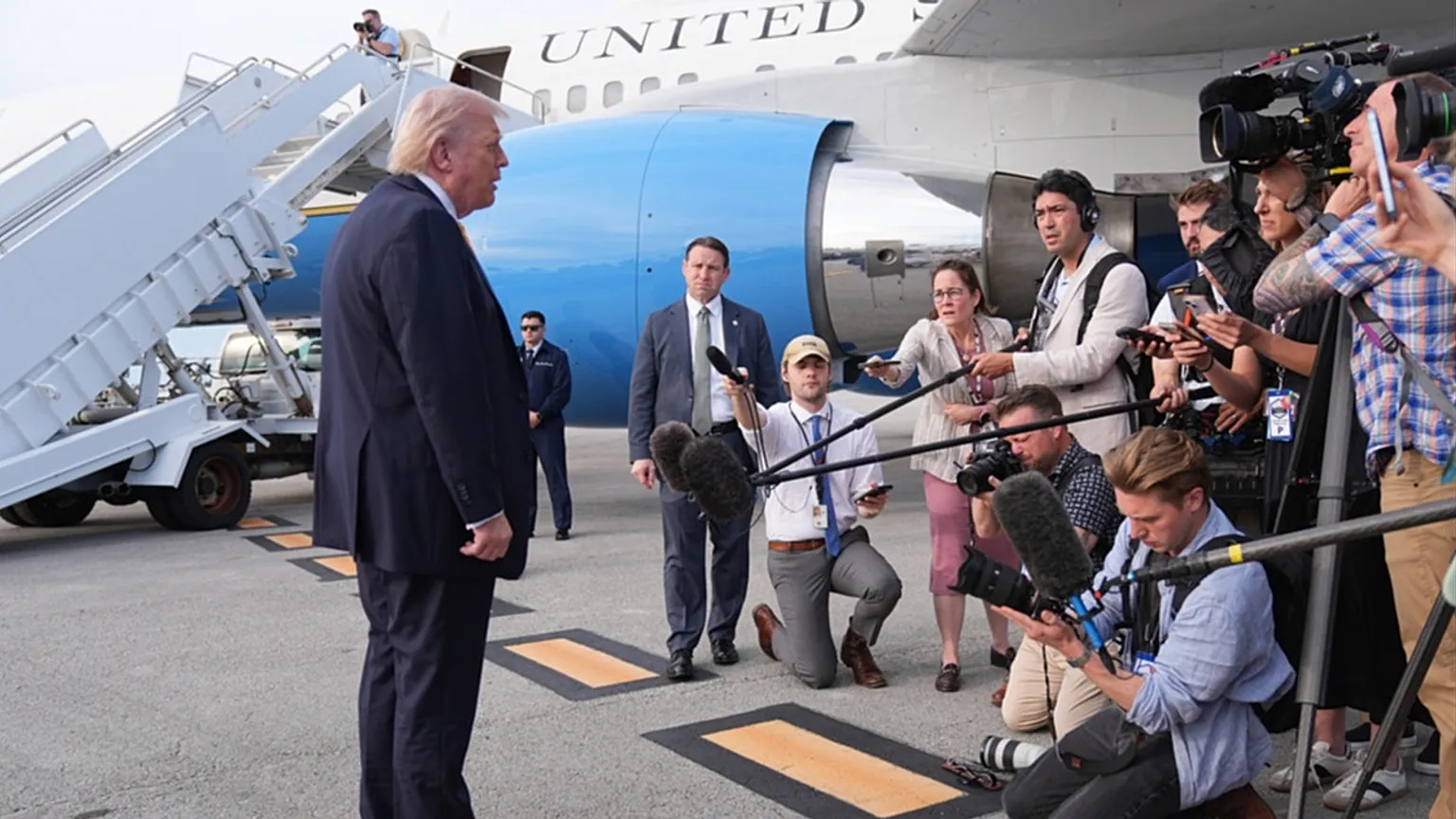
“We will greatly reduce our presence. This reduction will surpass the announced 5,000 troops,” Trump stated to the press in Florida.
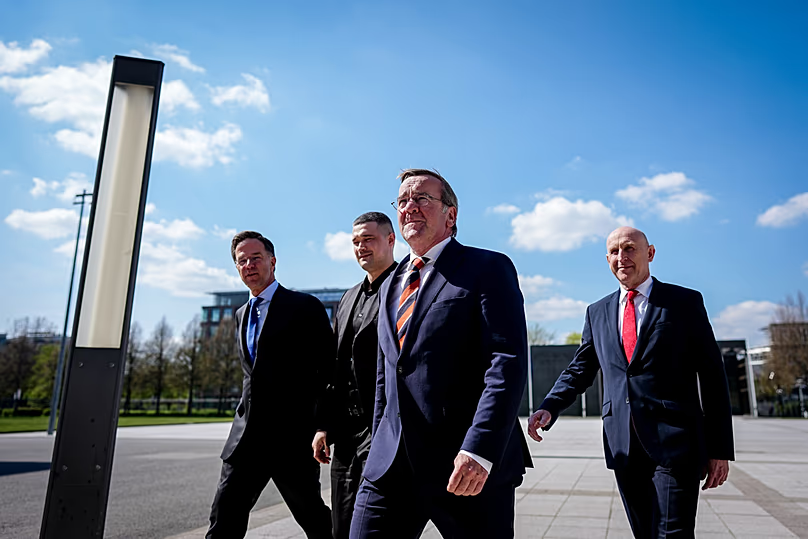
Earlier on Saturday, Germany’s Defence Minister Boris Pistorius seemed to accept the announcement of 5,000 US troops departing his country with composure.
Pistorius acknowledged the drawdown, which Trump has warned about for years, as anticipated, stressing the necessity for European countries to assume increased responsibility for their own defence. Nevertheless, he underlined that security cooperation remains mutually beneficial across the transatlantic partnership.
“The deployment of American forces in Europe, notably in Germany, serves both our interests and those of the United States,” Pistorius commented to German news outlets.
The announcement to reduce US forces faced opposition across party lines in Washington, provoking prompt objections from Democrats and apprehension among Republicans who fear it could signal weakness to Russian President Vladimir Putin, as Russia’s invasion of Ukraine approaches its fifth year.
Trump’s move follows growing irritation with European allies, who he accuses of failing to back his stance with Israel against Iran. He has criticized leaders such as Merz, Spanish Prime Minister Pedro Sánchez, and British Prime Minister Keir Starmer.
Merz recently condemned the Iran conflict, claiming the US is being “humiliated” by Iranian leaders and criticizing Washington for lacking a defined strategy, clear goals, and exit plans.
In another indicator of rising tensions, Trump accused the European Union of violating their US trade agreement and revealed plans to raise tariffs next week to 25% on EU-made cars and trucks, a move expected to disproportionately impact Germany’s significant automotive industry.
Brussels reacted promptly, with Bernd Lange, chair of the European Parliament’s trade committee, condemning the action as “unacceptable” and accusing Trump of reneging on yet another US trade promise. Lange also described the US as an “unreliable” trade partner.
The withdrawal of 5,000 troops from Germany would represent approximately one-seventh of the 36,000 US military personnel currently stationed there. The Pentagon has provided minimal information regarding which units or missions will be affected.
Earlier in the week, Trump also hinted at troop reductions in Italy and Spain following disputes with their leaders, once more related to the Iran conflict. The US keeps about 12,500 troops in Italy and nearly 4,000 in Spain.
Overall, the US typically deploys between 80,000 and 100,000 active-duty troops across Europe, depending on ongoing operations, training exercises, and rotations.
Washington increased its military presence in Europe following Russia’s full-scale invasion of Ukraine in February 2022. German officials have expected for over a year that these forces would be the first to withdraw.
Additional sources • AP