
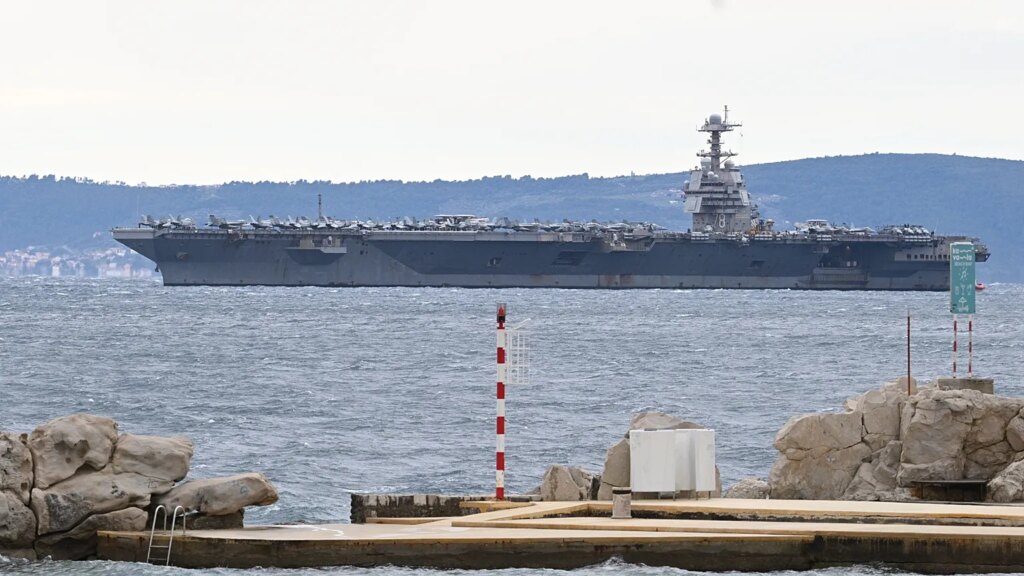
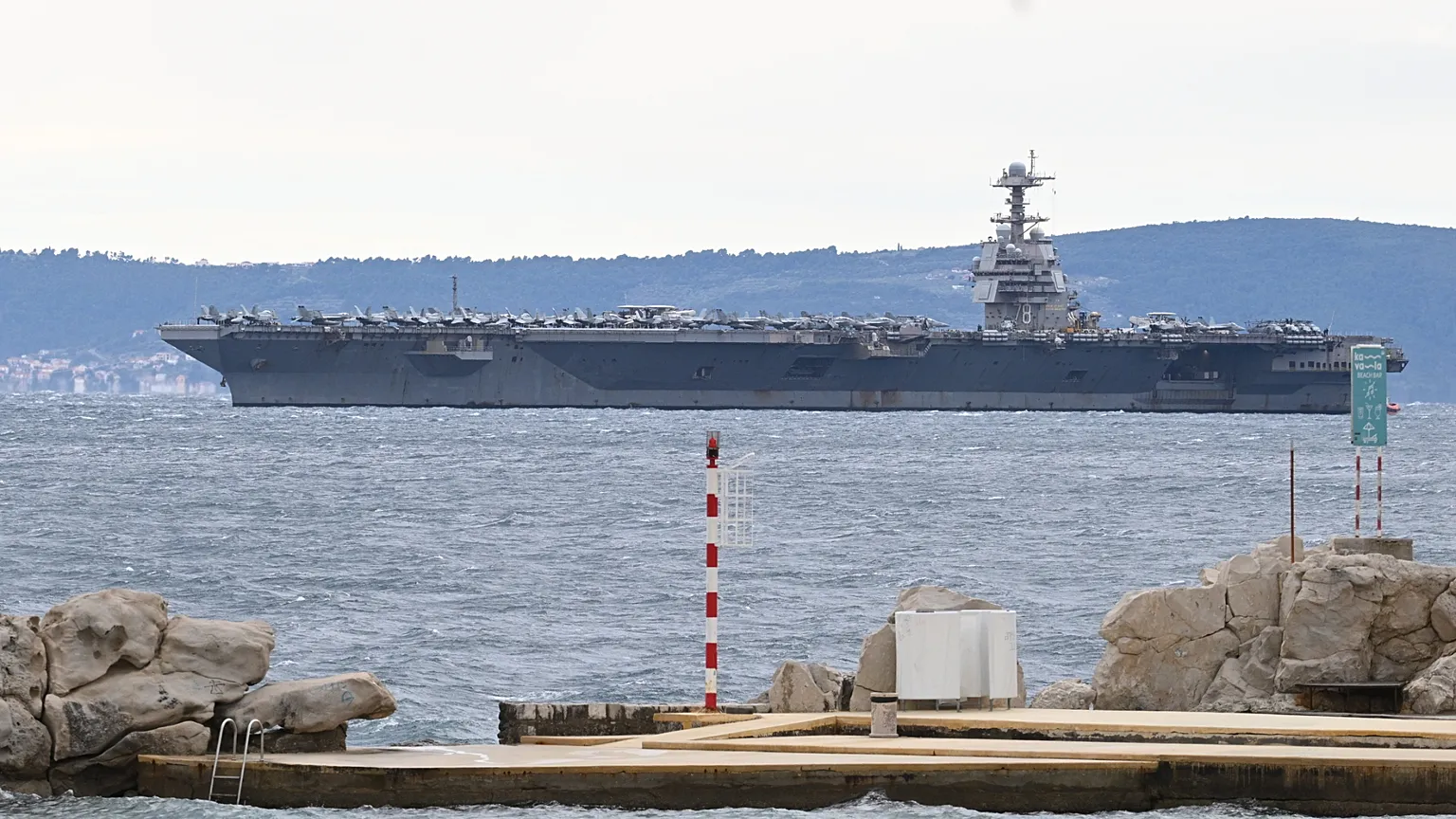
The largest aircraft carrier on the planet is poised to return to the US after completing missions that involved operations during the Iran conflict and the US-led mission in Venezuela culminating in the capture of Nicolas Maduro.
The USS Gerald R Ford is heading back to the United States after spending over 300 days at sea — marking the longest deployment by any American aircraft carrier since the Cold War — following its participation in the Iran war and the Venezuelan mission that led to Nicolás Maduro’s capture.
 ADVERTISEMENT
  ADVERTISEMENT
Details about the exact timing of the Ford’s departure from the Middle East remain unclear, though officials speaking anonymously have indicated the carrier will reach its base in Virginia by mid-May.
Recognized as the world’s most powerful and technologically advanced aircraft carrier, the Ford set sail from Naval Station Norfolk in late June 2025, initially navigating towards the Mediterranean Sea before rerouting to the Caribbean in October.
Last month, the carrier had to return to the Mediterranean for repairs after a fire erupted in its laundry room on 12 March, docking in a Greek port for maintenance.
Subsequently, the Ford was moved to Croatia to undergo additional repair work.
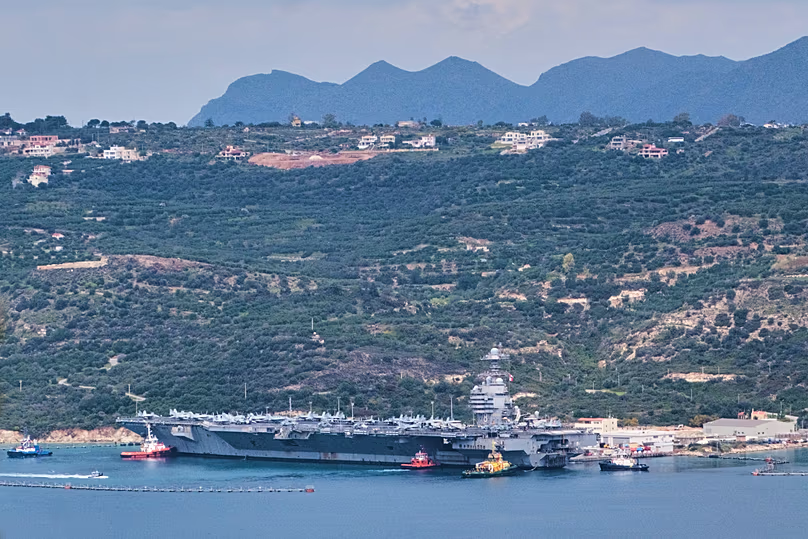
Weighing 100,000 tonnes and stretching 334 metres in length, it has a flight deck that can support over 75 aircraft, though typically it deploys with an air wing consisting of 60 to 70 planes.
On its 295th consecutive day at sea, the Ford surpassed the previous post-Cold War record of 294 days, set by the USS Abraham Lincoln in 2020 amid the COVID-19 crisis, according to figures from the US Naval Institute.
The longest deployment record is still held by the USS Midway, which spent 332 days active during the Vietnam War.
At present, three US aircraft carriers are operating in the Middle East — a level not observed since 2003.
The USS Abraham Lincoln has been stationed there since January, while the USS George HW Bush arrived just last week, proceeding to the Arabian Sea to support a US blockade on Iranian ports.
Additional sources • AP