
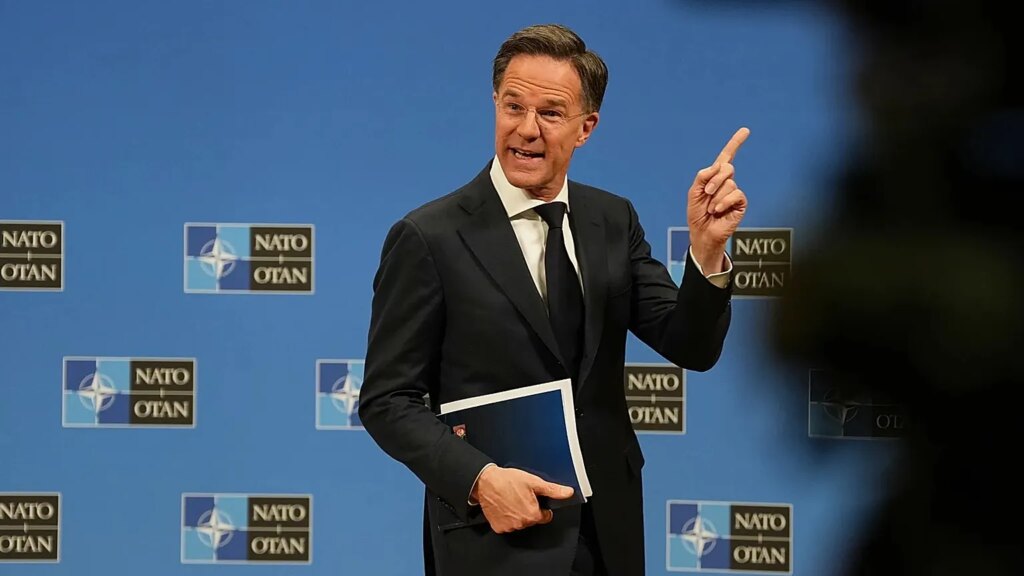
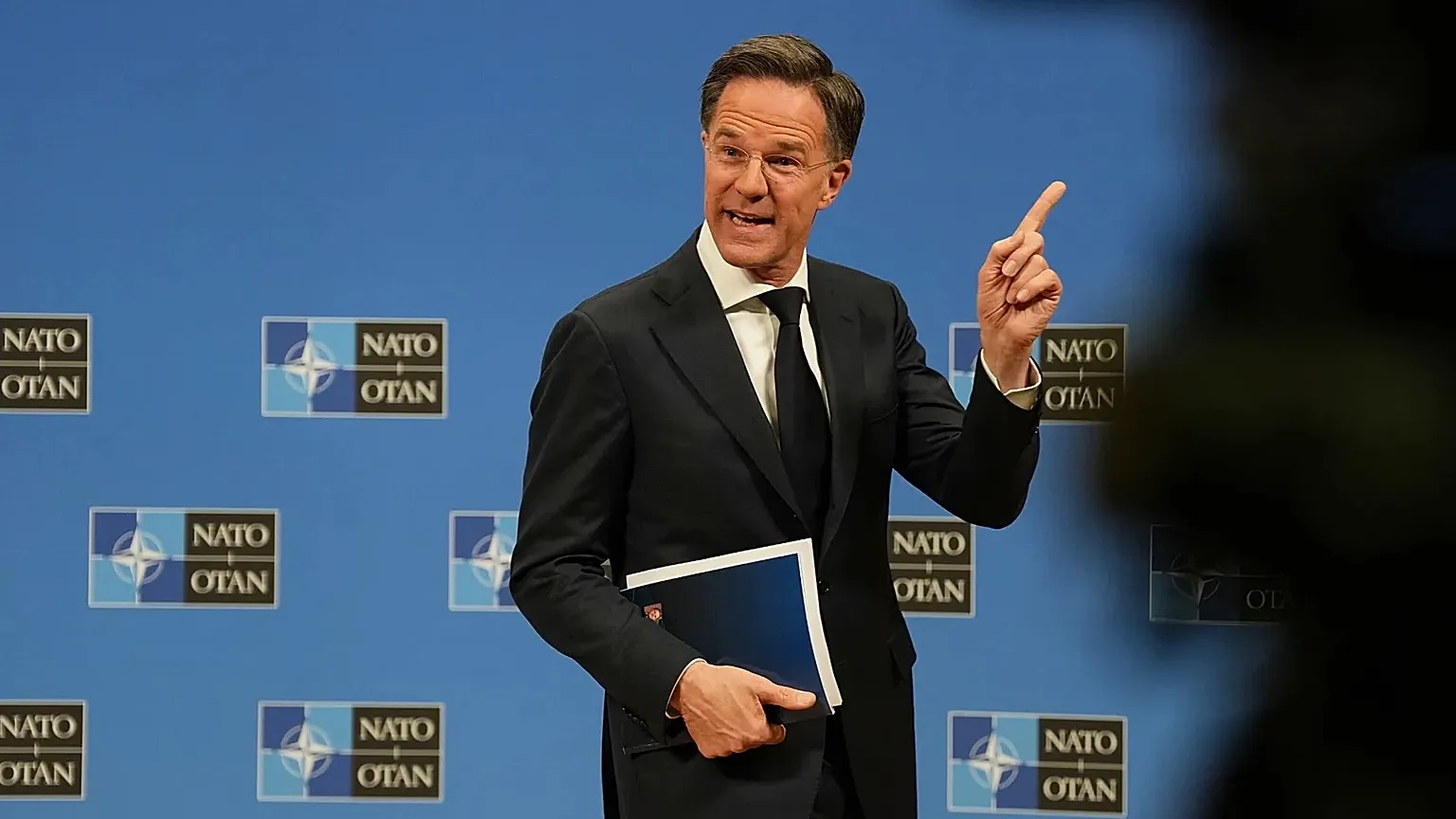
The Secretary General confronts a delicate mission: convincing Trump on the advantages of staying in NATO, or else facing further isolation amid a more volatile global environment. Although Rutte’s strategy of flattering the US president has unsettled some allies, NATO experts consider it indispensable.
On Wednesday, NATO Secretary General Mark Rutte embarks on a planned three-day trip to Washington, coinciding with renewed warnings from US President Donald Trump regarding the potential withdrawal from the alliance.
 ADVERTISEMENT
  ADVERTISEMENT
Following Tuesday’s last-minute easing of tensions with Tehran, reportedly including a two-week truce and the reopening of the Strait of Hormuz—although details remain vague—Rutte is set to hold talks with Trump.
Later this Wednesday, he will meet President Trump in the White House alongside Secretary of State Marco Rubio and Defence Secretary Pete Hegseth.
Rutte’s agenda also includes discussions with congressional members and a keynote address scheduled for Thursday at the Ronald Reagan Presidential Foundation and Institute.
A central topic during this visit is anticipated to be Washington’s frustration over allies’ refusal to back the United States and Israel militarily against Iran, or to permit US aircraft involved in the conflict to traverse their airspace.
This stance by several NATO members has provoked Trump’s ire, leading to his criticism of European governments and raising doubts about the continued value of US involvement in the alliance.
For a long time, Trump has voiced skepticism about what he perceives as America’s outsized role in providing European security.
The US president has frequently condemned NATO allies for their lack of support during critical phases of conflict, branding the alliance a “paper tiger” without the US. Last week, he stated he would revisit the US contributions to NATO, a sentiment echoed by Marco Rubio, who indicated a possible reassessment of ties with allied countries.
Kurt Volker, former US ambassador to NATO under President George W. Bush, highlighted that Rutte faces a challenging role in balancing relations with European allies like Germany, Finland, Spain, and France, nations which have openly criticized the US-Israeli campaign in Iran.
Volker described Europe’s messaging as “very poor” in remarks to Euronews.
He suggested that an open opposition by these countries was unnecessary and helped fuel a negative reaction against NATO.
Volker further proposed that Trump might now try to “shift the blame” for difficulties in the conflict onto allies who declined to back the US stance.
“Europeans could have stated, ‘we all share an interest here, let’s explore how we might assist,’” he noted, emphasizing that such a statement wouldn’t have entailed direct military engagement.
Patrick Bury, a former NATO analyst and defense studies lecturer at the University of Bath, affirmed that allies have every right to refuse access to their airspace.
“NATO states can legally close their skies,” he said, recalling the 1982 precedent when France and Spain limited US access during the Libya operations.
Bury added that Rutte’s main goal will be to reassure Trump while allowing member countries to uphold their independent policies regarding Iran.
“He must secure US commitment to NATO. His role encompasses representing the entire alliance, not just individual members,” he explained.
Having served as Dutch prime minister from 2010 to 2023, Rutte has faced criticism for his diplomatic stance towards Trump.
For instance, in January, when Trump hinted that the US might “take” Greenland, some allies felt Rutte’s response lacked firmness. Back then, Trump did not dismiss the possibility of military action to acquire the territory from Denmark, a NATO partner.
Additionally, Rutte was subjected to ridicule after calling Trump “daddy” during the 2025 NATO summit in The Hague.
Nonetheless, analysts argue this is not the time for a shift in tactics and acknowledge merit in his approach, despite growing European perceptions that Rutte is excessively deferential and compliant with Trump’s requests.
“Trump is often pulled back from extreme positions, so Rutte should attempt to do so,” a Washington-based source familiar with the matter told Euronews.
“Rutte is a capable and prudent figure. There is an evident effort to guide this administration toward a more measured posture on NATO,” the official continued. “If Rutte can ease tensions when stakes are so elevated, he must at least make the effort.”