
Budapest maintains its reliance on Russian crude oil, but analysts argue this may stem from political and economic choices as well as technical limitations.
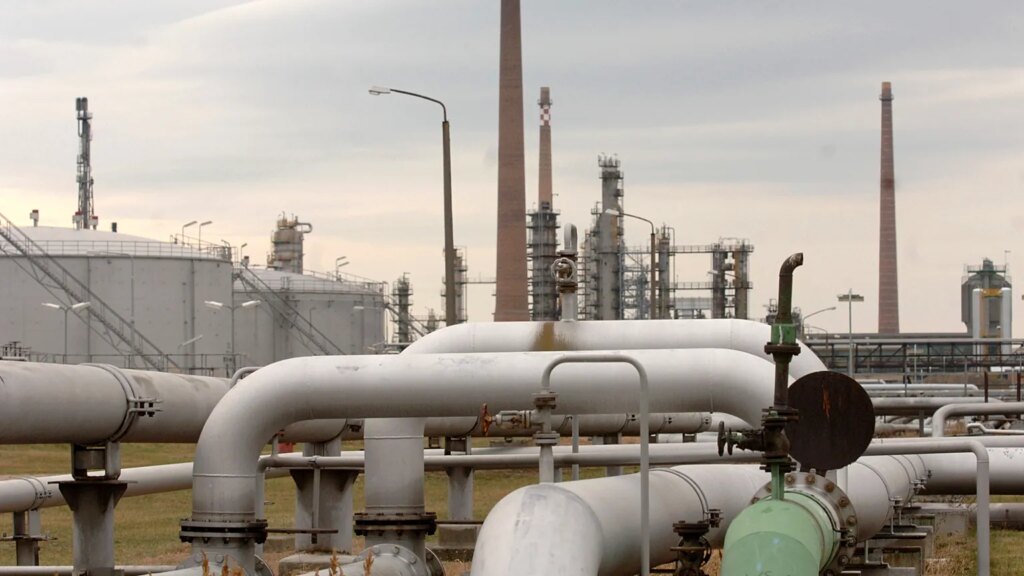
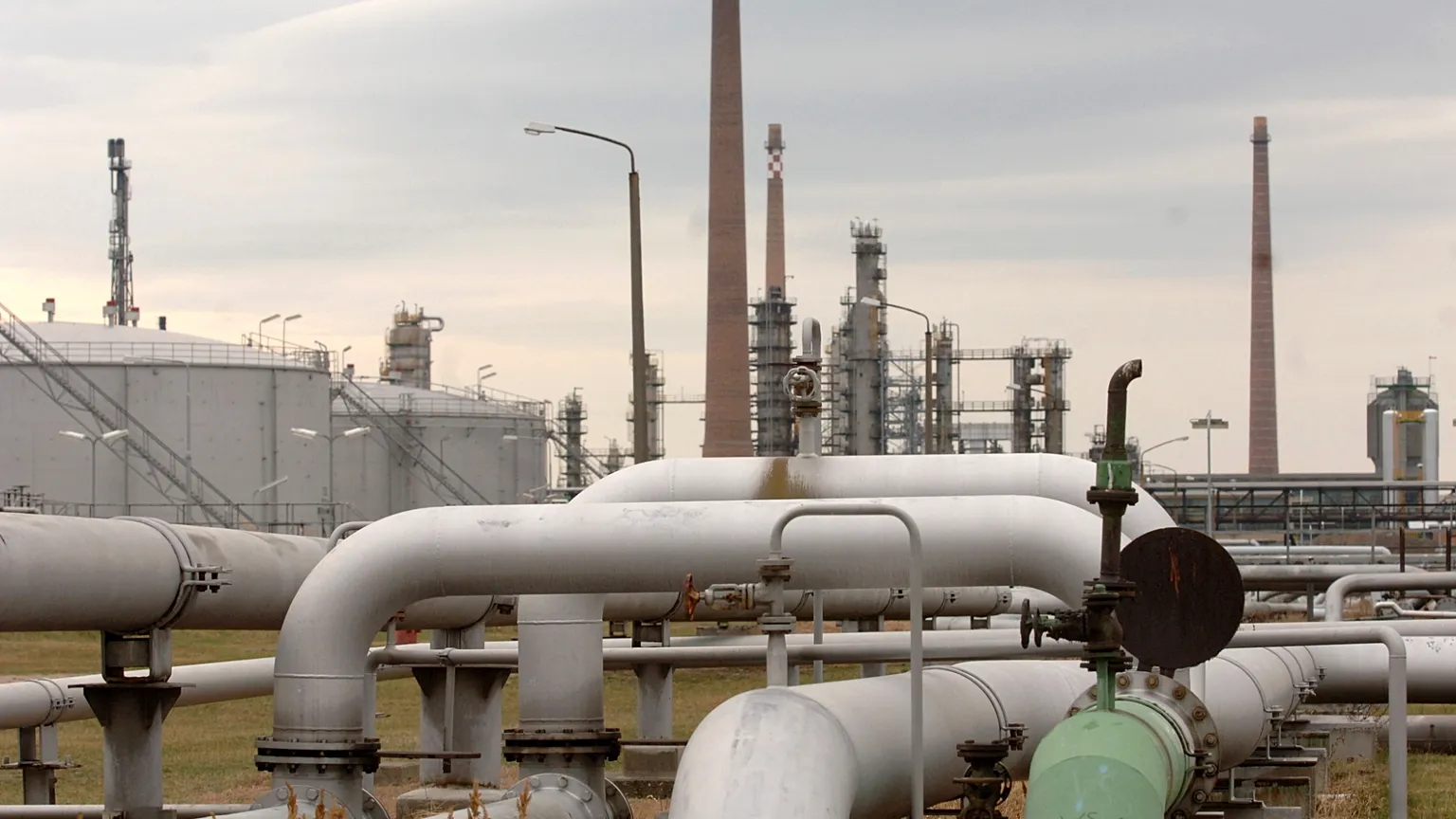
Damage to the Druzhba pipeline, the world’s longest oil pipeline and currently exempt from EU sanctions, has stopped oil deliveries from Russia to Hungary, jeopardizing a billion-dollar loan to Ukraine.
 ADVERTISEMENT
  ADVERTISEMENT
Ukrainian authorities claim a Russian strike caused the damage, complicating repairs because Ukrainian engineers can only work during daytime due to nightly air raids.
On the other hand, Hungary accuses Kyiv of sabotage and slow repair efforts. Meanwhile, the European Commission has officially proposed launching an inspection and fact-finding mission into the event.
The incident along the pipeline, which transports oil from Russia through several Eastern European countries, has revived questions about Hungary’s heavy dependence on Russian energy while other EU member states have managed to reduce it.
Hungarian Prime Minister Viktor Orbán has consistently maintained that Russian crude is vital for the nation’s energy stability, arguing that changing suppliers would increase costs and reduce efficiency.
Nevertheless, experts suggest the situation is more nuanced. The Centre for the Study of Democracy (CSD) notes that although Hungary remains heavily reliant on Russian oil, it has disregarded advice to diversify its energy sources, despite having access to suitable alternative routes. Furthermore, purchasing Russian crude has not resulted in lower domestic fuel prices for Hungarian consumers.
Euronews’ fact-checking unit, The Cube, examined these statements in detail.
Dependence of Hungary on Russian oil
According to the CSD, Hungary is among the EU countries most dependent on Russian crude, accounting for about 90% of its imports by 2025.
This places Hungary in contrast to the broader EU and other European nations, which have successfully reduced their reliance on Russian oil and gas following Russia’s full-scale invasion of Ukraine in 2022.
Hungary’s main oil and gas firm, MOL, which refines and produces fuels for Hungary and Slovakia, remains the EU’s last significant purchaser of Russian crude.
Despite repeated warnings to shift sourcing away from Russian oil amid the war in Ukraine, analysis from CSD reveals Budapest’s dependence actually increased between 2021 and 2025, from 61% to 93%.
Even after Ukraine restricted pipeline flows targeting deliveries from Russian supplier Lukoil, Hungary did not follow the wider EU trend of reducing Russian crude imports.
Instead, in September 2025, MOL agreed to a new deal enabling it to take ownership of crude at the Belarus-Ukraine border and continue purchasing from Lukoil.
Hungary’s alternative oil supply options
The main alternative identified by the European Commission is the Adria pipeline, managed by Croatian state company Jadranski naftovod (JANAF).
This pipeline links the Omišalj Terminal on Croatia’s Krk island in the Adriatic with refineries in Croatia, Slovenia, Hungary, Bosnia and Herzegovina, and Serbia.
According to the CSD, the transit fees for non-Russian crude transported through this pipeline are lower than for Russian crude delivered via the Druzhba pipeline — about €12 per tonne through Adria versus €21 per tonne through Druzhba.
JANAF asserts that its infrastructure can satisfy the demand from Hungary and Slovakia.
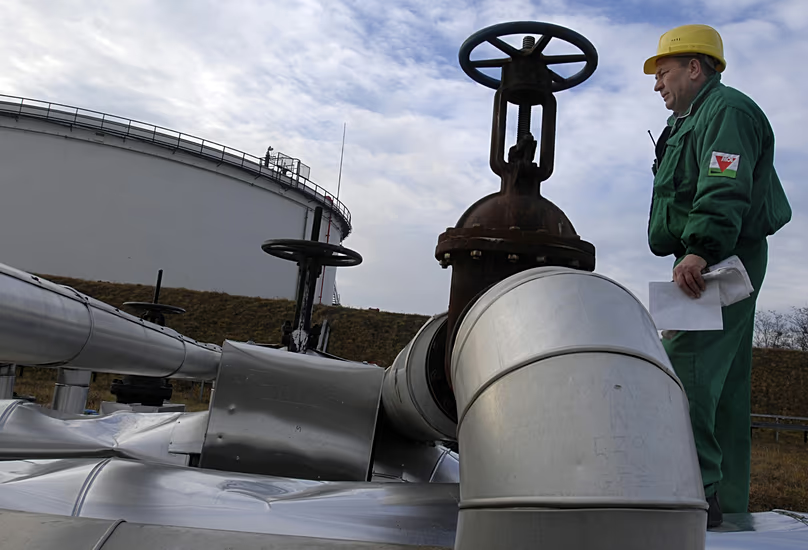
A company representative told The Cube the pipeline is capable of transporting 14-15 million tonnes annually.
«All capacity tests for JANAF’s pipeline system were conducted in the presence of MOL representatives,» the company added. «Initial tests confirmed JANAF’s pipeline can fully meet MOL’s crude oil needs.»
JANAF also highlighted that MOL has utilized this infrastructure for over ten years and is «well acquainted with the pipeline’s capacity».
Disagreement over capacity
The Hungarian government and MOL contest these claims.
Officials argue the Adria pipeline has not shown, in practice, a reliable capacity for delivering sufficient volumes. Hungary maintains that actual oil flow volumes have generally been closer to 2 million tonnes per year, significantly less than JANAF’s stated 14-15 million tonnes.
Research from the Centre for Research on Energy and Clean Air finds that Russian crude oil remains consistently cheaper than alternative sources. In 2024, Hungary’s average price for Russian oil was about €471 per tonne, compared to approximately €564 per tonne for non-Russian crude, reflecting a 20% discount.
Orbán’s spokesperson, Zoltán Kovács, noted that Hungarian refineries were «fundamentally constructed to process Russian crude oil», especially Russian Urals Crude, which Hungary has relied on since Soviet times.
«Regarding the Adria oil pipeline, it has not been conclusively proven to consistently and reliably transport adequate volumes,» he stated, pointing to conflicting capacity test results and insufficient clear data.
MOL has further cautioned that relying solely on the Adria pipeline and sea-borne crude incurs significant supply security risks. Unlike the Druzhba pipeline, maritime deliveries are vulnerable to disruptions from conflicts such as in the Middle East and other logistical delays.
Nonetheless, analysts emphasize this highlights the dangers of depending on a single supplier.
The CSD observes that technical restrictions on the Adria pipeline are not absolute and that MOL’s refineries have previously processed non-Russian crude, including during a 2019 interruption of the Druzhba pipeline, and have undergone upgrades to enhance flexibility.
Necessity or political decision?
Although studies indicate Russian crude consistently costs less than alternatives, CSD analysis shows this has not led to lower domestic gasoline and diesel prices in Hungary, notably when compared to neighboring countries like the Czech Republic.
In 2024, Hungary’s pre-tax fuel prices were 18% higher than those in the Czech Republic and 10% higher for diesel.
The report points out that nations like Bulgaria and the Czech Republic, which gradually phased out Russian oil, saw no significant supply issues and now enjoy some of the lowest fuel prices in the EU.
The CSD contends that MOL, which owns all major refineries in Hungary and Slovakia, has in fact boosted its profits by selling products at regional market rates while sourcing Russian crude at a discounted price.
Ben McWilliams, an energy analyst at the Bruegel think tank, told The Cube that Hungary’s dependency is «motivated by commercial reasons rather than strict technical constraints.»
He explained that the choice ultimately rests with MOL and is «driven by economic interests, not hard technical limitations.»
«It is entirely feasible for both states to stop importing Russian crude oil,» he confirmed.
Hungary remains resolute
«In recent years, Hungarian families and businesses have had access to fuel prices aligned with regional averages,» Kovács stated.
He added that measures by the Hungarian government, including price caps and the release of strategic reserves, have protected consumers, and withdrawing from Russian energy sources would incur significant costs.
«The government will persist in its efforts to guarantee a secure and affordable supply for households,» he concluded.