
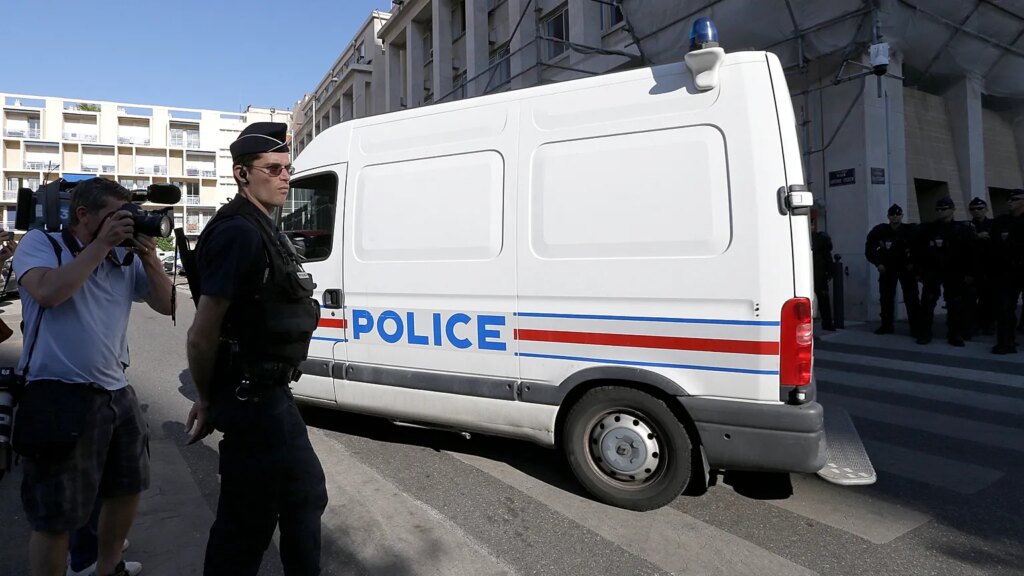
A wave of contradictory accounts and false information about alleged suspects linked to the death of 23-year-old Quentin Deranque in Lyon has circulated online ahead of a series of arrests made Tuesday evening.
On social media platforms, far-right activists and politicians have disseminated the names of several individuals they assert were involved in the killing of Quentin Deranque, a 23-year-old far-right activist who suffered fatal injuries after being attacked by a group of youths in Lyon on 12 February, succumbing two days later.
 ADVERTISEMENT
  ADVERTISEMENT
French prosecutors, as reported by French media, confirmed that four men in their twenties were apprehended Tuesday evening. Among these detainees is Jacques-Élie Favrot, parliamentary assistant to far-left France Unbowed MP Raphaël Arnault.
Arnault is also a co-founder of Jeune Garde, an anti-fascist group that was dissolved by government order in June 2025.
This development follows a surge of contradictory stories and misinformation about the identities of suspects before the arrests, alongside circulating false images alleged to depict Deranque.
What circumstances led to Deranque’s death?
The incident culminating in his death unfolded alongside a conference led by far-left MEP Rima Hassan at the Institute of Political Studies, known as Sciences Po.
A statement from the far-right feminist collective Némésis claimed that Deranque and “around 15 other men” were present to provide security support for their protest outside the conference.
According to Némésis, these men could not fulfill their protective roles because they were pursued by a group of “anti-fascist activists.”
The Lyon Public Prosecutor’s Office reported that later that night, Deranque and two others “were forced to the ground and repeatedly beaten by at least six individuals.”
“Two individuals escaped, while Quentin Deranque remained on the ground,” the prosecutor’s office explained.
Despite Némésis’s claim that Deranque was engaged in security duties, his family lawyer stated on 13 February that he was “neither a security guard nor affiliated with any stewarding or security service” and that he had “no criminal record.”
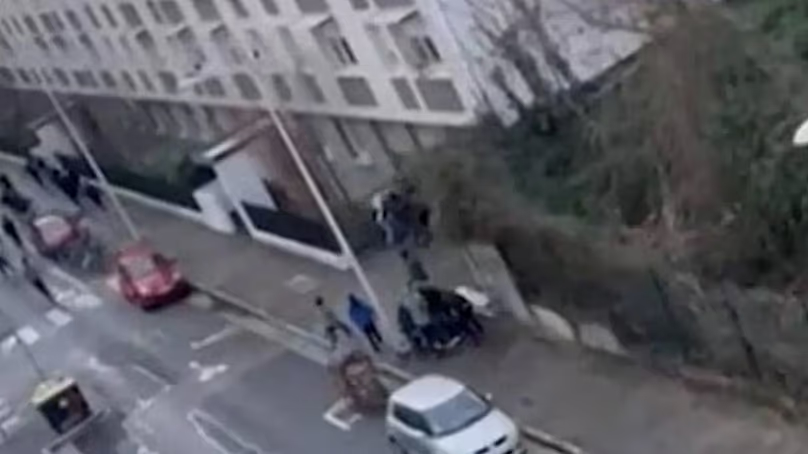
Left-wing activists targeted despite lack of proof
Numerous names, addresses, and photos of purported suspects have been circulated online, even though their names have not appeared in any official announcements, exposing them and their families to harassment on digital platforms.
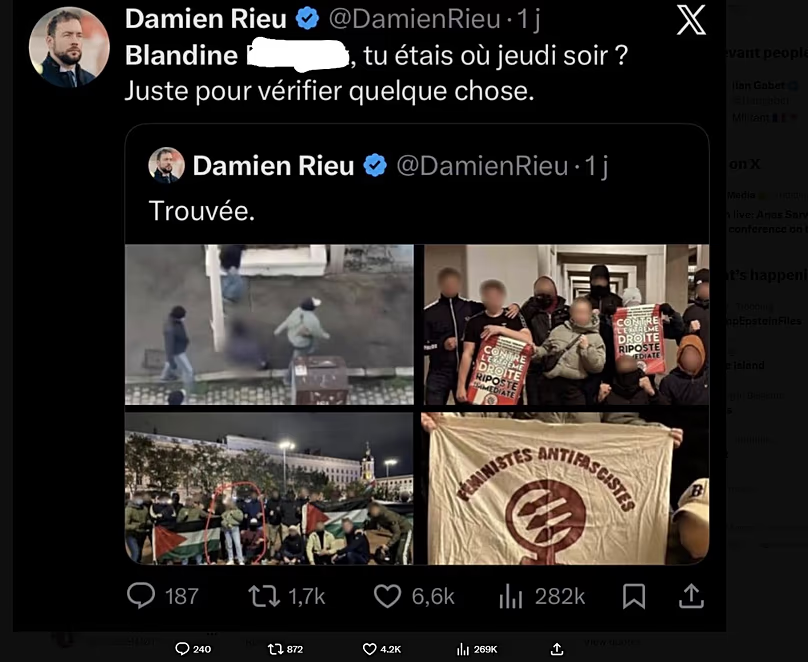
Among those identified in social media posts is Blandine Bardinet, a figure singled out by far-right activists including Damien Rieu, who posted a now-deleted message on X.
Rieu shared several unrelated pictures of Bardinet alongside video footage of Deranque’s assault, seemingly to underline that she wore the same coat as one of the assailants of the victim.
Ndong Eurydice, a far-right Reconquête party local politician, further propagated Bardinet’s name, alleging she had been “formally identified,” although this claim remains unverified at this time.
Bardinet’s attorney, Raphaël Kempf, informed Euronews’s fact-checking unit, The Cube, that legal measures would be pursued against those spreading falsehoods about Bardinet.
“Complaints will be submitted against individuals who persist in circulating these falsehoods, and they will be required to justify themselves in court,” Kempf wrote in an email. “For several days, multiple far-right influencers have assumed the roles of investigators and prosecutors, treating their audiences like juries by naming names and inciting waves of hatred and threats.”
“Driven by vengeance, they mistakenly identified Blandine Bardinet as present in Lyon on the evening of Thursday, 12 February, at the location where Quentin D. died,” he added. “They did not hesitate to support this theory with a fabricated analysis of a screenshot.”
Kempf denied any involvement of his client in Deranque’s killing, asserting that she “had left France on Wednesday, 11 February, the day before, for a planned multi-month trip abroad.”
“Thus, it is obvious she is not in the photo, and that her identification by Damien Rieu, Mila Orriols, Jean-Eudes Gannat, Eurydice Ndong, and the UNI, among others, was incorrect,” he concluded.
According to social media posts, Bardinet has participated in the anti-fascist Jeune Garde movement.
“Blandine Bardinet was engaged with Jeune Garde, motivated by her anti-fascist beliefs and the imperative to oppose the far right and its ideology and actions,” Kempf stated. “Since 12 June 2025, she has abided by the decree dissolving Jeune Garde.”
In a press release published Sunday, Jeune Garde distanced itself from the “tragic events” in Lyon, confirming it had “halted all activities” since its dissolution.
That same day in an interview with French public broadcaster France 2, France’s Interior Minister Laurent Nuñez indicated a potential link between Jeune Garde and Deranque’s death.
“The inquiry will clarify whether the individuals were Jeune Garde activists,” he remarked. “But the evidence is strongly suggestive.”
The Lyon Public Prosecutor’s Office declined to comment on the formal identification of suspects after reports in French press, citing police sources, that authorities had “formally” identified five suspects, intensifying speculation over names circulated online before Tuesday’s arrests.
At a press briefing Monday, the prosecutor’s office confirmed that Deranque was assaulted “by at least six individuals.”
False photos of Quentin Deranque circulate online
On social media, several images purportedly showing Deranque have been shared since the incident.
In truth, the only authentic photo of him was issued by his family and published in the French newspaper Le Figaro.
One frequently shared picture, claiming to depict Deranque, actually portrays Dylan Guichaoua, who represents the youth wing of the far-right National Rally party in France’s Pyrénées-Atlantiques department.
Guichaoua’s image also featured on French flags displayed at a commemorative rally held in Paris on Sunday.
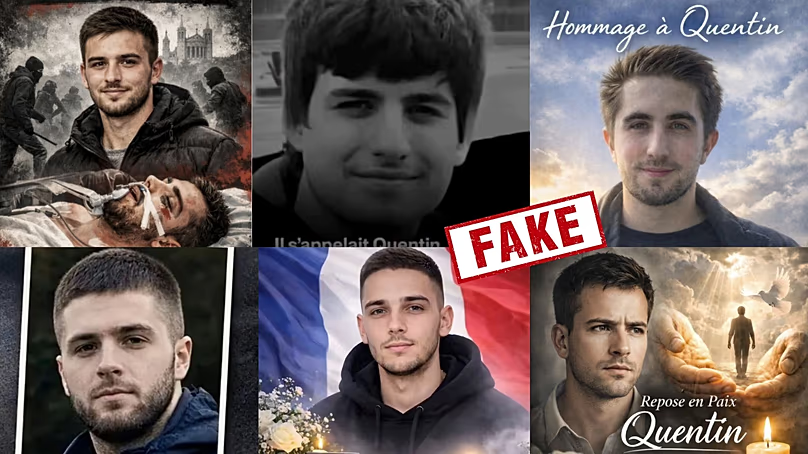
In response to the viral publications, Guichaoua issued a statement on Facebook condemning the misuse of his image, affirming he had “no connections to the described events, and certainly not to the assault or death of Quentin.”
Other images circulated under the caption “his name was Quentin” show Quentin Piron, a 23-year-old Belgian who died in a traffic accident in 2024.
Artificial intelligence has also been employed to create images of Deranque, which have been amplified by far-right accounts with slogans like, “The far left kills. Support for Quentin.”
Ultimately, The Cube identified at least six fake images of Quentin circulating online.