
Washington aims to shift its focus to other regions, while Europeans remain cautious about the unpredictable stance of the current US administration.
On Thursday, US and European defence ministers appeared to concur that NATO’s survival depends on becoming more European. Nonetheless, their reasons for this transition do not seem to be entirely aligned.
 ADVERTISEMENT
  ADVERTISEMENT
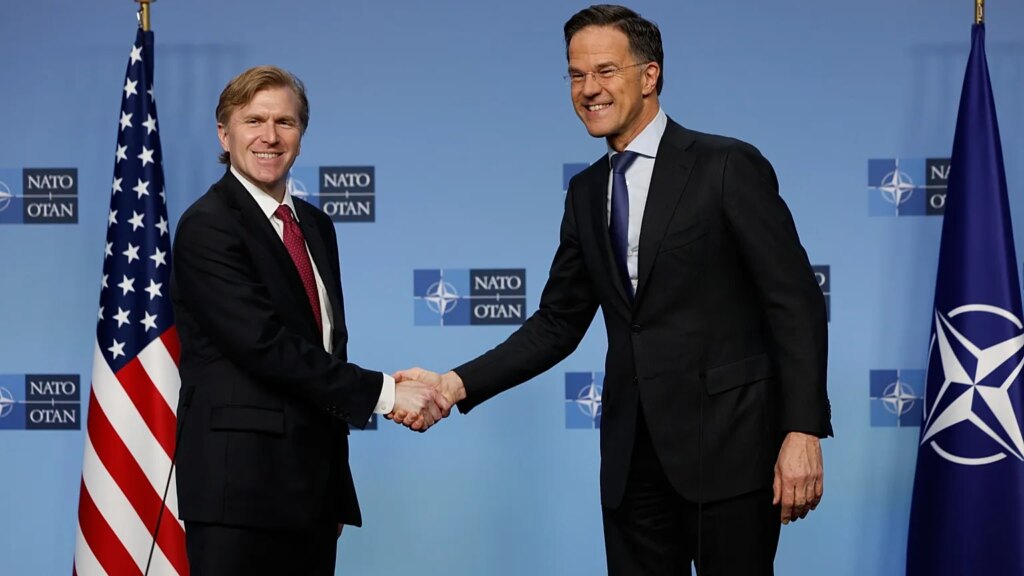
«The future demands a ‘NATO 3.0′,» declared US Under Secretary of War Eldridge Colby at the NATO defence ministers’ meeting in Brussels. «This iteration requires our allies to considerably increase their efforts and take primary responsibility for Europe’s conventional defence.»
«Therefore, Europe must provide the bulk of the forces needed to deter and, if the situation demands, repel conventional military threats within Europe,» he emphasized.
Colby’s stance, representing Defence Secretary Pete Hegseth, reflects a long-standing US call for greater burden-sharing, motivated by America’s intention to reorient towards the Indo-Pacific.
Historically, European reactions to this have been somewhat lukewarm. Yet, as the ministers met in Brussels, they were prepared not only to acknowledge this position but also to demonstrate progress in shouldering more responsibilities.
What was the outcome?
«This meeting ranks among the most crucial I have participated in,» NATO Secretary General Mark Rutte said following the discussions. «We witnessed not only agreement, but a shift in perspective—a unified vision and a substantially reinforced European defence within NATO.»
The NATO leader commended the «significant rise» in defence budgets in 2025, highlighting Denmark, Estonia, Latvia, Lithuania, and Poland for surpassing the agreed target of investing 3.5% of their GDP annually in defence, a goal achieved ten years earlier than planned.
This target was established last summer after intense debates triggered by US President Donald Trump’s doubts regarding his country’s adherence to NATO’s collective defence principle, including remarks suggesting Washington might withhold aid from allies failing to meet spending requirements.
Increasing NATO’s European dimension
The Thursday conference occurred just weeks after Trump warned of military measures against NATO ally Denmark to forcibly acquire Greenland. In response, NATO initiated heightened monitoring in the Arctic, while trilateral negotiations between Denmark, Greenland, and the US are ongoing.
«The US has historically borne the majority of responsibilities for European conventional deterrence and defence,» explained German Defence Minister Boris Pistorius before the meeting. «Now, Europeans need to progressively assume these duties in the coming years. This transition is both reasonable and expected. I fully endorse this path.»
«Maintaining NATO’s transatlantic character necessitates making it more European by increasing Europe’s share of responsibility,» he added.
His French counterpart, Catherine Vautrin, noted that Europeans «have already initiated» efforts to bolster the alliance’s «European pillar.» Similarly, Romania’s Radu-Dinel Miruță stressed that defence production must expand in Europe, emphasizing that this should be pursued collaboratively with NATO and the US but with the fundamental premise: Europe must be capable of defending itself.
Ruben Brekelmans from the Netherlands called for a «no-surprise policy» across the Atlantic to ensure that any American military reduction is balanced by increased European engagement.
«We are aware of the United States’ security and defence priorities. While NATO remains important, their focus is increasingly on the Western Hemisphere and Indo-Pacific regions. However, as long as open dialogue continues and mutual expectations are clear, this can be effectively managed,» he added.
Some adjustment has already commenced. Late last year, the US announced it would not replace an infantry brigade in Romania after its rotation, signaling the beginning of a strategic retreat.
European partners have also assumed more leadership within NATO’s command structure, although the US retains command of Allied Maritime Command and continues to lead Allied Land Command and Allied Air Command.
Rutte stated Thursday that Europe’s assumption of the three joint force commands is «noteworthy,» while stressing that it remains «essential» for the Supreme Allied Commander Europe, responsible for the alliance’s military planning, to continue being «an American.»
Such an arrangement guarantees a persistent, robust US conventional presence in Europe and represents a logical distribution of responsibilities in an alliance where the US economy accounts for over half of NATO’s total economic capacity.