
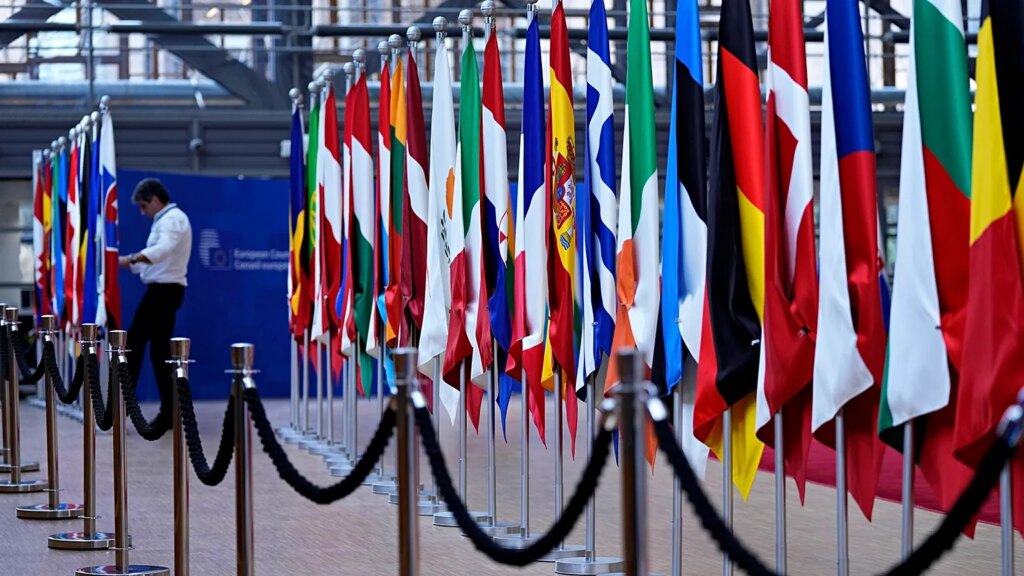
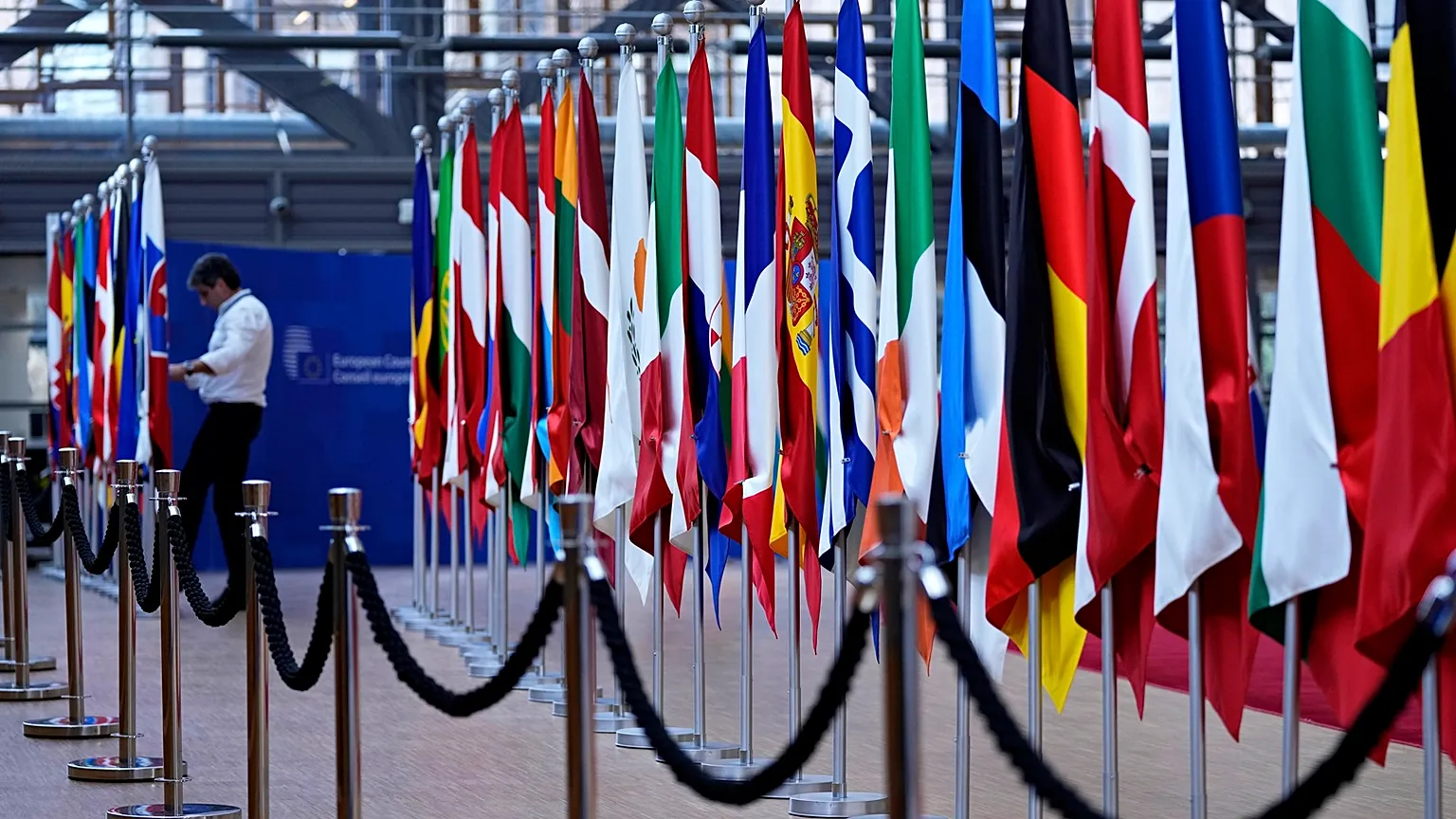
The concept of a two-speed Europe has re-emerged as leaders seek innovative solutions to revive the sluggish economy.
Industrial downturn. Emerging disruptive technologies. Slow investment rates. Regulatory obstacles. Punitive tariffs. Unequal competition. Climate crises. Demographic challenges.
The serious issues confronting the European Union have sparked an urgent quest for bold and creative measures capable of delivering the essential transformative change. Yet, how far are leaders prepared to go?
«Our goal must always be to secure agreement among all 27 member states,» Commission President Ursula von der Leyen stated in a letter to leaders prior to an informal summit scheduled for Thursday.
«Nevertheless, if insufficient progress or ambition threatens Europe’s competitiveness or ability to act effectively, we should not hesitate to explore the options provided by the Treaties regarding enhanced cooperation.»
This proposal was notable coming from a European Commission president, whose role involves setting policy direction for the entire Union and guaranteeing the consistent enforcement of EU regulations across all member states.
However, the idea did not arise without precedent.
Two weeks earlier, finance ministers from Germany, France, Italy, the Netherlands, Poland, and Spain formed a new coalition called the E6, aiming to promote «decisive action and rapid progress» in four key sectors, including defence and supply chain resilience.
«We are initiating momentum, and other nations are invited to join us,» remarked German Finance Minister Lars Klingbeil, extending an open call.
In December, EU leaders committed to issuing €90 billion in joint debt to support Ukraine’s financial and military needs for 2026 and 2027. This decision, taken at a high-profile summit in Brussels, was celebrated as a demonstration of European unity—although Hungary, Slovakia, and the Czech Republic completely abstained from participation.
This behind-the-scenes agreement to deliver critical aid to Kyiv was achievable only due to enhanced cooperation, the legal mechanism referenced by von der Leyen in her message. It marked the first use of this obscure procedure to achieve a foreign policy objective of such scale and cost.
Now, as EU leaders focus inward to develop urgent strategies for invigorating the bloc’s stagnant economy and preventing the United States and China from overwhelming their domestic industries, the idea of a two-speed Europe is gaining prominence.
«The initial effort must always involve all 27 member states, but we will not restrict our options,» explained a senior EU official, referencing the Ukraine loan as an example.
«Should there be a critical mass of countries ready to proceed without jeopardising the Union, adopting a pragmatic stance is warranted.»
Taking Different Paths
Practically speaking, a two-speed Europe is already in place.
The eurozone stands as the clearest example of a subset of member states opting to implement an ambitious policy—in this case, a single currency—while others choose to remain outside. Complementary financial mechanisms, such as the European Stability Mechanism and the Single Resolution Fund, were established based on this principle.
The passport-free Schengen Area originated on an intergovernmental basis, with five founding countries (France, West Germany, Belgium, the Netherlands, and Luxembourg) signing an agreement in 1985, separate from EU institutions. Over time, its membership expanded and it was integrated into the formal EU structure; today, it includes all members except Cyprus and Ireland.
Meanwhile, enhanced cooperation has been utilized to set up the European Public Prosecutor’s Office (EPPO), enact a unitary patent system, and harmonise divorce laws.
This mechanism, defined in Article 20 of the Lisbon Treaty, requires a minimum of nine member states and allows others to join later if desired. For instance, the Netherlands, Malta, Sweden, and Poland joined the EPPO at a subsequent stage.
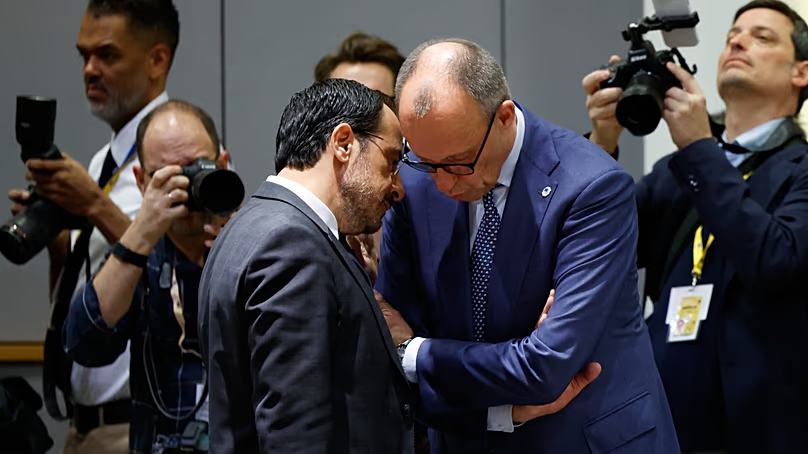
In addition to these treaty-based frameworks, European nations frequently form informal alliances to defend shared interests, such as the «Frugal Four» and the «Friends of Cohesion» during budget negotiations. Other examples include the Weimar Triangle, the MED9, the Visegrád group, and the Nordic-Baltic Eight.
Recently, the E6 alliance, driven by Berlin and Paris, emerged as the newest coalition.
However, these temporary coalitions create challenges for Brussels, since they fall outside its direct oversight, complicate internal coordination, and intensify political discord.
For this reason, von der Leyen favors enhanced cooperation, which is embedded in the treaties and empowers EU institutions to participate, explains Nicolai von Ondarza, senior researcher at the German Institute for International and Security Affairs (SWP).
«On one side, current EU processes proceed too slowly amid intense geopolitical and economic pressure, meaning smaller willing coalitions can act faster,» von Ondarza told Euronews.
«On the other, EU institutions worry that member states might form flexible coalitions entirely outside the EU framework.»
Federalist Aspirations
Underlying these groupings is the aim to bypass the EU’s notoriously complex decision-making—often hampered by what von der Leyen termed the «shackles of unanimity»—and to move ahead with greater speed, ambition, and breadth.
This concept is particularly appealing given the current difficult environment marked by multiple challenges, which demand groundbreaking solutions. Yet, the more ambitious the idea, the more difficult its realization.
The bloc’s intense focus on achieving consensus through lengthy negotiations is often criticized for leading to the lowest common denominator or failing to reach any agreement at all. Mario Draghi, former president of the European Central Bank and author of a significant report on competitiveness, recently introduced the term «pragmatic federalism» to promote integration among member states that are willing and capable.
«This approach breaks the deadlock that exists today without subordinating anyone. Member states opt in voluntarily, with the door open to others, but excluding those who would undermine shared goals,» Draghi stated in a speech.
«Achieving power does not have to come at the expense of our values.»
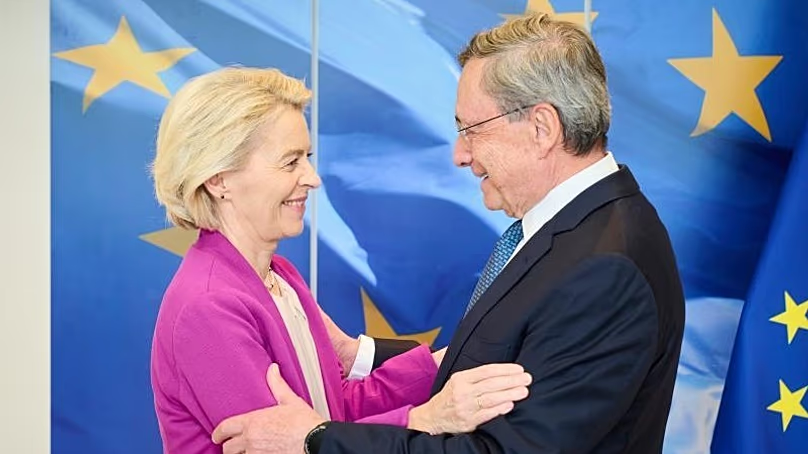
Von der Leyen, whose tenure has been credited by both supporters and critics with deepening integration and consolidating Brussels’ authority, appears to believe the moment is ripe to test enhanced cooperation on a broader scale.
Nonetheless, a two-speed Europe carries potential costs and risks. After all, the EU was created to unify nation-states under common laws and principles; if some capitals advance ahead while others lag, the resulting divergence could eventually undermine the project’s fundamental purpose.
«If consensus from all is required, the scale, speed, and scope of the needed policy response may no longer be achievable,» noted Fabian Zuleeg, chief executive of the European Policy Centre. «However, the approach must vary depending on the policy field.»
«Clear commitments to desired objectives should be established first, followed by selecting the appropriate method to achieve them, rather than beginning with processes and procedures.»