
The European Union aims to strengthen its relationships with Jordan, Syria, and the broader Middle East as it adopts a firmer approach to asylum applications and repatriations.
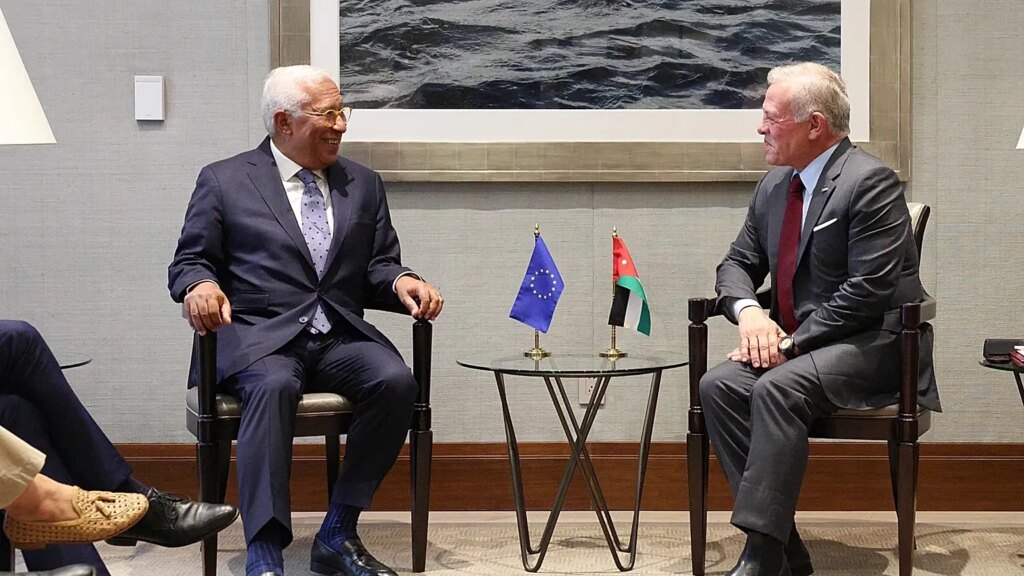
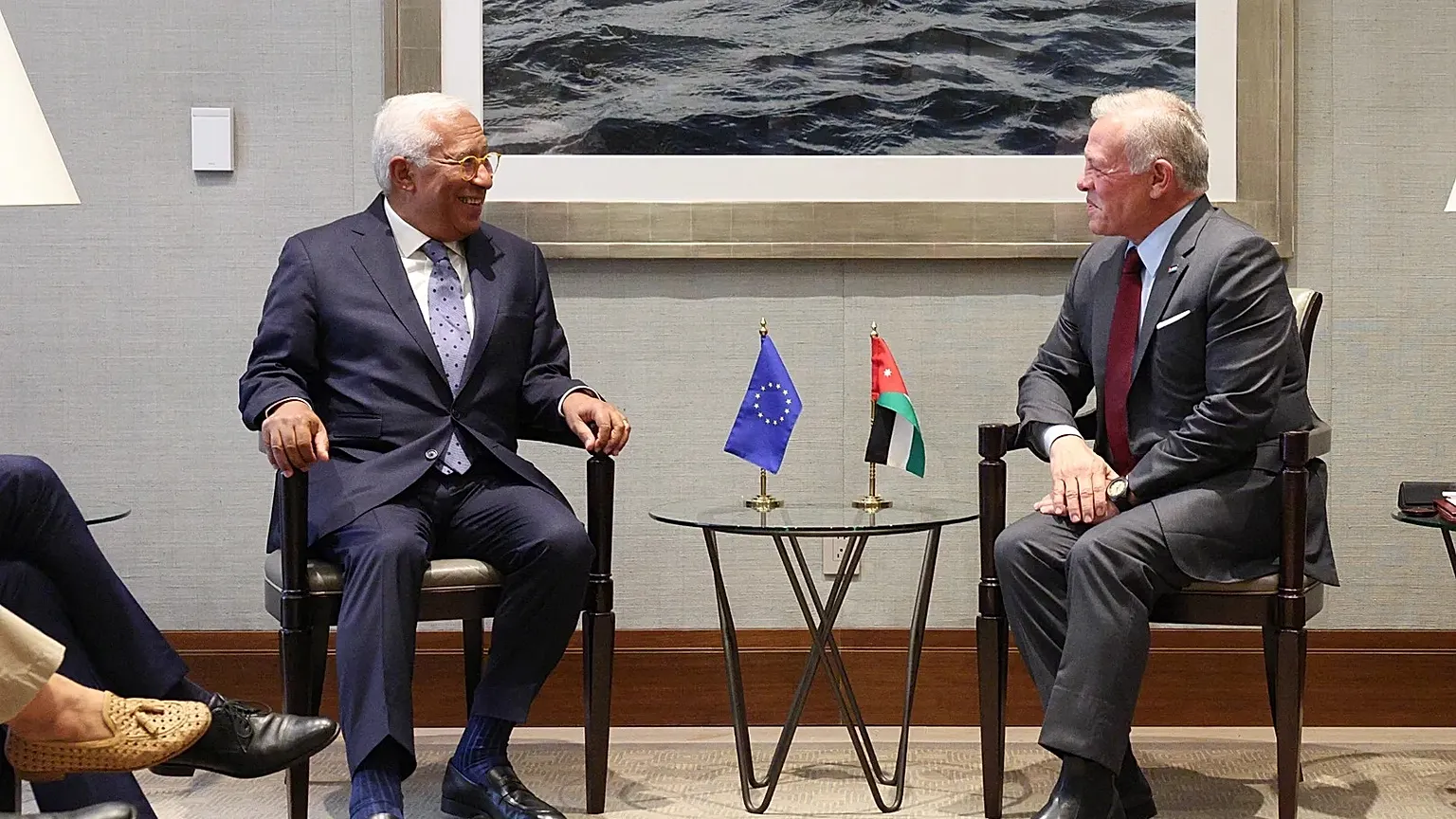
During the inaugural EU-Jordan Summit in Amman on Thursday, European Commission president Ursula von der Leyen will unveil new financial commitments to Jordan, as the EU seeks to act as a stabilizing actor in a region affected by prolonged conflict.
Following a meeting with King Abdullah II alongside European Council President António Costa, von der Leyen plans to proceed with visits to Syria and Lebanon.
The EU has committed €3 billion in loans and investments to support Jordan, prioritizing sectors such as trade, energy, security, and migration, a sensitive political issue for European nations. Additional investments in Jordan are anticipated to be announced during this trip.
Jordan holds strategic importance for the EU within the region, where Brussels intends to expand its political involvement as a stabilizing agent following the turmoil caused by conflicts in Syria and Gaza.
This visit coincides with the EU’s effort to enforce stricter migration policies, emphasizing repatriations and revisiting asylum regulations. Since the onset of Syria’s civil war in 2011, millions fled the devastated country heading towards Europe, often taking perilous routes.
Now, a decade later and with Syria undergoing transformation after the Assad regime’s downfall, European states have reversed previous asylum approaches and adopted more stringent policies on family reunifications.
With Syria in flux after Bashar al-Assad’s departure, German Chancellor Friedrich Merz was among the first to state that Syrians would need to return home to participate in reconstruction efforts.
In 2024, EU member states granted protection status to 437,900 asylum seekers, marking a 6.9% increase compared to 2023. International observers emphasize that although active warfare has ceased, the situation on the ground remains unstable and potentially hazardous for minority groups.
Focus on Israel-Palestine Relations
As a firm advocate for Palestine, Jordan has urged the EU to contribute to the rebuilding of Gaza following the first phase of the ceasefire agreement brokered by the Trump administration that came into effect last year.
The EU has committed €1.6 billion for 2025-27 to support Palestine under the supervision of the Palestinian Authority.
Jordan, which strongly opposed the initial proposal by the Trump administration to forcibly relocate Palestinians from Gaza, has called for full political backing from the international community to support the establishment and recognition of a sovereign Palestinian state.
Currently, fourteen EU member states, including Spain and France, officially recognize Palestinian statehood.
Together with the Arab League, the EU has persistently advocated for a political resolution to the conflict, reiterating that founding a fully operational Palestinian state based on a two-state solution remains the sole path to lasting peace and stability in the region.
Israeli Prime Minister Benjamin Netanyahu has dismissed recognition of Palestine as a concession to Hamas, while the US under the Trump administration has firmly refused to acknowledge the state of Palestine.
Video editor • Amandine Hess