
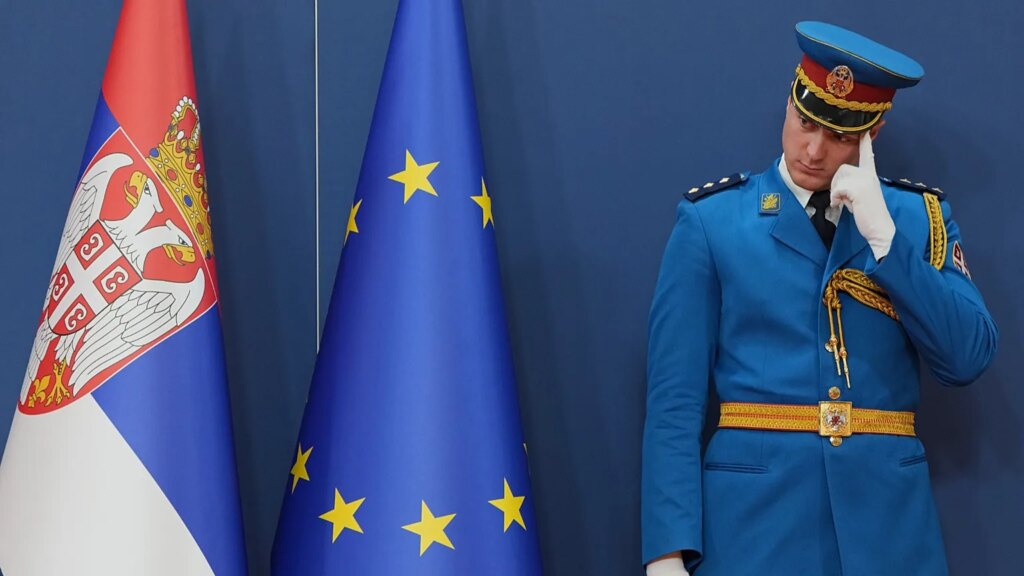
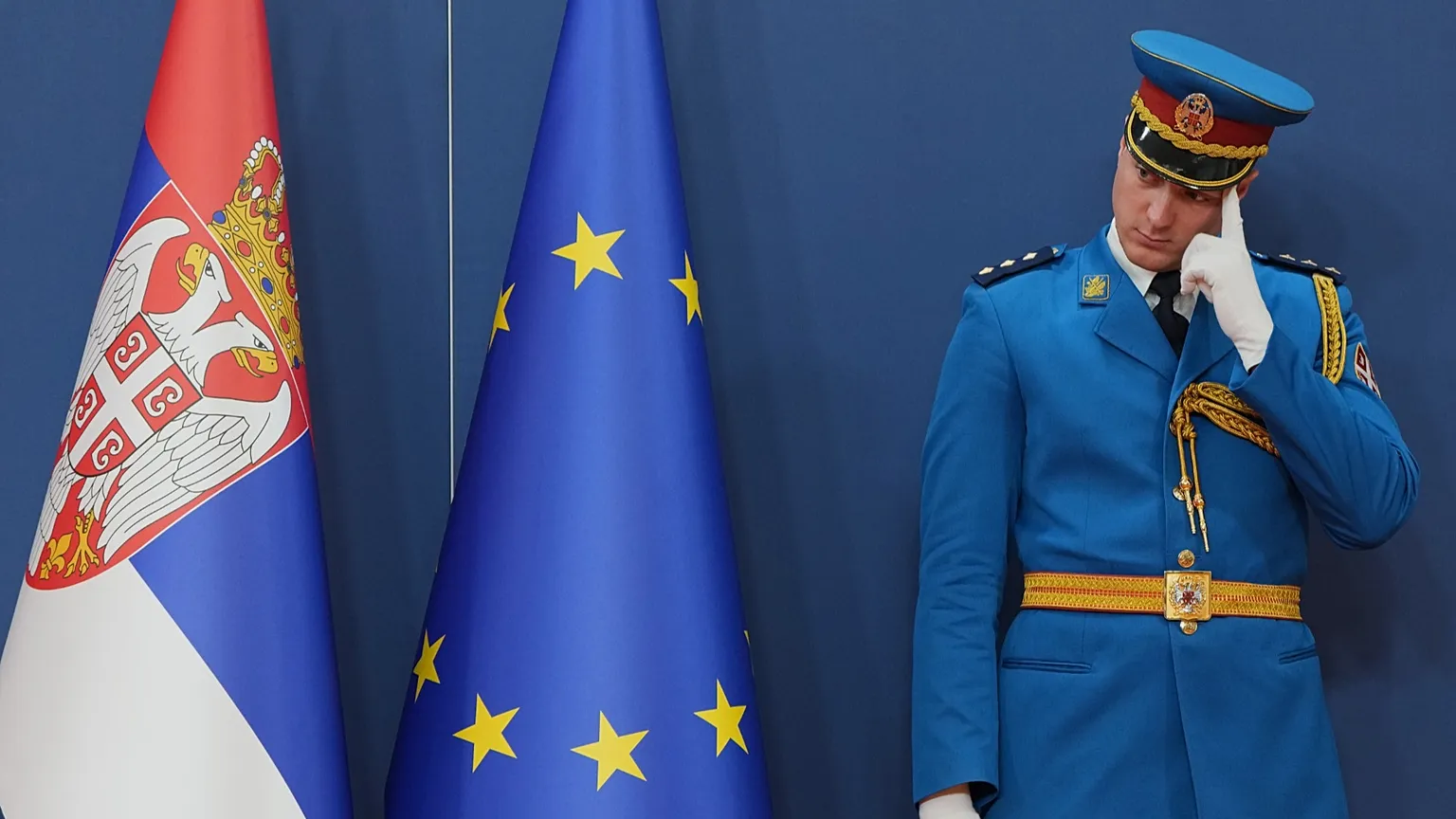
Serbia remains dedicated to EU membership — yet the unresolved matter of Kosovo, declining public support, and regional tensions continue obstructing progress. Ahead of Euronews’ EU Enlargement Summit on November 4, Euronews Srbija provides an update on Serbia’s current position regarding its EU accession.
Serbia’s path toward joining the European Union began in January 2001, after pro-European political forces won the parliamentary elections following Slobodan Milošević’s fall in October 2000.
At that time, some experts anticipated that the Federal Republic of Yugoslavia — which dissolved in 2006 following Montenegro’s separation — might integrate into the EU as early as 2007.
However, the situation soon proved more complex. Kosovo, which was managed by the UN after the 1999 conflict, legally remains part of Serbia under UN Resolution 1244. Its 2008 declaration of independence has not been recognized by Serbia.
Long before signing the Stabilisation and Association Agreement (SAA) and gaining EU candidate status in 2009, Serbia confronted several difficulties. The nation struggled to cooperate with the International Criminal Tribunal for the former Yugoslavia (ICTY) in The Hague, endured an economic collapse, and faced an ethnic Albanian separatist insurgency in southern areas like Bujanovac and Preševo.
Despite these obstacles, Serbia embarked on a sustained course toward European integration, which remains a core element of the country’s political agenda today.
From early enthusiasm to diminishing support
In the early 2000s, over 70% of Serbians favored EU integration. Currently, that level has decreased to roughly 40%. Although public enthusiasm has softened, political authorities still assert the importance of the European path.
Prime Minister Đuro Macut stressed that Serbia’s European affiliation is not only a strategic objective but also an assurance of improved living standards for its population.
“Serbia’s future within Europe represents both a political aim and a guarantee for continued development, progress, and better living conditions for our people,» Macut told Euronews Serbia.
The government has persisted in advancing reforms and modernizing public institutions, indicating to Brussels a serious commitment.
Macut noted Serbia’s attainment of 61% alignment with the EU’s Common Foreign and Security Policy, demonstrating measurable advancement while acknowledging the need for further reforms.
Beyond political and legislative convergence, securing energy supplies is a priority. Serbia is striving to ensure consistent gas, oil, and electricity access, cooperating closely with neighboring countries, including Hungary.
“Serbia must uphold full energy independence and steadiness, even amid complicated international situations,” Macut explained.
This simultaneous emphasis on European alignment and energy security reflects a wider strategy aimed at achieving both global credibility and internal stability.
Controversies surrounding EU enlargement
Meanwhile, Brussels has been considering a new enlargement framework: partial membership, wherein new entrants would join without full voting privileges. This concept has stirred debate across the Western Balkans.
Montenegrin Prime Minister Milojko Spajić firmly rejected the idea, underscoring that sovereignty must remain intact.
Croatian Prime Minister Andrej Plenković expressed concerns as well, worried that Serbia’s future accession could alter the balance of influence in EU institutions.
“Croatia would likely be reluctant to welcome Serbia into the EU, as it would boost Serbia’s power within EU bodies,” remarked Slobodan Zečević from Belgrade’s Institute for European Studies (IES).
Simultaneously, Bosnia and Herzegovina continues to lag behind, described by Amil Dučić, editor of Sarajevo-based news outlet Fokus, as the region’s “slowest learner” concerning EU integration.
These debates highlight a delicate interplay between political ambitions, regional tensions, and the EU’s own ability to accommodate new members.
Serbia’s future prospects
Nemanja Starović, Serbia’s minister for European integration, acknowledged the public’s increasing impatience about the accession’s slow progress.
“Despite dissatisfaction, abandoning EU integration would be a mistake. Joining the EU aligns with Serbia’s national interests,» he stated to Euronews.
Experts estimate Serbia might be ready for EU membership by 2030, though several challenges persist. Political obstacles, regional rivalries, and reliance on Russian energy supplies complicate the process.
“Living without Russian gas is very difficult for us. Alternatives exist, but currently, we remain heavily dependent on Russia,” Zečević added.
Although partial membership has been proposed as a transitional solution, many analysts view it as a temporary fix that could undermine the EU’s principle of equal treatment for all members.
Previous enlargement rounds reveal a pattern where early members block their neighbors: Slovenia obstructed Croatia, Croatia now impedes Serbia, and Bulgaria delays North Macedonia. Montenegro and Albania appear best positioned for accession by 2030, enjoying more favorable views within the EU.
“Currently, the EU shows the most support toward Montenegro and Albania,” Zečević noted. “Partial membership would only postpone necessary institutional reforms.”
Regional disputes, internal political issues, and unresolved challenges like Kosovo continue to shape the EU integration trajectory for the Western Balkans, making membership both an enduring objective and a sensitive strategic task.
This article was exclusively produced for Euronews by Euronews Srbija, ahead of the EU Enlargement Summit on 4 November, which will be streamed live and via YouTube.