
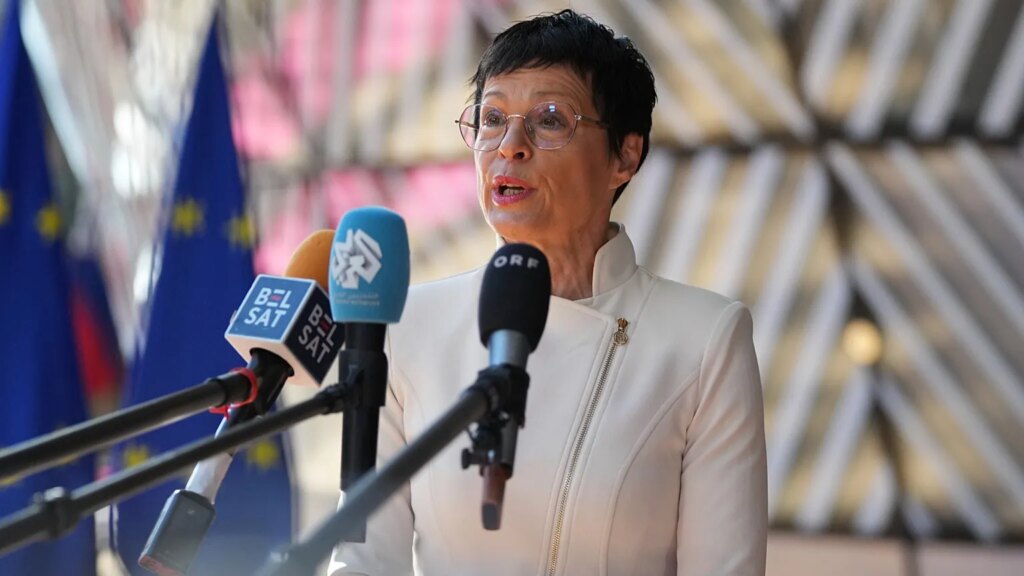
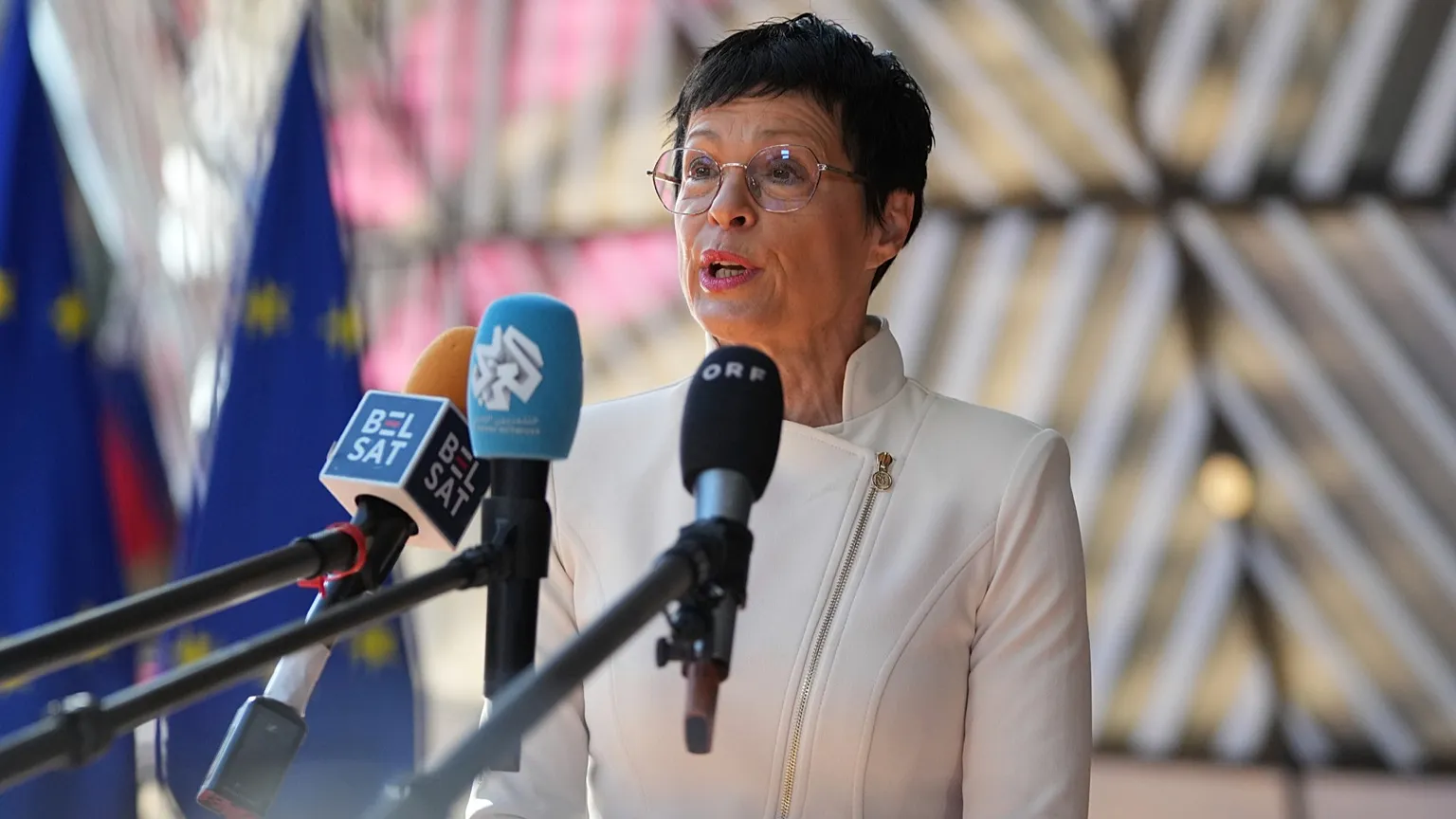
The EU bears a «responsibility» to support candidate countries in maintaining their European trajectory, the bloc’s enlargement chief stated this week ahead of publishing the annual accession process review.
European Commissioner for Enlargement Marta Kos noted that the EU has learned from previous errors with the UK and Georgia and is now ready to adopt a «more assertive» approach, including investing in candidate states to counteract false narratives.
During a group interview held on Tuesday, in which Euronews participated, Marta Kos highlighted that 2025 marked a shift in how the European Commission approaches enlargement, especially as «it was the first occasion where we dedicated resources and personnel to help counteract foreign malicious interference».
«This effort encompassed, for the first time, deploying the EU’s rapid hybrid response team,» she added.
Moldova was the recipient of this support, as its bid to join the EU was initiated just weeks after Russia launched its full-scale invasion of Ukraine in early 2022.
The nation includes the pro-Russian breakaway region of Transnistria, making Moldova particularly susceptible to hybrid threats.
Before last month’s parliamentary elections, Moldovan President Maia Sandu warned that Russia was investing «hundreds of millions of euros» to influence the vote away from pro-European factions.
In response, the EU’s rapid hybrid response team was deployed to counter these efforts. Sandu’s party achieved a decisive victory.
‘Demonstrating Improvement’
According to Kos, this situation evidences the EU’s learning curve: «When the UK held a referendum, the EU regarded it as an internal matter and refrained from involvement. We did not even request: ‘Please consider staying?'»
«Similarly, in Georgia, despite knowing the high level of Russian interference, we provided no assistance,» Kos explained.
Furthermore, she pointed out that the EU is now actively challenging Russia regarding disinformation campaigns.
«They have caused significant damage, but I am glad to report that we have improved,» said the enlargement Commissioner.
«We thoroughly analyzed Russian narratives, counteracted them, and leveraged them in favor of Europe. From my perspective, this kind of strategic communication requires a more assertive stance to protect our agenda, aligned more closely with the internal dynamics of our candidate countries.»
«Once a country obtains candidate status, it also becomes our duty to provide support,» she emphasized.
Next week, the EU’s enlargement chief will present the European Commission’s annual assessment of candidate countries’ progress in the accession process.
Moldova is expected to be commended for its efforts. Although the Commission has supported starting negotiations, advancement has stalled for several months as Moldova’s application is unofficially linked to Ukraine’s. Meanwhile, Hungary continues to block Kyiv’s accession progress.
‘Can the EU Deliver?’
Montenegro and Albania are also anticipated to receive recognition for their ongoing commitment to European integration.
Both nations aim to become full EU members before the decade concludes, with Montenegrin President Jakov Milatović urging the bloc during a recent summit in Copenhagen to initiate drafting the accession treaty.
Overall, Kos, who assumed office in December 2024, characterized «2025 as a positive year for enlargement» with «more advancement than in the past 15 years». She nevertheless cautioned that «challenges remain on the path ahead.»
«In 2026, stakes will rise, centered on a key question: can the EU fulfill its commitments?,» she noted.
Much will hinge on EU leaders whose unanimous approval is required to authorize every stage of the accession procedure.
A proposal by European Council President Antonio Costa to amend the rules, allowing the opening of negotiation clusters through a qualified majority vote, did not gain sufficient support last month.
The EU is also exploring alternatives such as gradual integration—where consistent progress would be rewarded with access to funds and programs that could be withdrawn if setbacks occur—and potential safeguards to guarantee ongoing cohesion.
One considered safeguard, according to diplomats quoted by Politico, would restrict new members from exercising full veto rights.